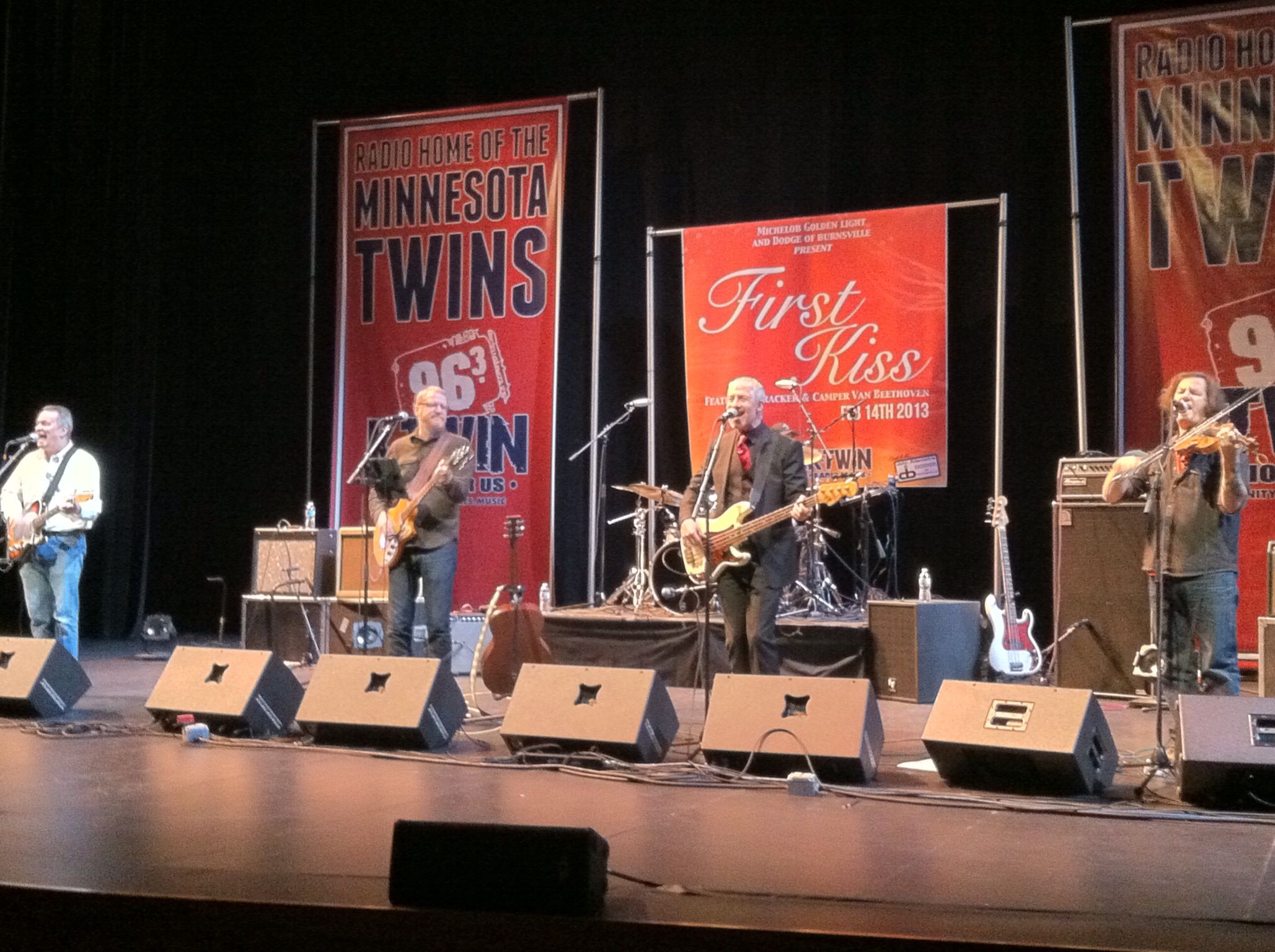
Double the pleasure, double the fun: Camper Van Beethoven and Cracker, Burnsville, PAC, Burnsville, MN, 2/14/13

"Take the skinheads bowling, take them bowling!" Camper Van Beethoven

“Take the skinheads bowling, take them bowling!” Camper Van Beethoven

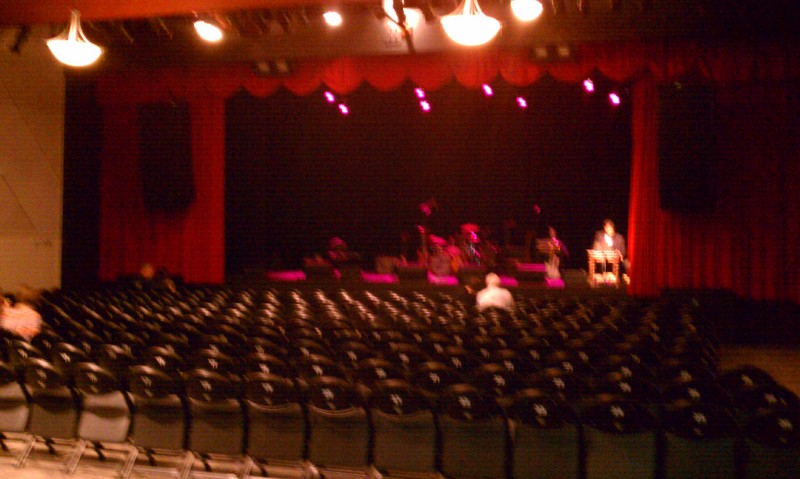
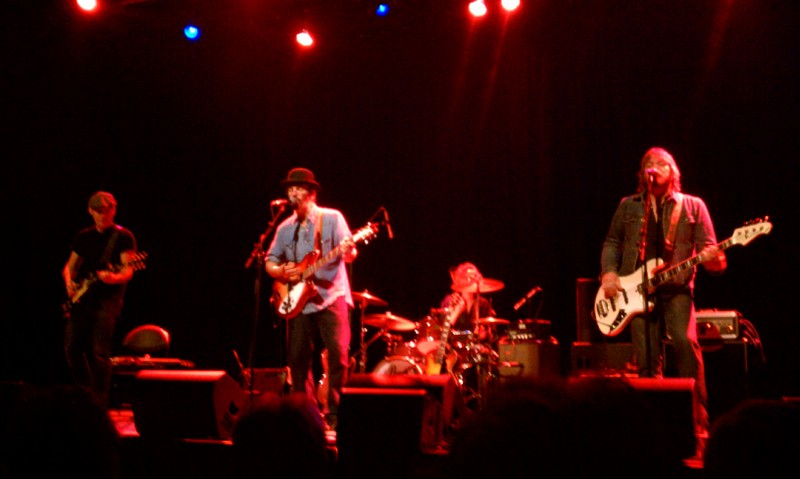
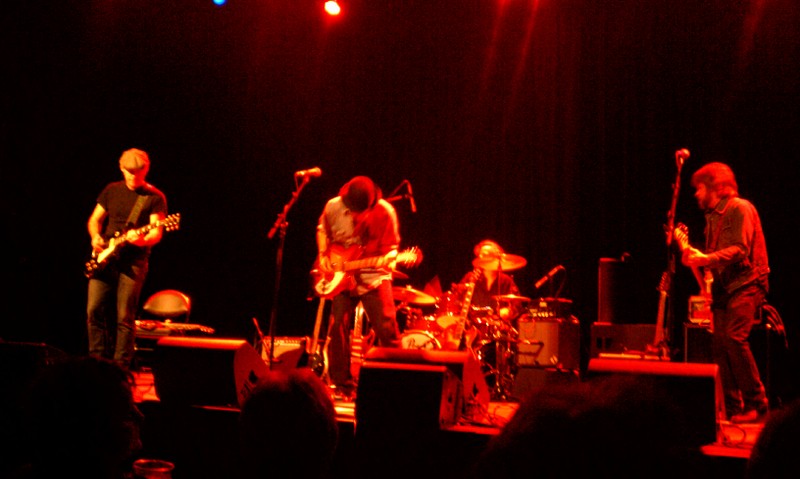
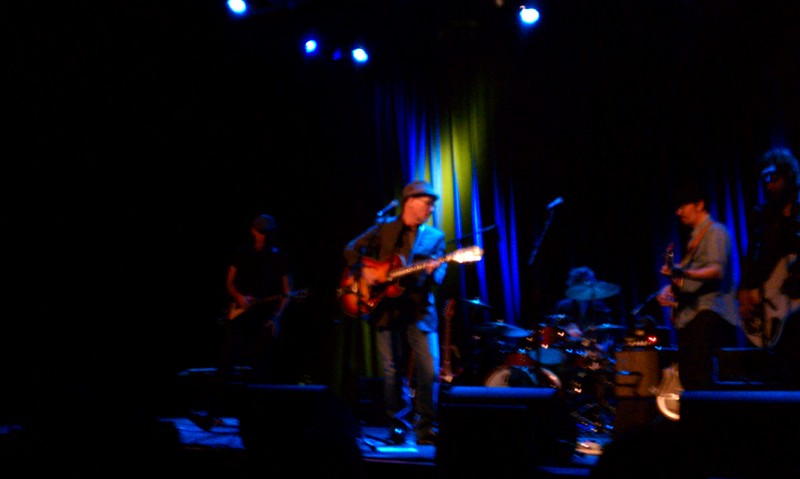
The last time these two bands, with their overlapping personnel, appeared together in the Twin Cities was approximately 13 months earlier, when the Camper/Cracker crew rocked a packed house at the Fine Line Music Café in downtown Minneapolis. Given their affinity for that particular venue (Cracker’s prior two shows were also held there), it seemed out of place to have the bands performing in this setting: a comfortable, new – but sterile – theater, with the garish banners for the radio station sponsor serving as the only backdrop. Ignoring their surroundings, and the separation between them and the audience (until the end of Cracker’s set), the bands both delivered solid performances, with Camper showcasing its new album, “La Costa Perdida,” and Cracker highlighting old favorites.

Following a brief opening set by Honeydog-in-chief, Adam Levy, Camper took the stage to the instrumental overture, “Waka,” before firing up their cover of “Pictures Of Matchstick Men.” “Pictures” had been a # 1 college radio hit for the band in the mid-80’s, with multi-instrumentalist Jonathan Segel’s soaring violin work replacing the wah-wah guitar of The Status Quo’s original. Segel would continue to impress all night, switching back and forth between violin and Stratocaster, sometimes in mid-song.

Frontman David Lowery noted that this year marked the 30th anniversary of Camper Van Beethoven (albeit, with a lengthy hiatus for most of the 90’s), and he promised that they would “try to make a new album more often than every eight years.” The new songs came off well in concert, including the first single from “La Costa Perdida,” “Northern California Girls,” with Lowery on acoustic guitar, pleading with the expatriate NoCal women to come home: “Don’t you miss the ocean? / Don’t you miss the weather?” he implored. “Summer Days,” featured intricate guitar and violin interplay between Segel and lead guitarist Greg Lisher, while “Too High For The Love-In,” had the sort of twisted, free-association lyrics for which the Campers are well known. With a perfectly straight face, however, David Lowery remarked at the end of “Too High” that it was based on a true story, involving Jonathan’s wife being bit by a viper while traveling in Sweden. Not sure how that happens but . . . O . . .K.

It’s pretty hard to top “Take The Skinheads Bowling” for off-kilter, free-associating lyrics. Sandwiched between the country-flavored “Sad Lovers Waltz” and the dark, dissonant, menacing “You Got To Roll,” from the new album, “Skinheads” was delivered forcefully, but without a trace of irony. Regardless, it was the crowd-pleasing high point of the set, with most of the audience joining in the singalong chorus.

Cracker, Burnsville PAC, Valentine's Day 2013

Cracker, Burnsville PAC, Valentine’s Day 2013

After a brief intemission, Cracker took the stage for its 70-minute set. Despite sharing a couple of band members with Camper (David Lowery and drummer Frank Funaro), Cracker is not a side project or spinoff of Camper. It was formed in the early 90’s, after the Campers parted ways for most of the decade, and the band has produced its own substantial body of work. Cracker’s sound is less lush than Camper’s, as befits a smaller, four-piece unit, and less eclectic, opting for more straightforward rock/alt-country arrangements rather than the polyglot of influences present in Camper’s oeuvre, What they share, besides Lowery and Funaro, is a penchant for the left-of-center lyric. Not having a new album to promote, the Cracker set was full of old favorites, including its own cult classic, “Euro-Trash Girl.”

Regrettably, some sound problems cropped up from time to time during Cracker’s set. Johnnie Hickman’s Les Paul sounded muddy and lost in the mix on the opening “Been Around The World.” The sound evened out for “Low,” a mid-tempo rocker, and was stable for “Teen Angst (What The World Needs Now),” a fast-paced song with the acerbic chorus: “Cause what the world needs now / is another folk singer / like I need a hole in my head.” Tell us what you really think about folk singers, David!

The honky-tonk “Lonesome Johnny Blues,” with its “Folsom Prison Blues” tempo, gave way to the less frantic but still forceful pace of “Hey Bret (you know what time it is),” from the 2009 “Sunrise In The Land Of Milk And Honey” album, the band’s most recent studio effort. Unfortunately, once again the sound mix seemed to falter, with Hickman’s solos being amped too low to showcase his formidable chops.

From the country-flavored “Mr. Wrong,” (“Don’t want to hear about Mr. Right / ‘Cause he’s out of town tonight / Baby come and spend some time with Mr. Wrong”); through the earnest love song “Guarded By Monkeys” (“You are so beautiful / You should be guarded by monkeys”); and the escapist/survivalist plea “Turn On, Tune In, Drop Out With Me,” (“(Now picture this) I’m shopping in town / For our homemade Agrarian fortress / You’re texting: Corian, granite or tile kitchenette in the gun nest?”), the warped and twisted lyrics kept coming hard and fast. To this point, the crowd was engaged but somewhat reserved, until Hickman began the extended solo to introduce “Euro-Trash Girl.” At that point, a fearless fan near the front got up out of his seat and walked to the front of the stage, inspiring a whole horde of folks to stream down to join him, singing and swaying to the chorus of this fan favorite. There they stayed, through the closing “Seven Days,” “Get Off This,” “One Fine Day,” and “Gimme One More Chance.”

The encore was a nifty cover of a lesser-known Dylan tune, “The Man In Me,” with Johnnie Hickman handling the vocals as well as some terrific solos. Despite the occasional sound issues during Cracker’s set, it was an evening well-spent, in the company of a couple of truly creative – if slightly askew – bands. It is ironic that Camper’s first hit was a cover of a song by a band called The Status Quo, since both Camper and Cracker are quite far removed from the status quo. We should be grateful that there are still independent spirits like this at work out there, challenging our expectations and keeping us on our toes. What the world needs now are more fearless bands like these two.
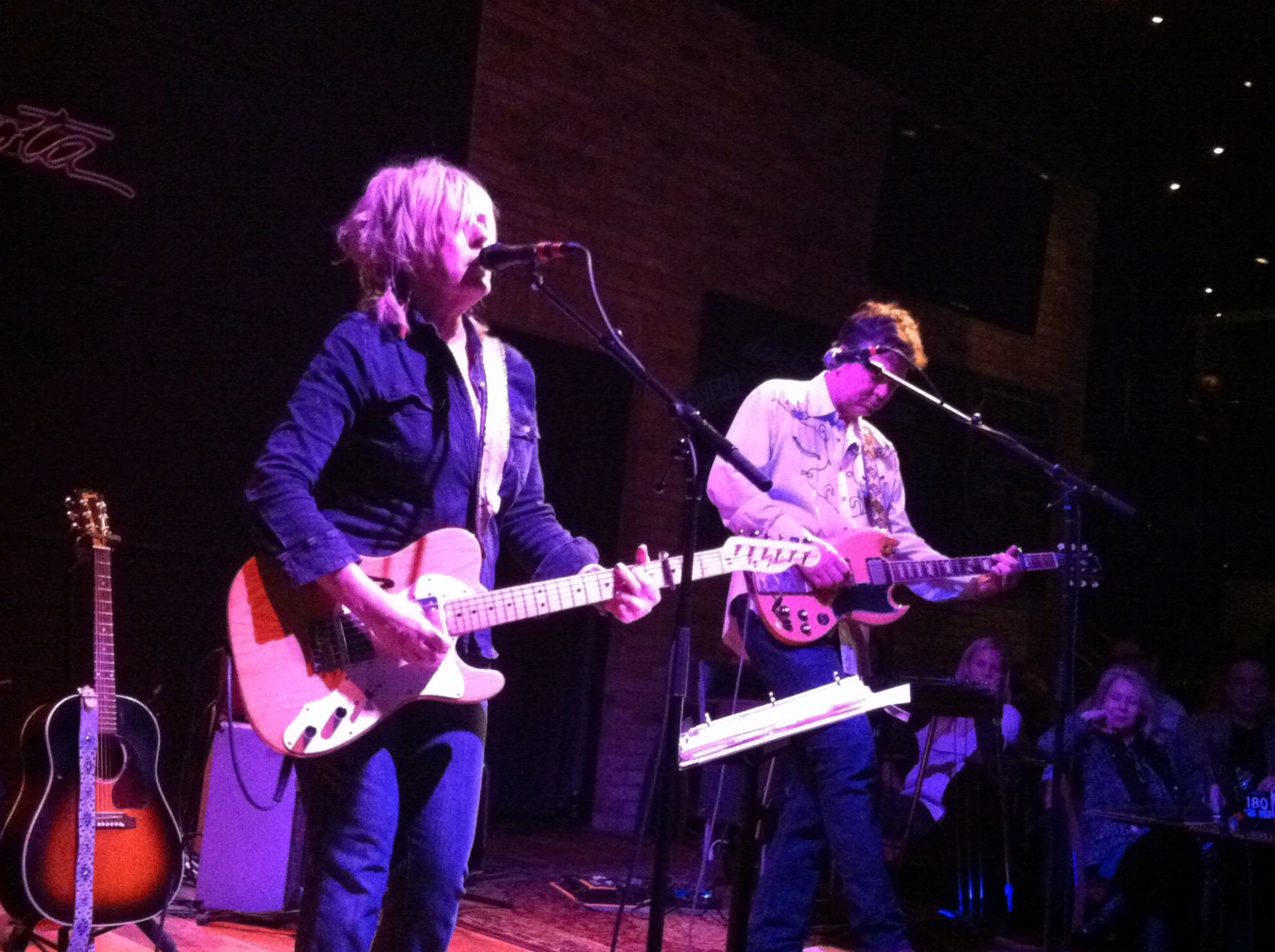
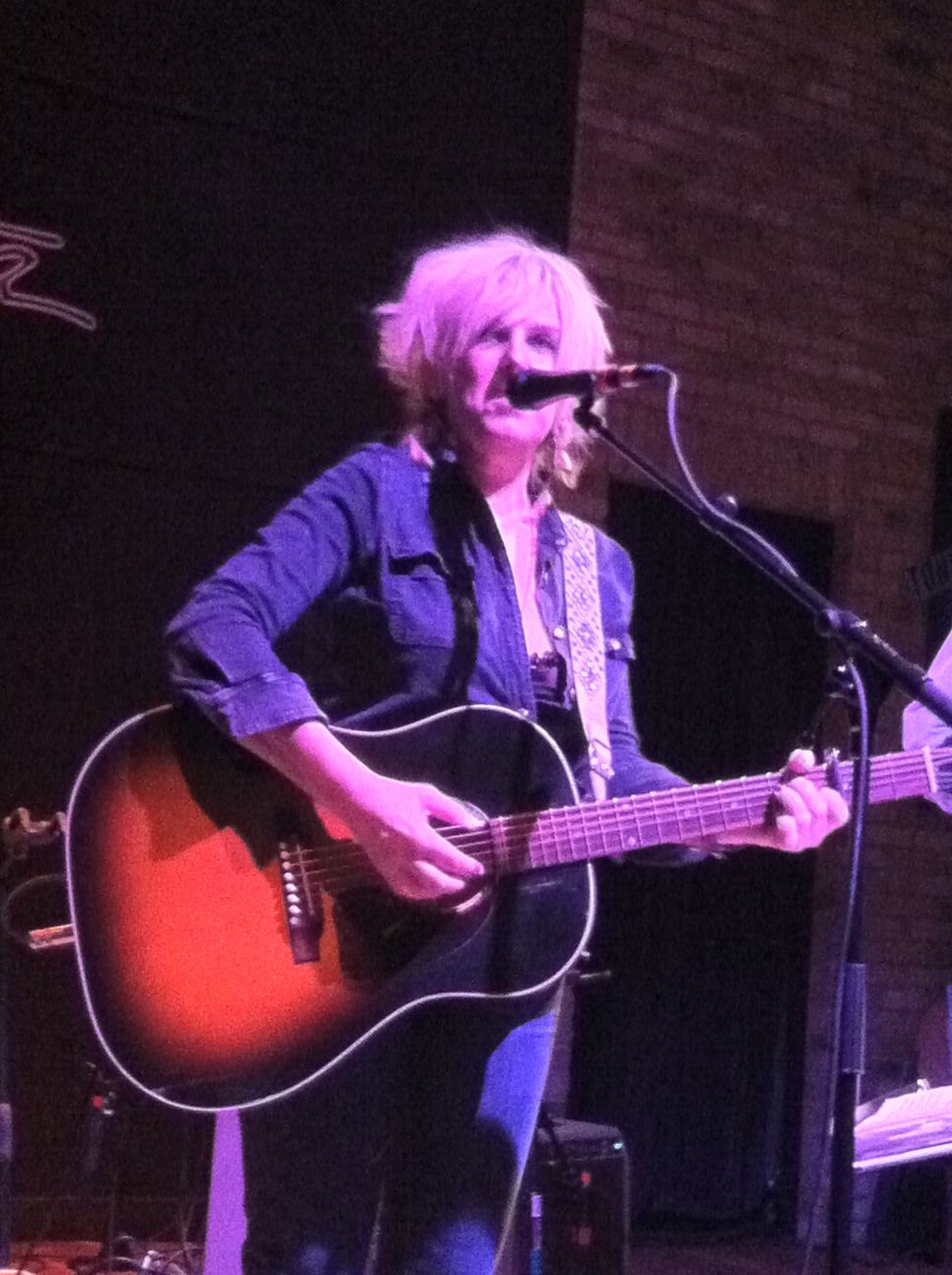


Americana Queen Reigns Supreme: Lucinda Williams at The Dakota Jazz Club, Minneapolis, MN, 2/6/13

Lucinda Williams, with Doug Pettibone

Lucinda Williams, with Doug Pettibone

Minneapolis has become something of a second home for Lucinda Williams. Her 2003 release “World Without Tears” included a song called “Minneapolis,” and also “Real Live Bleeding Fingers And Broken Guitar Strings,” purportedly written about Paul Westerberg of The Replacements. In 2009, she married Minnesota-born Tom Overby onstage at First Avenue, in a post-concert service that was surprisingly moving, given the unholy setting. With her apparent affinity for the Twin Cities, it was no surprise that by the fourth night of her five-night “residency” at the Dakota, she seemed completely at ease; comfortable in her surroundings, friendly and gracious with the crowd, and calm and self-assured in her delivery. None of this detracted from the passion and conviction of her performance – the best of the half-dozen times this writer has seen her.

Following brief opening sets by Ben Kyle (Romantica) and The Kenneth Brian Band, Lucinda and her longtime guitarist, the incomparable Doug Pettibone, took the stage and opened with “Can’t Let Go,” a song written by St. Paulite Randy Weeks – yet another local connection! – from her 1998 masterpiece, “Car Wheels On A Gravel Road.” Doug Pettibone was already making his presence felt, with sharp, focused lead and bottleneck slide work on this uptempo breakup song. Reaching back nearly 25 years to her eponymous 1988 release, for the next number, “Big Red Sun Blues,” it was clear that Lucinda was going to make the most of her deep catalogue by sprinkling her set list with obscure gems, as well as more familiar favorites.

The title track to “Car Wheels” certainly fell into the latter category. Introducing it, she told a deeply personal story of having debuted the song at the intimate Bluebird Café in Nashville, before an audience that included her father, the writer and poet, Miller Williams. Afterward, he commented that she must have been the little girl in the verse: “Chld in the back seat, about four or five years / Lookin’ out the window”. In complete and convincing sincerity, Lucinda said that she had never realized that until her father pointed it out to her, so complete was her immersion in her writing.

Slowing down the pace, Lucinda next chose the title track to “World Without Tears,” an achingly beautiful ballad that showcased her world-weary voice to its best advantage. Doug Pettibone switched from his Strat to a big hollow body Gretsch for the tender solos on this one, adding understated harmony to Lucinda’s vocals, as he did all night. Keeping the mood somber, Ms. Williams told of having been inspired to write “Memphis Pearl” in 1984, by the sight of a poor woman digging through trash cans, looking for food. The gentle, bluegrass-flavored song tells the story of a fallen angel, a girl whose high hopes and big dreams are sadly unrealized. It is a common theme of Ms. Williams, who relates tales of the downtrodden and those living on the fringes of society, without ever becoming maudlin, condescending or judgmental.

"Back in Memphis she was a pearl"

“Back in Memphis she was a pearl”

Lucinda kept the mood subdued and intimate with “Tears Of Joy,” a love song to Tom Overby, from her 2008 release, “Little Honey.” Introducing the next song, “I Don’t Know How You’re Living,” Lucinda noted that it was written for her younger brother, “who I haven’t seen in many years.” Incredibly sad and moving, featuring sublime echo-effect guitar work by Doug Pettibone, the pairing of the song with “Tears Of Joy” was breathtaking. Where “Tears Of Joy” celebrates the emotional catharsis of falling deeply in love, “Don’t Know” reminds us of the pain and longing that comes from being estranged from someone we were once close to. “I don’t know how you’re living / I don’t know where you are / And you may not be willing / To open up the door.” The yin and yang of interpersonal relations, encapsulated in two songs. Stunning.

To bring us out of our doldrums, at least momentarily, Lucinda debuted a new song, “Stowaway,” a mid-tempo rocker that’s sure to appear on her next album. “Born To Be Loved,” from her most recent album, “Blessed,” was next, followed by “Everything Is Changed,” from 2007’s “West,” featuring Miss Lily Mae Rische from The Kenneth Brian Band on fiddle. Lily Mae and her fiddle stuck around for “Jailhouse Tears,” giving the song a more country, less rocking feel than the studio version (that paired Lucinda with guest vocalist Elvis Costello). The ease with which Lucinda traded verses with Doug Pettibone erased all the bad memories of her tortured attempt at the song during her 2008 First Avenue appearance – simulcast on the internet – when she stopped and started the song four times before finally being able to finish it.

Returning to the land of broken dreams and tragic characters, Lucinda noted that “you meet a lot of beautiful losers in this business,” and told the story of Blaze Foley, a gifted songwriter whose songs have been recorded by Merle Haggard, Willie Nelson, and John Prine, among others. But, possessed by his own demons, he barely eked out a living on the fringes of society before being shot and killed in a senseless confrontation. “Drunken Angel” from the “Car Wheels” album is Lucinda’s tribute to this singular talent, whose life and death are straight out of a Greek tragedy.

The tempo picked up and the set list continued its wide range thereafter, as Lucinda debuted another new song, a driving, soulful number that might be titled “I Need Protection (From The Enemy of Love),” followed by the title track to 2001’s “Essence,” with Doug Pettibone producing stinging notes on his Gibson SG. To amp up the proceedings, Lucinda switched from her big Gibson acoustic to a Telecaster for the remainder of the night, starting with a Delta blues number by Little Son Jackson, “Disgusted,” followed by a ferocious version of “Change The Locks,” then a new version of “Joy” (recorded as part of a compilation to support the West Memphis Three), and a hard-rocking ‘Honey Bee” to close out the set.

Before starting the encore, Lucinda complimented the crowd, saying “y’all might be the liveliest audience yet!” She then opened the three-song encore with “Blessed,” an inspired piece of songwriting that takes the biblical Beatitudes and turns them around 180 degrees. Instead of the meek, the humble, the poor in spirit being blessed by the diety, it is we who are blessed by them: “We were blessed by the girl selling roses / Showed us how to live / We were blessed by the neglected child / Who knew how to forgive.” It is a brilliant, thought-provoking piece of songwriting. Not wanting to leave us with anything too heavy, Lucinda brought Lily Mae and the rest of the Kenneth Brian Band back on stage for the rollicking Hank Williams party tune, “Jambalaya,” and a hand-clapping, foot-stomping gospel cover, “You Know You’ve Got To Get Right With God.”

The little girl in the back seat of the car is all grown up now, and she’s moved behind the steering wheel. The tank is full, the engine is well-tuned, and those tires still have a lot of life left in them. The road ahead is wide open and there’s still a lot of this sweet old world left for Lucinda to discover. We’ll all be waiting for her when she swings by next time, to tell us all about it.

The Righteous Shall Rock! The Reverend Billy C. Wirtz– The Mills House, Charleston, S.C. 2/9/13

Rev. Billy C. Wirtz

The start of Saturday night services: The Right Rev cranks up the keys.  Far stage right is  Tib Miller on the box.

Our Low Country correspondent, ” Col.” Nanker Phledge, gets the Good Word as Rev. Wirtz puts the fodder where the lambs can reach it!

” Mr. Phillips was the only man that Jerry Lee still would call ‘ Sir ‘ .” – Mike Cooley-            ” “Carl Perkins’ Cadillac”

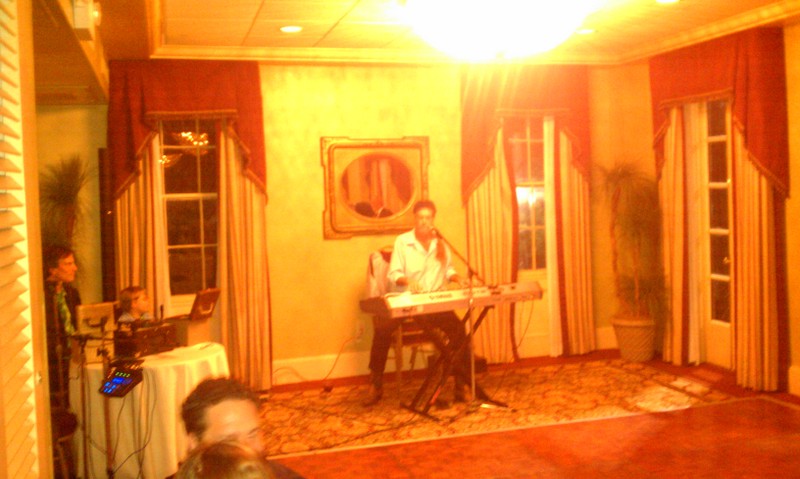
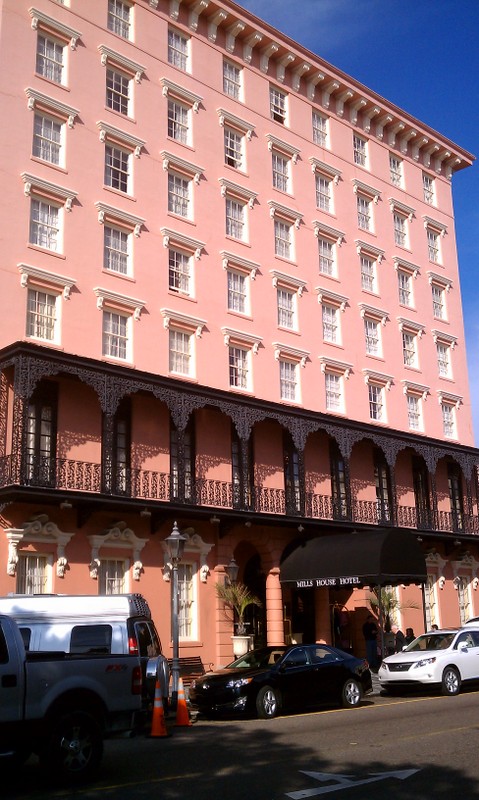
There’s a scene in ” Great Balls of Fire ” where Sam Phillips, the owner of Sun Studios who discovered Elvis, Johnny Cash, and Carl Perkins, is rhapsodizing over his other client Jerry Lee Lewis’ playing with ” a black left hand, and a white right hand”, seemingly drawing from the best of classical, pop, blues, and gospel to create his own inimitable sound,  which some were already calling ” rock and roll “. Regrettably, the Killer’s demeanor and demons kept him from fortune, but his fame lives on in the art form for which he, Little Richard, and Chuck Berry are rightly called Creators, and in the keyboard stylings of contemporaries like Cocoa Beach, Florida’s own Reverend Billy C. Wirtz. The Rev was at his righteous best on Saturday night, knocking out the lucky attendees of a private party in the Robert E. Lee Room of Charleston, S.C.’s lovely Mills House hotel, where a step outside onto the wrought-iron balcony places you in the footsteps of General Lee as he gave his Secession Speech to a cheering throng in the run-up to the Civil War.

Mills House

The Mills House, amazingly still standing on Sunday morning!

The revelry was triggered by the 60th birthday of trial lawyer/ Nassau County, FL socialite    ( now there’s an oxymoron)/ bon vivant Teri Sopp, who commissioned the Rev to save any souls left standing after a Massive Night on the streets of Chucktown.

The Rev bangs out ” Happy Birthday ” for the Guest of Honor!
( Nanker can be seen Stage Left, searching for The Lost Tanqueray – Ed. )

Drawing upon the legacies of the Killer, Brother Ray, and Fats, as well as his own hilarious repertoire of modern-day chronicles of South Florida living– when he lead the crowd in a chorus of ” drive, Granny, drive ” while peering through an imagined steering wheel, we could all relate– Billy C. kept the dance floor jumpin’ and sides bustin’ with his social commentary, crowd engagement, and deft handiwork on the keys. Blazing through  signature tunes  ” What I Used To Do  All Night Takes Me All Day to Do “, ” Stairway to Freebird”, and ” Granny’s At the Wheel “, as well as Jerry Lee’s ” Whole Lotta Shakin’ Goin’ On “, Billy gently poked fun at conservatives, religion, pop culture, and commercialism ( his ” Waffle House Fire” is a crowd pleaser) with Parkinsonian gesticulation and  comic facial expressions that punctuated the lyrics. Victor Borge meets Mojo Nixon!

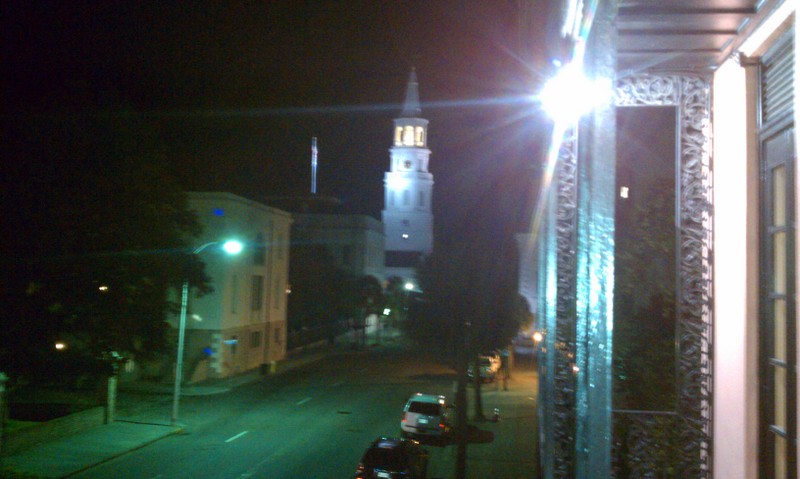
As the charming Aiken, S.C. native wound up his set to rousing applause, I drifted out to the balcony and stood in General Lee’s steps, gazing down Meeting Street toward St. Martin’s, wishing Billy C. were in the pulpit the next morning spreading his irreverent gospel.

” Four generations/ whole lot has changed/Robert E. Lee/ Martin Luther King/Proud of the glory/stare down the shame/ duality of the Southern Thing” — Patterson Hood

Charleston's Meeting Street

Blues at the Crossroads 2: Muddy & The Wolf, Guthrie Theater, Minneapolis, MN, 2/4/13

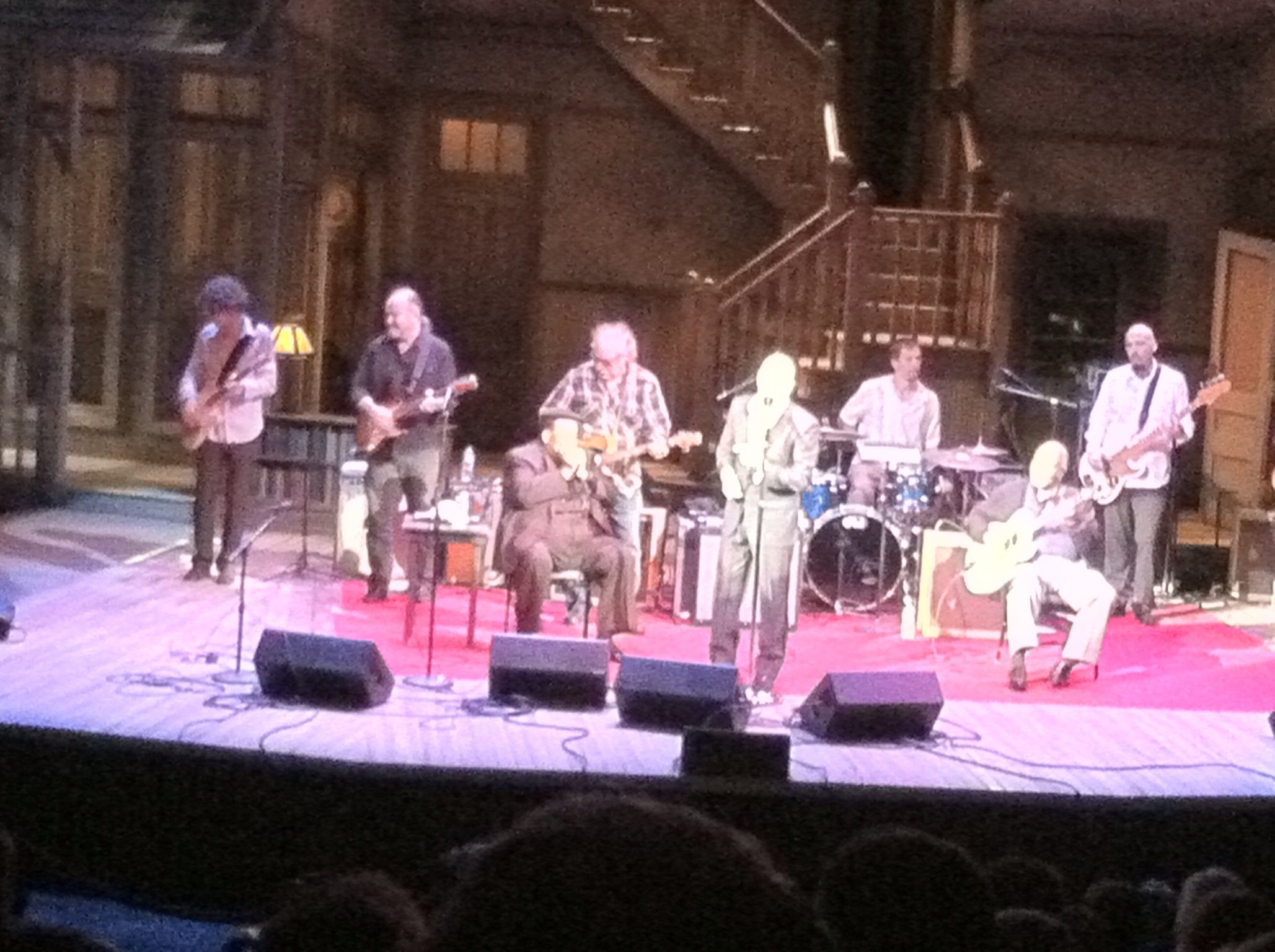
“Got their mojos workin’!”; Seated: James Cotton (L), Jody Williams (R); Standing: Tinsley Ellis (2nd L), Bob Margolin (3rd L); Kim Wilson (Center) with the rest of The Fabulous Thunderbirds arrayed behind him

BLUES AT THE CROSSROADS 2: MUDDY & THE WOLF, GUTHRIE THEATER, MINNEAPOLIS, MN, 2/4/13

Blues at the Crossroads 2 followed the same successful formula as the original tour from 2011: choose a theme based on the music of an iconic blues legend (2011: The Robert Johnson Centennial; 2013: The Music of Muddy Waters and Howlin’ Wolf); showcase two senior citizens of the blues (2011: David “Honeyboy” Edwards and Hubert Sumlin; 2013: James Cotton and Jody Williams); add some special guests (2011: Cedric Burnside and Lightnin’ Malcolm; 2013: Tinsley Ellis and Bob Margolin); and pick a band to back everyone up (2011: Big Head Todd & The Monsters; 2013: The Fabulous Thunderbirds). The result is like trying to make supper out of party hors d’oeuvres: lots of tasty bites, for sure, but ultimately one is left hungry for more.

Concerts held at the Guthrie during its busy performance season invariably take place on a Monday evening (the traditional theater off night), and the musicians set up right smack dab on the set of whatever play happens to be staged at the time. On this night, the play was Eugene O’Neill’s “Long Day’s Journey Into Night,” with the stage set up as a cutaway view of the interior and exterior of an English country home. Before the show started, it was amusing, yet somehow appropriate, to observe some of the musicians chatting casually as they sat on the rocking chairs or leaned on the railings of the faux front porch located stage left. If you let your mind wander, you could almost imagine the scene as an old Delta farmhouse with local pickers and players wandering in and out, milling about, getting ready for their regular weekly jam session.

Kim Wilson and the Fab T’birds kicked things off with a short set of Muddy and Wolf tunes, including “Baby, How Long” and “I’m Ready,” with Kim Wilson getting some big orchestral sounds out of his chromatic harp on the latter. The first guest up was Tinsley Ellis, the Georgia-born blues rocker, who made a grand entrance at the top of the center staircase of the “Long Day’s” set. His too-brief set featured dueling guitar solos with T’bird Johnny Moeller on “I’m Gonna Quit You” and a duo with Kim Wilson on Willie Dixon’s “Red Rooster,” with Tinsley on the National steel guitar. Alas, we would not see or hear from Mr. Ellis again until the grand finale at the close of the show. More hors d’oeuvres, please!

“Steady Rollin'” Bob Margolin was up next. Margolin and the venerable James Cotton were bandmates of Muddy Waters from the mid-70’s until Muddy’s death in 1983, a period of time that saw Muddy’s career gain a boost from his association with Johnny Winter’s Blue Sky records. Margolin recalled those days as a member of Muddy’s band, sparking the T’birds with some furious bottle-neck work on his Telecaster. Then, like Tinsley Ellis before him, he was gone; off to the rocking chairs and porch railing at stage left. These cocktail weenies and meatballs just ain’t gonna cut it!

Kim Wilson takes a stroll

Kim Wilson takes a stroll

Wilson and the T’birds closed out the first half of the program with another short set, bringing unannounced newcomer Jeremy Johnson onstage to join them on guitar. Wilson took the spotlight on Sonny Boy Williamson’s “Early In The Morning,” with his unmiked stroll halfway up the center aisle of the Guthrie, tweeting the high notes on his blues harp all the way. As if that piece of showmanship wasn’t enough, Wilson engaged in an insufferably long, self-indulgent harp workout on the final song of the first half, sending the band offstage for what seemed like an eternity before bringing them back to wrap things up. A famous man – it was either Karl Marx or Mr. Rogers – once said, “Sharing is caring.” While we’re all in awe of your prowess on the mouth harp, Mr. Wilson, there is such a thing as too much of a good thing.

Following the break, Wilson & the T’birds were back to open the second half of the show, starting with Howlin’ Wolf’s “You’ll Be Mine,” and including Eddie Boyd’s chestnut, “Five Long Years,” with Wilson once again taking center stage on the chromatic harp. T’bird guitarist Mike Keller got in a nice solo on the Wolf’s “Riding With Daddy,” to finish off the set, before bringing out the special guests.

First up was 78-year old Jody Williams, an obscure but important figure in blues history, who, as a teenage guitarist, was part of the 1954 recording sessions that produced such Howlin’ Wolf classics as “Evil (Is Goin’ On)” and “Forty-Four.” Mr. Williams took the stage carefully, as befits a man his age, and seated himself stage right, where he played an unnamed double-shuffle instrumental, before switching to familiar songs associated with The Wolf: “How Many More Years” and the Willie Dixon-authored “Spoonful.” As befits a musician more accustomed to the studio than the stage, Mr. Williams seemed uncomfortable in performance, and his guitar playing was tentative, causing the T’birds to adjust the tempo of the song on the fly to stay in sync. Still, he received a rousing ovation when he finished his short set.

By contrast, blues harp pioneer James Cotton was full of personality when it came his turn to take the stage. Mr. Cotton was the third of Muddy Waters’ harp players, after Little Walter and Big Walter Horton, and he has recorded and led his own band ever since Muddy’s death. Touring regularly, despite his advanced age and arthritic knees, Mr. Cotton is outgoing and engaging onstage, with a harp style that’s long on power, at the expense of finesse. He was smiling and playful and clearly seemed to be enjoying himself. In deference to Mr. Cotton’s status, Kim Wilson actually left the stage briefly, allowing the old master to have the harp spotlight all to himself. Wilson rejoined the festivities for a nifty trio workout, with Messrs. Cotton and Margolin, on Son House’s “I Got A Letter This Morning.” The evening ended with everybody back onstage for an extended version of Muddy’s signature tune, “Got My Mojo Workin’,” with Cotton and Wilson – mentor and mentoree – engaging in a playful harp dialogue.

With the show clocking in at roughly two hours, excluding the break between sets, it was certainly a solid evening’s worth of entertainment. Still, it left one questioning the balance of time between the artists. Was it really necessary for Wilson and the T’birds to have opened the second half of the evening by themselves? Why couldn’t Messrs. Ellis and/or Margolin have joined them right away? It seems a shame to have had these two formidable bluesmen out on stage for only their brief 15-20 minute sets, plus the final group number. And, while it is understandable to not want to overtax the senior citizens, the world would benefit from more exposure to Messrs. Cotton and Williams, who are some of the last links to the founding fathers of the blues. Perhaps when it’s time to put together Blues at the Crossroads 3, the producers will consider dividing up the stage time more equally among the performers. Until then, we can at least thank them for putting together these tours, which celebrate the historical antecedents of this most fundamentally American music form.

Small Wonder: The Phenomenal Ruthie Foster, Hopkins Center for the Arts, Hopkins, MN, 1/29/13

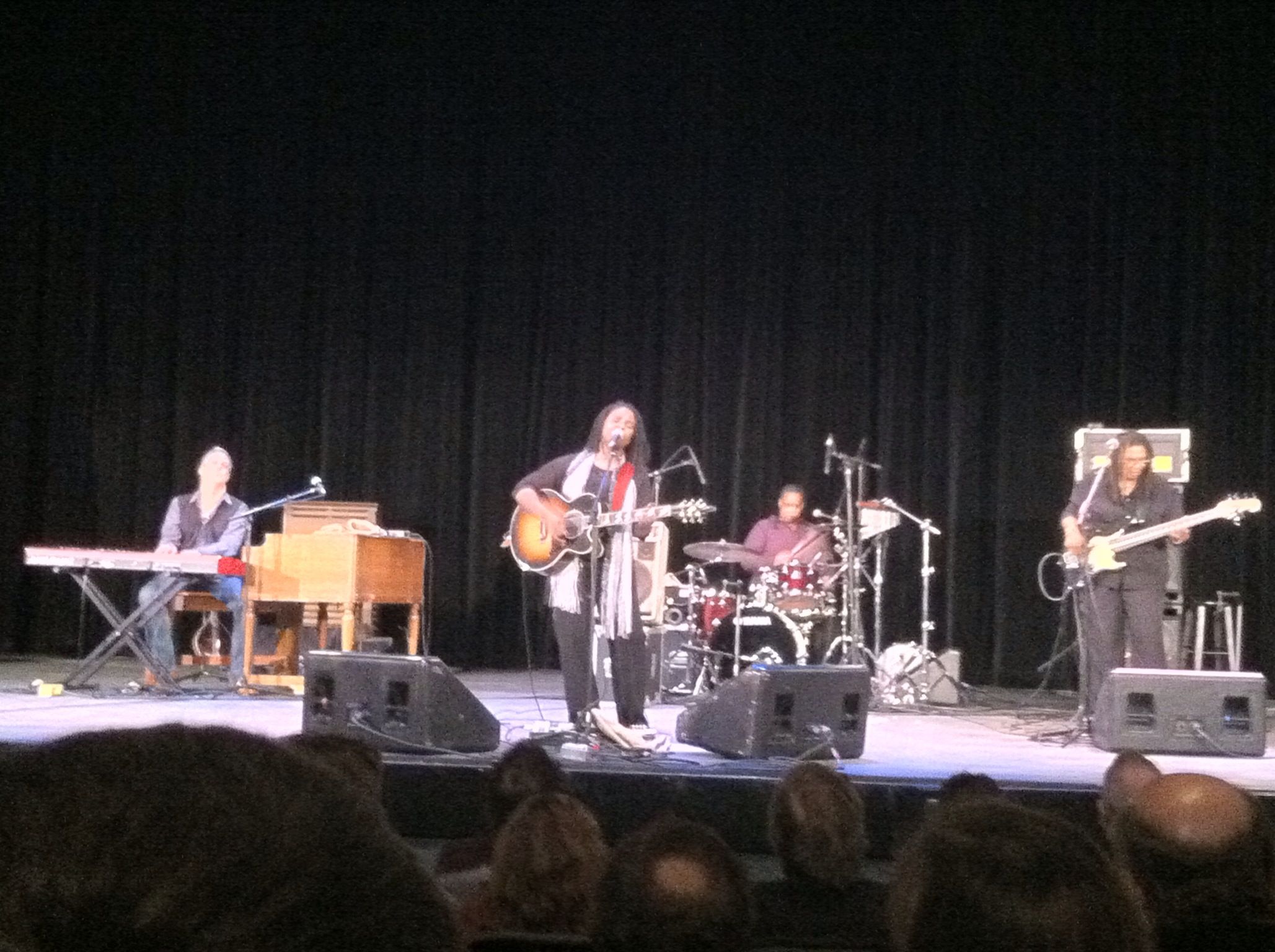
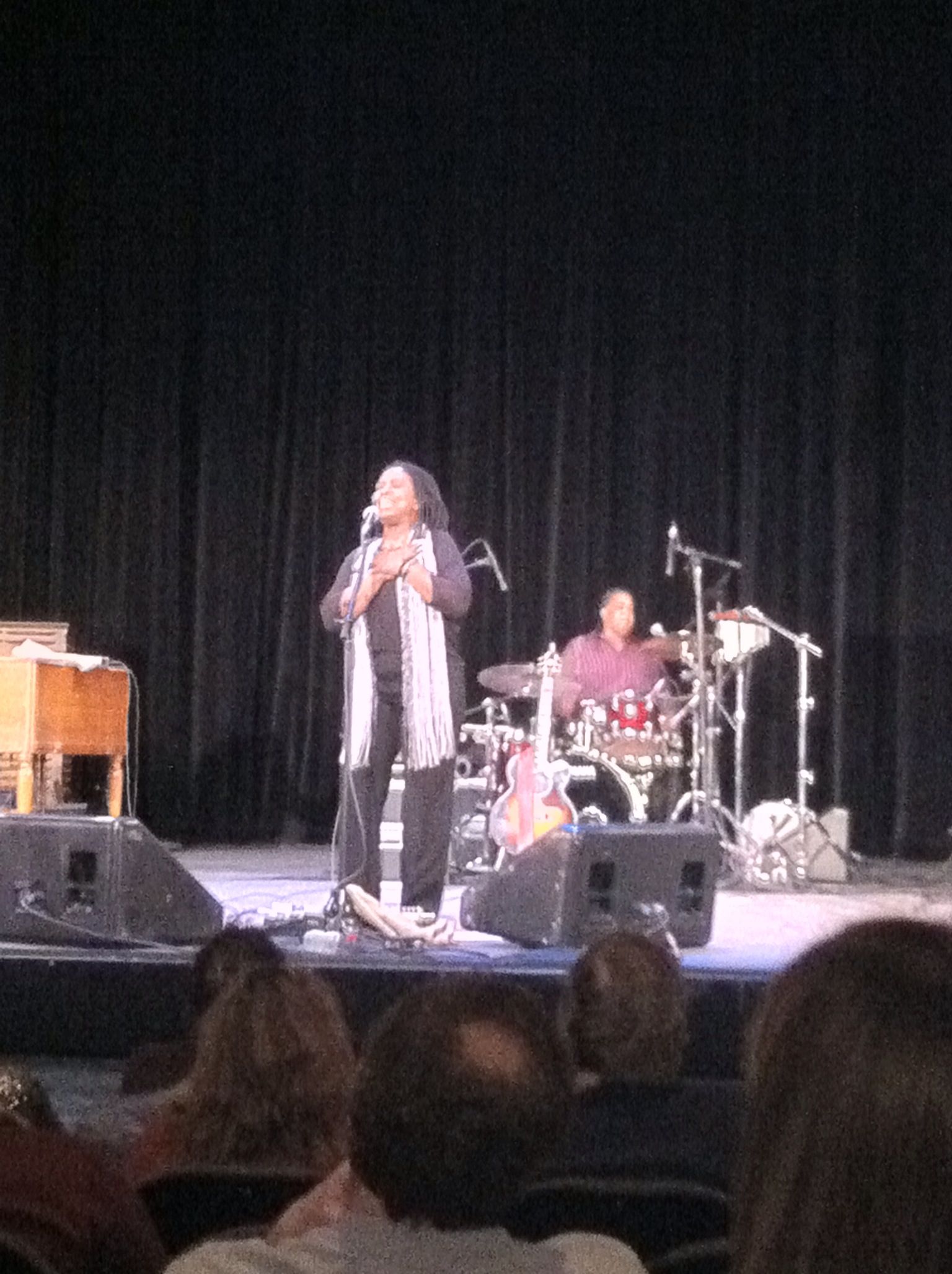
Ruthie Foster and band

Ruthie Foster and band

(Ed. note:  Struggling mightily agaiinst writer’s block, and well past deadline, Harry Gebippe offers these long overdue observations about the recent Twin Cities’ appearance of the diminutive but dynamic Ruthie Foster.)

The roots of Ruthie Foster’s musical genealogy lead back to Sister Rosetta Tharpe (“The Godmother of Rock ‘N Roll”), Mahalia Jackson (“The Queen of Gospel”), and Aretha Franklin (“Lady Soul”), with branches stretching out into country, blues, and even pop, Ruthie’s music pays homage to the past, celebrates the present, and never strays too far away from the church, for it is there that she first found her voice, as a teenage soloist in her local Texas choir.

Immediately upon taking the stage at the Hopkins Center for the Arts, Ruthie introduced her band (Samantha Banks on  drums, Tanya Richardson on the 5-string bass, and Twin Cities native Scottie Miller on the B-3, electric piano and mandolin) – a classy gesture that for many headliners is an end of the show afterthought.  Ruthie warmed up with the Patty Griffin-penned “When It Don’t Come Easy,” a power ballad that did not tax her considerable vocal prowess.  Despite having just returned from Europe the day before, she and the band showed no signs of jet lag; instead, all were in high spirits, engaging with each other and the audience immediately.

Next up was Lucinda Williams’ “Fruits Of My Labor,” an early set show-stopper, showcasing Ruthie’s superb phrasing; sustaining key passages of the song, then snapping off the end of the lyric.  While Ms. Williams deserves much credit for writing this smoldering ballad, Ruthie Foster OWNS this song, much as Mary Chapin Carpenter owns another Lucinda-penned tune, “Passionate Kisses.”

Noting that “I love to record where I like to eat!” Ruthie introduced two songs off her newest album, the Grammy-nominated “Let It Burn,” recorded in New Orleans.  “This Time” is another carefully chosen cover, written by David Hidalgo and Louie Perez (Los Lobos), while  “Aim For The Heart” is Ruthie’s own composition. Of the latter, she remarked, “I had written the song with Bonnie Raitt in mind, sent it to her people, and they promptly sent it back!”  Ms. Raitt might want to reconsider that decision, as “Aim” is a mid-tempo rocker, well-suited to Bonnie’s blues/rock style.

Ruthie is careful to pay her respects to the strong African-American women artists whose legacy she embraces, by celebrating their music.  Maybelle Smith’s “Ocean of Tears” was delivered with a slinky “double shuffle” blues beat, reminiscent of Howlin’ Wolf, while Sister Rosetta Tharpe’s joyous “Up Above My Head” took us right back to the church.  Get out your fans, sisters, and let’s have us a good givin’!

The centerpiece of Ruthie’s shows is her signature rendition of “Phenomenal Woman.”  Featuring the words of the writer Maya Angelou set to music, “Phenomenal Woman” is a proud feminist statement, proclaiming the joys of womanhood.  Ruthie set aside her guitar for this one, bending her knees like a weight lifter, throwing her head back and unleashing the full power of her formidable voice.  Microphone?  We don’t need no stinkin’ microphone!   The folks in downtown Minneapolis could probably hear her, let alone those of us in the concert hall.  It was an amazing performance, earning her a well-deserved mid-set standing ovation.

"Phenomenal Woman"

“Phenomenal Woman”

From the gospel to the blues for the next two songs: Son House’s “People Grinnin’ In Your Face,” with hand-clapping accompaniment from the audience, followed by “some front porch pickin'” on a Mississippi John Hurt country blues number, that featured Scottie Miller on mandolin and Samantha Banks doing yeoman work on the spoons.  Can’t recall the last time I witnessed a solo on the spoons, but Ms. Banks’ is truly a virtuoso on that primitive percussion instrument.

Ruthie ended her eclectic set with a wide range of songs, from the gentle country blues of “Hole In My Pocket,” with its singalong chorus, to a straightforward rocking version of David Crosby’s “Long Time Gone,” to her cover of Adele’s power pop ballad, “Set Fire To The Rain.”  But far and away the most interesting song in this last segment of her set was her take on “Ring Of Fire.” The song was totally deconstructed into a slow blues number, completely unrecognizable from the original, and with Ruthie’s most understated vocal of the night.  It was a bold, fascinating move by Ms. Foster, appropriating one of Johnny Cash’s signature songs and remaking it into her own, much as The Man In Black himself did near the end of his life, when he released his American Recordings series of sparely-arranged rock ‘n roll songs.   In that sense, it was the perfect homage to one of the most independent spirits in contemporary music history.


Marshall Crenshaw and the Bottle Rockets

Concert review- Marshall Crenshaw and the Bottle Rockets, Ponte Vedra Concert Hall, Ponte Vedra Beach, FL 1/25/13

(The ubiquitous Mr. Phledge gets some religion… alt-country style! — Ed.)

IMAG0860

” Welcome to the Hotel Ponte Vedra..”, as Don Henley might say!

” If you give me some direction/ I would give it a try/ It’s Friday night wherever I am/ And I feel like gettin’ high…” – Brian Henneman, ” Alone In Bad Company”

We can all relate! The little Baptist church on A1A just north of Guana State Park may have saved lots of souls over the years, but its mission was never more righteous than in its present incarnation as a concert venue. Praise the Lord and pass the earplugs! The tony Beaches area ( that’s PON- tuh  VEE-druh to the locals ) has golf and churches out the wazzoo, so the conversion ( take that, evangelicals!) to a concert venue has been widely applauded, and rightfully so. The former sanctuary is now an acoustically balanced listening room with comfy padded seats and a targeted capacity of about 800 lost souls seeking redemption through rock and roll.

IMAG0866

Hold that collection plate– I gotta hit the merch table!

With the Bottle Rockets winding their way south from the Famous Dave’s gig in Minny so ably reviewed by Harry last month to front and back Marshall Crenshaw’s tour, the odds seemed good to avoid any lingering lightning strike that might be waiting for one last heathen to cross that threshold. Does ” don’t Tase me, bro! ” count as a prayer?

IMAG0871

Not alone, but in bad company nonetheless!

The Rockets hit their Opening Act mark, striding onstage unassumingly at 8pm sharp, and promptly tore into their alt-country rock catalog with great vigor and enthusiasm that belied the thin crowd of jaded Ponte Vedrans for whom standing O’s are apparently reserved for the Symphony. Drawing heavily upon the tracks from their monster ” Live in Heilbronn, Germany” CD, Brian Henneman lead the band through ” Get Down River “, ” I Wanna Come Home “, ” Alone In Bad Company “, and their well-known ” Thousand Dollar Car “, which Henneman claimed could be found on the ” Springsteen conversion table on our website ” as the Bottle Rocket equivalent to  ” Born To Run “.  The band’s own twenty-year run was evident in the close guitar interplay between Horton and Henneman and the steady thumping of the rhythm section. Noting that Tom Petty was one of his favorite songwriters, Henneman shared his joy in ” playing a Rickenbacker in the state of Florida ” as a tribute to Gainesville’s gift to rock. The highlight was perhaps the driving ( pun intended) rocker ” Radar Gun “, with Horton blistering the strings to the crowd’s delight.

IMAG0867

” Get down, river, get down! “

The tight, all-too-short set ended with Henneman’s promise to turn like genies into the         ” Marshall Crenshaw Band “, which they magically did after a brief intermission.

Horton, Crenshaw, Henneman

Marshall Crenshaw and the Bottle Rockets

Marshall and the Rockets have compatible tastes and mutual admiration, and the pairing worked well as Crenshaw played a rousing set of original tunes highlighted by two outstanding covers of Richard Thompson’s ” Valerie ” and Buddy Holly’s ” Crying, Waiting, Hoping “, and his recent vinyl release ” I Don’t See You Laughing Now “. Crenshaw has adapted to the current self-release business model by putting out a new EP on wax every couple months, and touring behind old favorites like  ” Mary Anne” and ” Cynical Girl “. His voice was clear, strong, and charming, and his guitar chops were welcomed into the          ” three guitars or a life of crime ” lineup with Henneman and Horton. But unlike any church service known to mankind, the show ended all too soon, with the lights coming on and people giving the Peggy Lee ” Is That All There Is? ” look to their fellow worshipers .

A final note of props and love to local promoter Tib Miller for bringing great acts to small venues at considerable financial risk. Buy that man a drink the next time you see him, and get your ass out to the rock show!

( Our apologies for the photos. Phledge has apparently found a camera app that renders photos like his world view– dark, unfocused, and without perspective! — Ed. )

Kelly Hogan at The Turf Club, St. Paul, MN, 1/24/13

Kelly Hogan (center); Nora OÇonnor (L), Gerald Bell (rear), Casey McDonough (R), Turf Club, St. Paul, MN, 1/24/13When it came time for Kelly Hogan to record her new solo album last year, she had no trouble calling in several well-placed chips. All she had to do was go down her Contacts list (Rolodexes are soooo 1970!) of all the people who she’s worked with over the last several years, to come up with a veritable who’s who of indie-rock and alt-country artists, ready, willing and able to contribute to her project. Robyn Hitchcock provided the title track, “I Like To Keep Myself In Pain;” Andrew Bird and Jack Pendarvis collaborated long-distance to create “We Can’t Have Nice Things;” and old friends and cohorts M. Ward, Jon Langford, Stephen Merritt (The Magnetic Fields), and Jon Wesley Harding, among others, all provided compositions.  With an all-star band, featuring Booker T. Jones, Scott Ligon (lately of NRBQ), Gabriel Roth (Dap Kings) and veteran drummer James Gadson, it’s no surprise that the resulting CD made several Best Of 2012 lists.

No such luminaries joined Kelly on her recent visit to The Turf Club, on a cold, January night, but the trio of veteran Chicago musicians forming her backup band – Nora O’Connor (bass – and a Bloodshot recording artist in her own right), Casey McDonough (guitar) and Gerald Bell (drums) – provided outstanding, understated accompaniment and sweet, pure vocal harmonies all night.  Indeed, the only thing lacking was Booker T’s swirling Hammond B-3 organ, which was particularly missed on songs like “We Can’t Have Nice Things,”and “Haunted,” where no amount of furious strumming nor 4-part harmonizing would fill in the gap.

But, that’s a minor quibble against an otherwise outstanding night of music.  Opening with the country-flavored title track to the new CD, Ms. Hogan kept the volume level low with “Nice Things,” before stepping up the pace with the self-penned “Golden.” Introducing the latter, Kelly noted that she’d written the song, “for my friend, Neko Case, who was having a really shitty day.”  The lyrical admonition to “Go on, show them what you’re made of!” no doubt resonated well with her long-time musical cohort.

It was interesting to observe the difference in demeanor between the singing Kelly Hogan and the between-songs Kelly Hogan.  Although loose and fun-loving throughout, when singing, she seemed to enter the “zone” that artists and athletes speak about, with her gaze fixed on the ceiling or over the heads of the audience, thoroughly engrossed in the music.  Between songs, she was a bundle of nervous energy, fidgeting with her hair, chatting with her bandmates, and free-associating with the audience.  Relax, Kelly!  You’re clearly among friends.  Even during the slower, melancholy numbers (of which there were several), the normally boisterous Turf Club crowd kept the murmuring to a low volume.  Some fans delivered song requests on napkins to the front of the stage and one fellow even presented Kelly with a bag of fresh eggs (?).  A puzzler, that one, but Kelly loved it.

After reaching back to her last previous solo album, 2001’s “Because It Feel Good,” for the uptempo “No, Bobby Don’t,” Ms. Hogan subdued the mood again with the sad, hushed torch song, “Daddy’s Little Girl.” Delivering the opening lyric (“My name is Frank Sinatra”) in a voice barely above a whisper, Kelly built up the volume gradually with her crystal-clear, perfect-pitch voice, without ever losing the song’s emotional punch.  Somebody hand me a Kleenex.

Still favoring the melancholy, Ms. Hogan introduced “Plant White Roses,” as “the saddest song about gardening ever written.” Her voice cracked slightly at the end of Vic Chesnutt’s “Ways Of The World,” reaching for a high note, whether from emotion or simply the dry January air in Minnesota.  Either way, it was effective.  She picked up the pace somewhat with The Handsome Family’s lilting “Come Back To The Valley” featuring beautiful, subdued harmonizing and accompaniment from the rest of the band.  Showing that she could afford to be choosy with her selections for the new CD, Ms. Hogan then sang one that didn’t make the cut, Jeff Tweedy’s “Open Mind.”

But, it was getting later in the evening and it was time to pick up the pace, starting with the finger-snapping “Sleeper Awake,” followed by “my favorite love song,” “Papa Was A Rodeo,” from her 2000 solo release, “Beneath The Country Underdog.”  “Haunted” benefited from a rousing intro, somewhat offsetting the absence of the B-3 organ track on the recorded version.  Then, it was time for a guest appearance by John Munson, former bass player/singer for Semisonic and its much-loved local predecessor, Trip Shakespeare, currently a member of The New Standards.  Munson towered over everyone else on stage, and, still wearing his immense, furry parka, he drew comparisons to a certain legenday Northwoods lumberjack, causing Ms. Hogan to quip, “Where’s your ox?”  Best line of the night, hands down!

""Where's your ox?

“”Where’s your ox?

Ms. Hogan professed to being a big Trip Shakespeare fan during her years growing up in Georgia, and she and the band did a credible version of one of TS’s better known tunes, “Snow Day,” with Nora O’Connor ably handling the opening verse.

The set closed with a Kenny Rankin tune, “Do It In The Name Of Love,” featuring some tasty brushwork by Mr. Bell, and a sweet guitar solo by Mr. McDonough, to go along with Ms. Hogan’s beautiful jazz phrasing.  “Pass On By,” finished off the set before the three-song encore set, beginning with the quiet, acoustic “Vanishing Girl.”   Reverting back to her usual role as the consummate backup singer, Ms. Hogan switched places with Ms. O’Connor, giving Nora the spotlight for a country-flavored song that I believe was called “Leaving You Has Been On My Mind.” And, reversing its order from the CD, Kelly Hogan sent us off into the cold January night with the low-key opening track, “Dusty Groove.”

Very likely, the next time Ms. Hogan will grace us with her presence will be in her more familiar role, singing backup for the likes of Neko Case, Andrew Bird, The Mekons, or any of the many artists with whom she’s collaborated over the years.  As such, it was a rare and pleasant treat to see her step out front and assume the role of headliner.  Here’s hoping it won’t be another decade between solo albums; in the meantime, start sending her your compositions, all you hot-shot songwriters out there, lest you fail to make the cut the next time around.

Martha Reeves and The Vandellas, Dakota Jazz Club, Minneapolis, MN, 1/10/12

Martha Reeves and The Vandellas, turning up the heat at the Dakota Martha Reeves and The Vandellas, turning up the heat at the Dakota[/caption]

Mention the word “Motown” to a member of Generation X, Y or Z and you’ll likely draw a blank stare. I know, I’ve done it. The magnificent music empire that Barry Gordy, Jr. forged in Detroit in the 1960’s – spawning such artists as Marvin Gaye, Stevie Wonder, The Supremes, The Jackson 5, The Temptations and The Four Tops – is a part of our musical heritage that is in danger of being forgotten. More than just a record label, Motown was an instantly recognizable sound, blending the call-and-response of gospel, the sweet harmonies of doo-wop and the persistent beat of rhythm & blues. The Motown Sound was slicker and more sophisticated than its grittier Southern cousin, the Memphis soul music produced by Stax Studio. And, boy, could you dance to it!

Like Stax, Motown’s heyday ended by the early 70’s. Few of the classic Motown artists are still plying their trade today. Stevie Wonder gets trotted out for the occasional awards program guest shot, and the casino circuit has kept alive the careers of Smokey Robinson, Gladys Knight, and various iterations of the Temps and the Tops. The dwindling number of active Motown artists made Martha Reeves and The Vandellas return engagement at The Dakota all that more special.

Taking the crowded stage with her sisters, Lois (a Vandella since 1967) and Delphine (who joined the group in 1980), Martha opened with “Quicksand,” with the 8-member band already revving up the instantly recognizable beat. The sequined septuagenarian was in good voice, upbeat and chatty, with a well-rehearsed stage patter, familiar to those of us who had seen her last year. Following “Quicksand” with the equally upbeat “Ready For Love,” Martha then introduced “Our first recording on Motown,” and asked the audience to try to recall “Where you were, what you were doing, and who you were doing it with,” leading into “Come And Get These Memories” – a make-out song, if ever there was one.

Ït's like a heat wave!
Returning to more familiar territory, Martha related a story about having gone to a certain movie with her son, sitting in the front row, and her son admonishing her not to make a scene during the movie. “The movie was ‘Good Morning, Vietnam,’ and when Robin Williams played this song on his radio show, you bet I jumped up and made a scene!” The song, of course, was “Nowhere To Run,” one of Martha & The Vandellas biggest hits and most instantly identifiable recordings.

The setlist interspersed the group’s well-known songs with carefully chosen covers. Following their hits, “Love like Yours (Don’t Come Knockin’Every Day)” and a too-slow “Jimmy Mack,” Martha introduced their version of George Harrison’s “Something,” by noting with pride that, although The Beatles caused massive traffic jams when they came to the U.S., when Martha & The Vandellas and the rest of the Motown Review went to England, “We shut down Heathrow!” Back to the hits, with the bouncy, uptempo 1964 smash “Heat Wave,”before Martha and her sisters paid tribute to the late Marvin Gaye, covering “What’s Goin’ On?” The singers were able to take a breather on this one, as each of the eight members of the band was given a solo, and an individual shout-out by Ms. Reeves. Classy! Next up was the Johnny Bristol-penned tearjerker, “No One There,” sung by Martha in a quavering voice that threatened to break at any minute.

But, you can’t end the show on a downbeat note, so it was time for THE BIG ONE: “Dancing In The Streets,” one of the biggest selling singles of all time, recorded by everyone from The Mamas and The Papas and Neil Diamond, to Van Halen and the David Bowie/Mick Jagger duet. Although Martha got no takers when she asked the audience to “Get up and do the ‘Temptation Walk’ with me” during “Jimmy Mack,” for this song, she had no difficulty rousing the crowd from their seats to move and clap along to the infectious rhythm. The stage version included a medley of Motown hits, plus a nod to Stax, with the inclusion of Eddie Floyd’s “Knock On Wood.” Martha and The Vandellas left the stage as they had entered, with the band in high gear accompanying them.

If you’ve followed us at all, you know that seeyouattherockshow isn’t a nostalgia website. While we love and appreciate older, well-established artists, we’re also eager to sing the praises of newer or lesser known musicians. In the case of Martha Reeves and The Vandellas, we pay tribute not just to their own formidable catalogue, but also to their role as purveyors of an important and influential style of music that is fading from public view. The Motown era is a significant chapter in American musical history, and we can be thankful that Martha Reeves and her sisters are still out there to remind us of that. So, pay attention, Gen X thru Z-ers! Do yourselves a favor and drag out some of Mom’s & Dad’s old Marvin Gaye, Supremes, Martha & The Vandellas, and Temps & Tops records and give a listen. There will be a test!

Drive-By Truckers and North Mississippi Allstars

Concert Review- DBT and NMA- 930 Club, Washington, D.C. New Year’s Eve 2012

With the sound of Jack Bruce’s harp on ” Traintime ” in his ears, Nanker rides the rails to DC to usher in the New Year with some good sweet tea and Southern hospitality! — Ed.

Matt Patton, Patterson Hood, and Mike Cooley at the 930 Club, NYE 2012

Matt Patton, Patterson Hood, and Mike Cooley at the 930 Club, NYE 2012

“Neil Young always said that ‘Sweet Home Alabama’ was one of his favorite songs, and legend has it he was an honorary pall bearer at Ronnie’s funeral. Such is the Duality of the Southern Thing..” – Patterson Hood, ” Three Alabama Icons “

Quentin Tarantino was explaining to Teri Gross on ” Fresh Air ” about the seminal moment in “Django Unchained ” when the enlightened German dentist turned bounty hunter explains to the recently purchased and freed Django the dynamic they face in 1858 Mississippi as they kill off wanted train robbers now working as field bosses on plantations owned by slave traders: “They are selling living people. I’m selling corpses “. These contradictions played themselves out daily during the Civil War, with families split down the middle and kinfolk shooting at each other.

Southerners since then have had to stay “proud of the glory”, yet “stare down the shame “, as Patterson says, and embrace the duality of their heritage. These contradictions are  evident today in our capital, which is bordered on the North by a Union state, on the South by a Confederate state. Last week the fiscal cliff resolution was rejected by 80% of House Republicans from the Deep South and approved by 80% from the Northeast. Such is the duality of the Capital Thing.

As I climbed off the long escalator from the U Street METRO station, just north of Shaw and Howard Universities, my first sight on the street was the African-American Civil War Memorial. I’d like to think that Tarantino’s Django took his wife North, settled her in, then went back wearing the uni of the Army of the Potomac to give more ass whuppin’s to the slavers, like the brave men in the Memorial.  The Buffalo Soldiers lived the  duality of that era as armed  freed slaves riding back into the South, where many of the locals had never seen a black man on a horse.

The duality of the keyboard/guitar player Jay Fernandez

The duality of the keyboard/guitar player Jay Fernandez

Thankfully, my mission was merely to ride planes, trains and subways to the 930 Club, where two bands born and schooled in the Deep South were rocking the District with music that  reached back both to the Delta blues of antebellum Mississippi and the melting pot of George Wallace’s era in Muscle Shoals and Memphis. The delightful pairing was not coincidental.  The Dickinson boys have known Patterson since they were teens, and the bands go back to Hood and Cooley’s time as Adam’s House Cat. Both bands were in flux; the Allstars’ epic bassist Chris Chew has struggled with health issues and this show was a mere duo. The DBT have only done a few full band shows since the departure of bassist Shonna Tucker in November, 2011, and were apparently surprised by pedal steel whiz John Neff’s checkout a few weeks ago. No new member has been announced, although  Matt Patton from the Dexateens played these three shows, as well as several last year, and looks like a great choice to join the band. He had a huge shit-eatin’ grin the whole night, and knew the deep DBT catalog well enough to cover the audibilizing ( that’s right; they never use a set list, walking onstage with only the opening number agreed) Hood and Cooley as they called out the next tune.

Patton marvels as Patterson shreds!

Patton marvels as Patterson shreds!

The Dickinson boys stoking the fire

The Dickinson boys stoking the fire

The Dickinsons strolled onstage unnoticed and started before some even knew they were on, despite the presence of a sizeable fan contingent, some of whom professed not to know the DBT. The stripped-down duo lineup is a great presentation of the Hill Country blues legacy from R.L. Burnside, Kenny Brown, and Junior Kimbrough all the way back to Fred McDowell, with the sons of Mudboy bringing the elemental rhythms and universal lyrics to life for this generation of fans. Indeed, it’s a joy to see how powerful this true American roots music is for the college kids pogoing around geezers like me. Luther and Cody shifted tempos and tunes easily with glances, and the joy they share carrying out their Dad Jim’s prophecy that ” you’ll always be better together than apart ” was evident. DBT drummer Brad Morgan stepped in on his kit when Cody strapped on the washboard, and Luther was so engaged that he sat on Cody’s kit and banged a complementary beat, a la Jaimoe and Butch Trucks with the Allmans. I’d loved to have seen Cody grab a guitar and trade some licks with Luther, and of course, Big Chew was missed. But a great Duo show  ended like a stopped carousel when they’d ” hit their mark” as the Opening Act and politely slipped offstage to ringing applause. Like the gentlemen they were raised to be, the humble Dickinsons could be seen pitching in with the roadies and the 930 Club crew to clear their gear and set up for the DBT. Cody bantered laughingly with the fans down front as he coiled cords and packed gear.

" More washboard!", the ladies cried, and Cody obliged!

” More washboard!”, the ladies cried, and Cody obliged!

Soon, the mikes were lined up, the axes stacked, and Cooley and Hood were marching onstage to roars as they launched into Patterson’s ” The Buford Stick “, followed quickly by Cooley’s ” Uncle Frank “. Many fans knew every lyric, every punctuated beat sturdily pounded by Morgan. The set was tilted toward Southern Things, with many selections from ” Southern Rock Opera ” and the early CDs, including 2003’s finally soon-to-be released “Alabama Ass Whuppin’ “.  Patterson revealed that the missing master tapes had recently been located and delivered by Rob Malone, and the long-bootlegged album will be released “on vinyl for y’all to enjoy while we’re workin’ on the new one”, according to Hood. The entire NYE show is available on the DBT Facebook page, and the set list looks like this:

01. The Buford Stick
02. Uncle Frank
03. The Company I Keep
04. Gravity’s Gone
05. The Three Great Alabama Icons >
06. The Southern Thing
07. 72 (This Highway’s Mean)
08. Steve McQueen
09. Marry Me
10. Road Cases
11. Get Downtown > Happy New Year
12. Don’t Be In Love Around Me
13. 3 Dimes Down
14. Margo and Harold
15. Love Like This
16. A World of Hurt > A Ghost To Most
17. Heathens
18. Birthday Boy
19. Hell No, I Ain’t Happy
20. Encore call
21. Zip City
22. Let There Be Rock
23. Shut Up and Get on the Plane
24. Buttholeville
25. People Who Died

Hood, Patton, and Cooley

Morgan, Hood, Patton, and Cooley

As they neared midnight at the close of  ” Get Downtown “, Hood counted down 2012 to the release of hundreds of balloons from the ceiling as he hollered, ” Happy New Year, motherfuckers!”, and with a twist on ” World of Hurt”, ” It’s fuckin’ great to be alive!”  The band plowed through the rest of the set, bowed out to chanting ” DBT, DBT, DBT “, and returned for the encore with Cooley’s huge crowd favorite, ” Zip City “. Patterson called and waved the Dickinsons onstage for ” Let There Be Rock “, and I saw the wall clock read 1:15 am. The METRO stationmaster’s admonition shook me: ” You better be back here by 1:40 “. Streets jammed with drunken revelers, I raced back to the station, now crowded like Tokyo rush hour, and gave a crisp salute to the Civil War Memorial’s most Django-worthy statue as I ran down the escalator to avoid missing the last train out. A taste of the Southern Thing for the City of Duality. I wonder if Django coulda filled in on bass with the Allstars?

——Your humble Dixie correspondent, Col. Nanker Phledge

After the Scene Dies: Remembering the 400 Bar

(“Somali Children’s Center is Likely to Replace 400 Bar” Minneapolis Star Tribune, December 29, 2012)

If you weren’t aware of its place in Twin Cities musical history, you would not likely give a second glance at the nondescript 2-story red and black building on the SW corner of Cedar & Riverside in Minneapolis’ West Bank neighborhood. Walking through the side entrance (the front door was walled off long ago) was an equally underwhelming experience, revealing a long bar along the wall by the entryway, a few shabby booths and ripped up stools with uneven legs, and red, red walls throughout. But, oh, if these walls could talk, what a story they’d tell!

The news that the Sullivan brothers, Tom and Bill, were calling it quits after 17 years of running the 400 Bar was greeted with a mix of emotions by the Twin Cities’ music community: dismay at the loss of another live music venue; nostalgic reminiscing over memorable past shows; and acknowledgement that the sale of the bar is simply further evidence of the changing character of the neighborhood, as the largest Somali community outside of Somalia becomes more settled in its new surroundings. For this writer, it’s an opportunity to reflect upon the bar’s role in shaping one man’s musical tastes.

Before the Sullivans took over, the 400 Bar was part of a network of bars and clubs that made the Cedar-Riverside area a magnet for folks looking for the heart of a Saturday night. Drawing initially on the convenient patronage of students from the nearby University of Minnesota and Augsburg College, the West Bank became a destination point for young people throughout the metropolitan area, as well as out-of-towners who got the word that The Scene was here. Folk and blues artists like Spider John Koerner, Dave “Snaker” Ray and Tony Glover; Bill Hinkley and Judy Larson; Dakota Dave Hull and Sean Blackburn kept things lively at The Coffeehouse Extempore. Willie Murphy and The Bumblebees, The West Bank Trackers, Doug Maynard et al. were regulars at places like the Triangle Bar, the Viking Bar, and the Seven Corners Saloon. Pioneering local reggae/calypso stalwarts Shangoya put on many a memorable show upstairs at the old Dania Hall. Sadly, most of those venues no longer exist, falling victim to changing times, tastes, demographics and economics. (The whole scene is chronicled much better than space permits here, in Cyn Collins’ excellent 2006 book, “West Bank Boogie.”)

The 400 Bar certainly had a piece of that West Bank action. Before the bar doubled in size, to its current dimensions, the cramped stage was located right up front, behind the big window overlooking Cedar Avenue that drew in passersby wondering “Who’s playing?” Willie and the Bees could barely squeeze their 6 or 7 members onto the stage. Koerner, Ray & Glover played there often, individually or in various combinations. The West Bank was a supportive environment for Twin Cities musicians in the 70’s and 80’s and the 400 Bar played a vital role in nurturing the creative local talent base.

The character of the bar began changing when the Sullivans took over approximately in 1995. They expanded the bar into the space next door and moved the stage away from the front window and into the new space. Bill Sullivan had been the tour manager for popular local bands Soul Asylum and The Replacements, as they rose to national prominence. He and his brother, Tom, widened their search for talent and began booking lesser known but up and coming bands and artists. Bands that went on to national prominence, such as Arcade Fire, Bright Eyes (Conor Oberst), Sharon Jones & The Dap Kings, The Heartless Bastards, Elvis Perkins and Justin Townes Earle, all made their Twin Cities debuts at the 400. The Missus and I recall young Mr. Earle OPENING for The Felice Brothers at the bar – roles that would certainly be reversed today.

We were privileged to see many a fine show at the 400. Patterson Hood of the Drive By Truckers made his only two solo Twin Cities appearances there (these were true solo shows, unlike his recent appearance with The Downtown Rumblers, reviewed earlier on this site). Split Lip Rayfield chose the 400 for their Minneapolis return engagement following the death of founding member Kirk Rundstrom. The first of several times we saw Marah there ranks as one of the best bar shows ever, as we marveled at Serge Bielanko duck-walking atop the half wall separating the front and back bar area, all the while blowing a furious harp solo. The Heartless Bastards, Jason Isbell & The 400 Unit, The Baseball Project, Southern Culture on the Skids, James McMurtry, The Bottle Rockets, The Deadstring Brothers, Centro-Matic – we can thank the 400 Bar for giving us our first look at these bands, among many, many others. And, we never tired of seeing iconic local musicians Willie Murphy, Spider John, or Tony Glover perform there.

Although no longer as densely packed with music venues as it was in its heyday, the West Bank remains well-populated with places to see live music. The Nomad World Pub, Triple Rock Social Club, Acadia Cafe, Red Sea, and Palmer’s Bar all cater to various musical genres. The Cedar Cultural Center books a wide variety of folk, rock, blues and world music acts, and at the Southern terminus of the West Bank, past the I-94 underpass, Whiskey Junction, The Joint and the venerable Cabooze all do brisk business every weekend. Still, it will be interesting to see who picks up the slack left behind by the 400’s closing. The challenge, in this Twitter/Facebook/Myspace age will be sifting through the plethora of information out there, to cull out the artists deserving of wider exposure. At this, the 400 Bar excelled, and for this, it will be missed.