Short Takes: Catching up on late April shows

(Harry’s been a busy boy lately – too busy, it seems, to stay on deadline. To make up for the long hiatus between posts, Harry offers this trilogy of brief reviews of recent shows of note.)

GOD BLESS US EVERY ONE!: JIM JAMES, FIRST AVENUE, MINNEAPOLIS, MN, 4/21/13
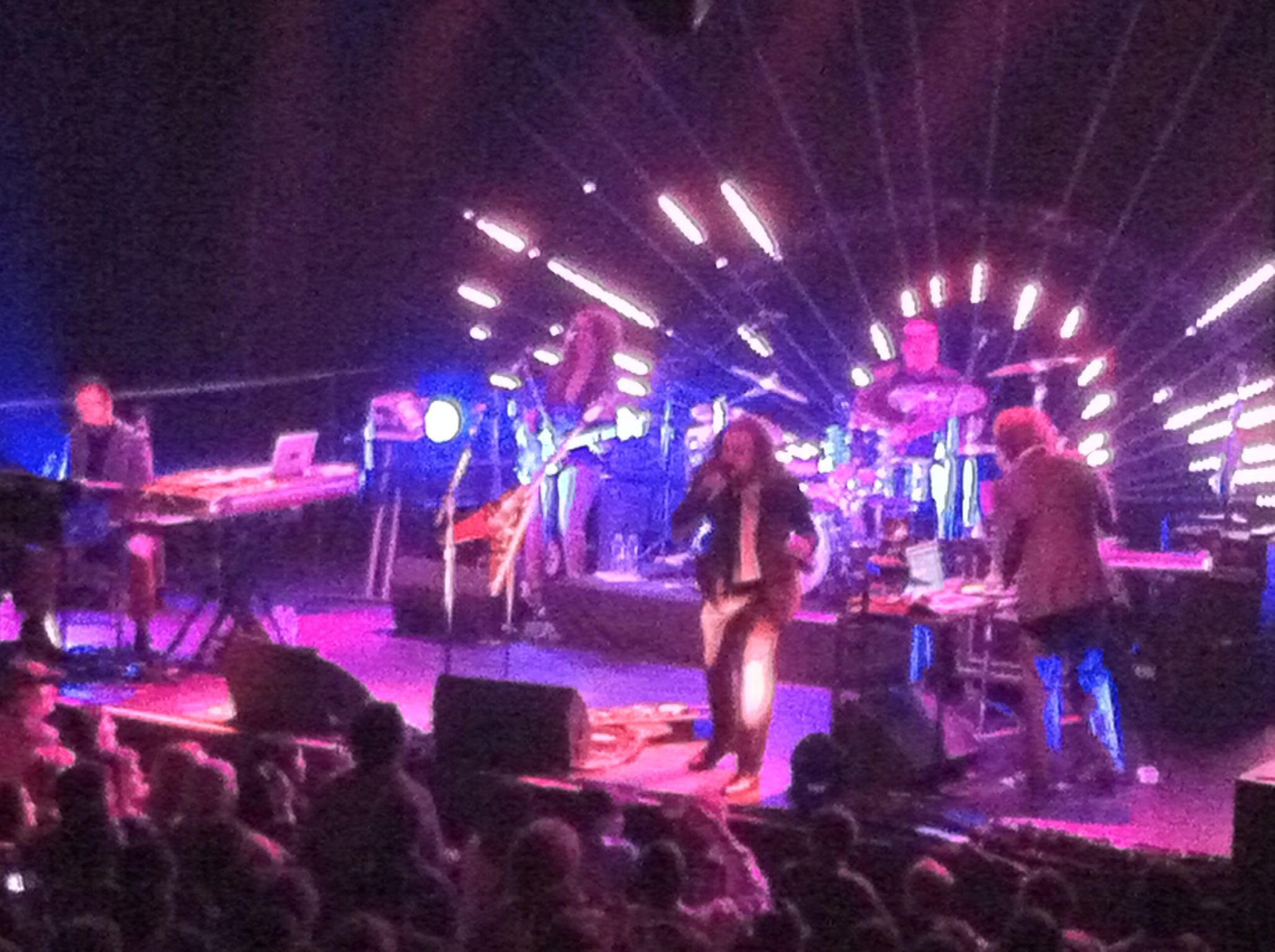
Jim James and band, First Avenue, Minneapolis, MN, 4/21/13

Jim James and band, First Avenue, Minneapolis, MN, 4/21/13

Artists draw their inspiration from all sorts of unusual places, as we know. For his first solo effort, My Morning Jacket front man Jim James found his inspiration in the 1929 book, “God’s Man: A Novel In Woodcuts,” The resulting album, “Regions Of Light And Sound Of God,” is a challenging work for the listener, full of overt religiosity and thoughtful musings about life, relationships, and our place in the cosmos. Far from evangelical proselytizing, the references to God and the biblical imagery in the songs provide a framework for us to contemplate the mysteries of life, both great and small. Clearly, there’s a lot going on in Jim James’ head these days.

The album was played in its entirety at First Avenue, with a touring band made up of musicians other than James’ band mates from My Morning Jacket. The production was fittingly high tech, with lots of loops and tapes augmenting the on-stage instrumentation. Sonically, it was one of the more impressive displays in recent memory.

Jim James on the stationary Flying V guitar.

Jim James on the stationary Flying V guitar.

James himself focused primarily on his singing, stepping up to a Gibson Flying V affixed to a mike stand for the occasional solo, as well a few surprising forays on the alto sax. He is blessed with one of the finest, purest, most emotional voices in all of rock music, and he knows how to use it to its best advantage. Starting out with the hushed opening lines of “Daylight Come, Daylight Go,” James and the band moved smoothly through the nine songs on the new CD. A certain r & b-flavored vibe runs through a number of the tunes, allowing James to let out his inner Marvin Gaye on selections like ‘”A New Life,” and “Know Til Now.” The beats were hypnotic and infectious, rippling through the crowd while James alternately prowled the stage like a caged tiger or glided from side to side like an awkward figure skater.

One comes away from a show like this with a clearer understanding of the motivation behind Jim James taking a temporary hiatus from My Morning Jacket to record this album. Far from being a mere vanity project, “Regions Of Light And Sound Of God” is an album James had to make, apart from the band. The themes come from a different, more spiritual, place than that which provides the source for My Morning Jacket’s material. Never fear, however; the more profane side of Jim James will be on full display when he returns with My Morning Jacket for this summer’s Americanarama tour, with Bob Dylan, Wilco, and Richard Thompson.

JOY TO YOU, JOSH RITTER, FIRST AVENUE, MINNEAPOLIS, MN, 4/25/13

Josh Ritter and The Royal City Band, First Avenue, Minneapolis, MN, 4/25/13

Josh Ritter and The Royal City Band, First Avenue, Minneapolis, MN, 4/25/13

It hasn’t been an easy time for Josh Ritter lately. As he explained to the First Avenue audience midway through his energetic set, he came home from a tour not long ago to learn that his marriage to fellow musician Dawn Landes was ending. Eventually, this personal crisis became the source for much of the material that appears on his new album, “The Beast In Its Tracks.” Far from being a buzz-kill, this brief mention led to a longer commentary about marriage and relationships, leading to a nice segue to the catchy, upbeat “In Your Arms Again” from the new CD. Making lemonade out of lemons, that’s what true artists do.

The son of college professors, Josh Ritter has been writing and recording music since 1999. His wordy, narrative lyrics, clever imagery and catchy melodies merit comparison with Bruce Springsteen’s early recordings, such as “Greetings From Asbury Park, NJ,” and “The Wild, The Innocent and The E Street Shuffle,” albeit with a lighter pop sound than Sprngsteen’s barroom rock. Meet the new Boss, not quite the same as the old Boss.

Josh Ritter, First Avenue, Minneapolis, MN, 4/25/13

Josh Ritter, First Avenue, Minneapolis, MN, 4/25/13

Ritter took the stage alone, strumming his acoustic guitar to the wistful “Idaho,” a paean to his home state, from his breakout 2006 release, “The Animal Years.” One by one, he was joined by the members of his longtime backup group, The Royal City Band (who take their name from a line in one of the other songs on “The Animal Years,” “Thin Blue Flame.”). From there, the wistful tone continued with “Southern Pacifica,” from 2010’s “So Runs The World Away,” before changing the mood with “Hopeful” from the new album. Ritter was energized now, bouncing up and down and urging the Royal Citizens on.

The set list was well chosen, mixing in ample selections from the new disc with all the favorites the crowd came to hear. “Lillian, Egypt,” was an early highlight, with its driving, clap-along beat and colorful silent movie imagery. “The Curse,” a waltz tune about a love affair between a mummy and a museum worker (I told you he was imaginative!) led to the single from the new album, “Joy To You, Baby.” with longtime friend and band mate Zach Hickman switching from electric to upright bass for this ballad. The kiss-off “New Lover” segued nicely into “In Your Arms Awhile,” both from the new record. Taking a chance on the sophistication of the crowd, Ritter began playing one of his earliest recordings, “The Starling,” then stepped away from the mike to let the audience take over. They did not disappoint, with a respectable portion of those assembled singing out verse and chorus, to Ritter’s obvious delight.

After the very catchy, upbeat “In Your Arms Again,” (not to be confused with “In Your Arms Awhile” also from the new album), Ritter dropped to his knees, cupped his hands around his mouth and howled at the unseen full moon outside. The audience, taking its cue, began howling as well, which could only mean one thing: “Wolves,” was next. This song, from “The Animal Years,” exemplifies the best of Josh Ritter’s writing, with its dance-happy beat, clever lyrics and singalong chorus. It was a true crowd pleaser, with most of the main floor audience happily bouncing up and down in time to the catchy beat.

Ritter and the Royal Citizens were on a roll now, moving into “Right Moves,” and the power ballad “Kathleen,” with the crowd with them all the way. By the time the show ended, with another wordy, infectious tune, “To The Dogs Or Whoever,” Ritter had a grin on his face so wide it looked as if it was locked in place. While it was no doubt cathartic, post-break up, to channel his emotions into his writing, it had to be equally cathartic to cut loose in front of an appreciative audience. Here’s to the healing power of rock ‘n roll!

GARY LOURIS TO THE RESCUE! DAKOTA JAZZ CLUB, MINNEAPOLIS, MN, 4/29/13

When Nanci Griffith had to cancel her 2-night engagement at the Dakota for the second time in less than a year [hoping all is well with you, Nanci!], it left the booking agents at the Dakota scrambling for a replacement. Fortunately, a worthy replacement was found in the form of Jayhawk-in-chief, Gary Louris.
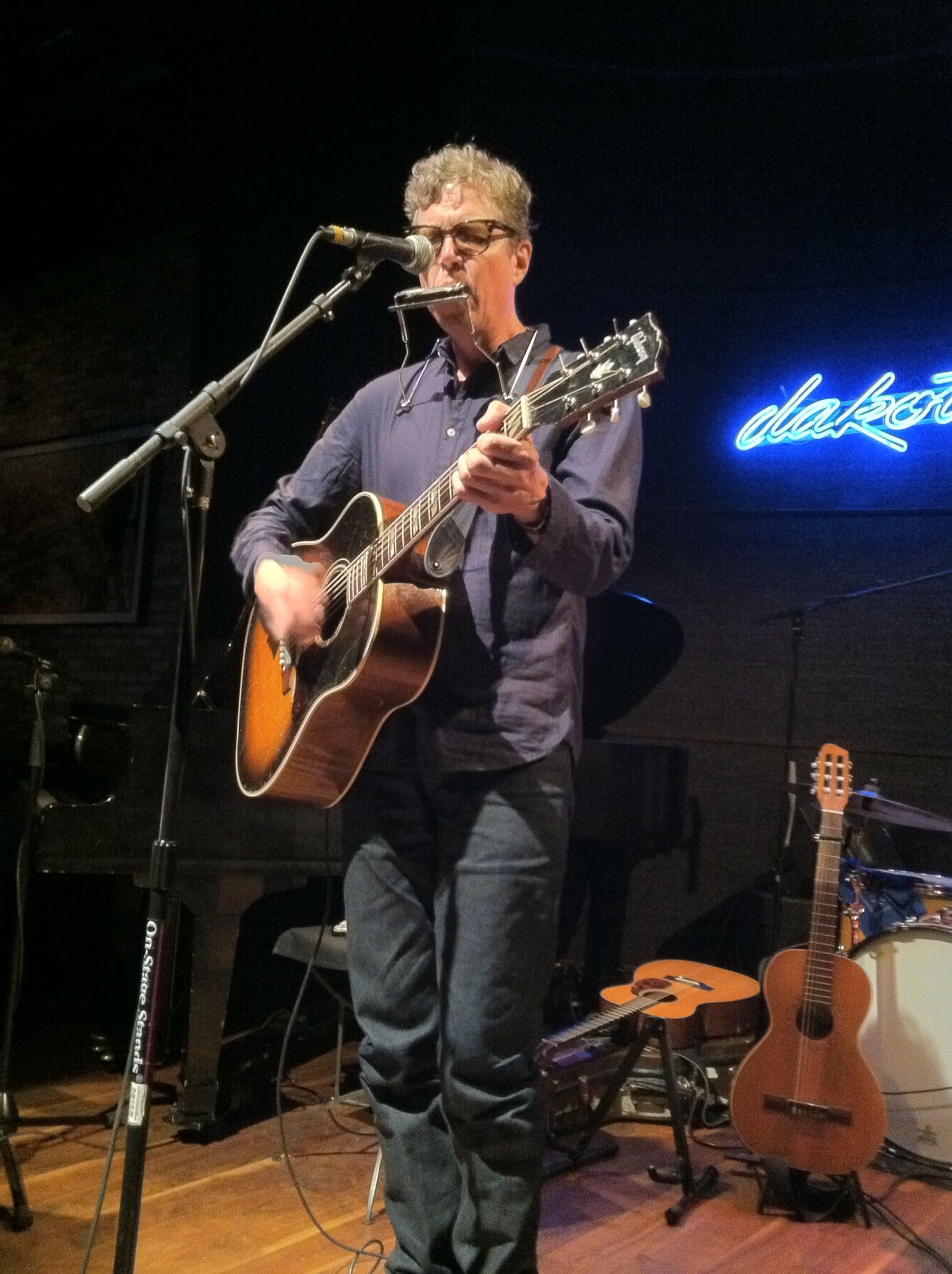
Gary Louris, Dakota Jazz Club, Minneapolis, MN, 4/29/13

Gary Louris, Dakota Jazz Club, Minneapolis, MN, 4/29/13

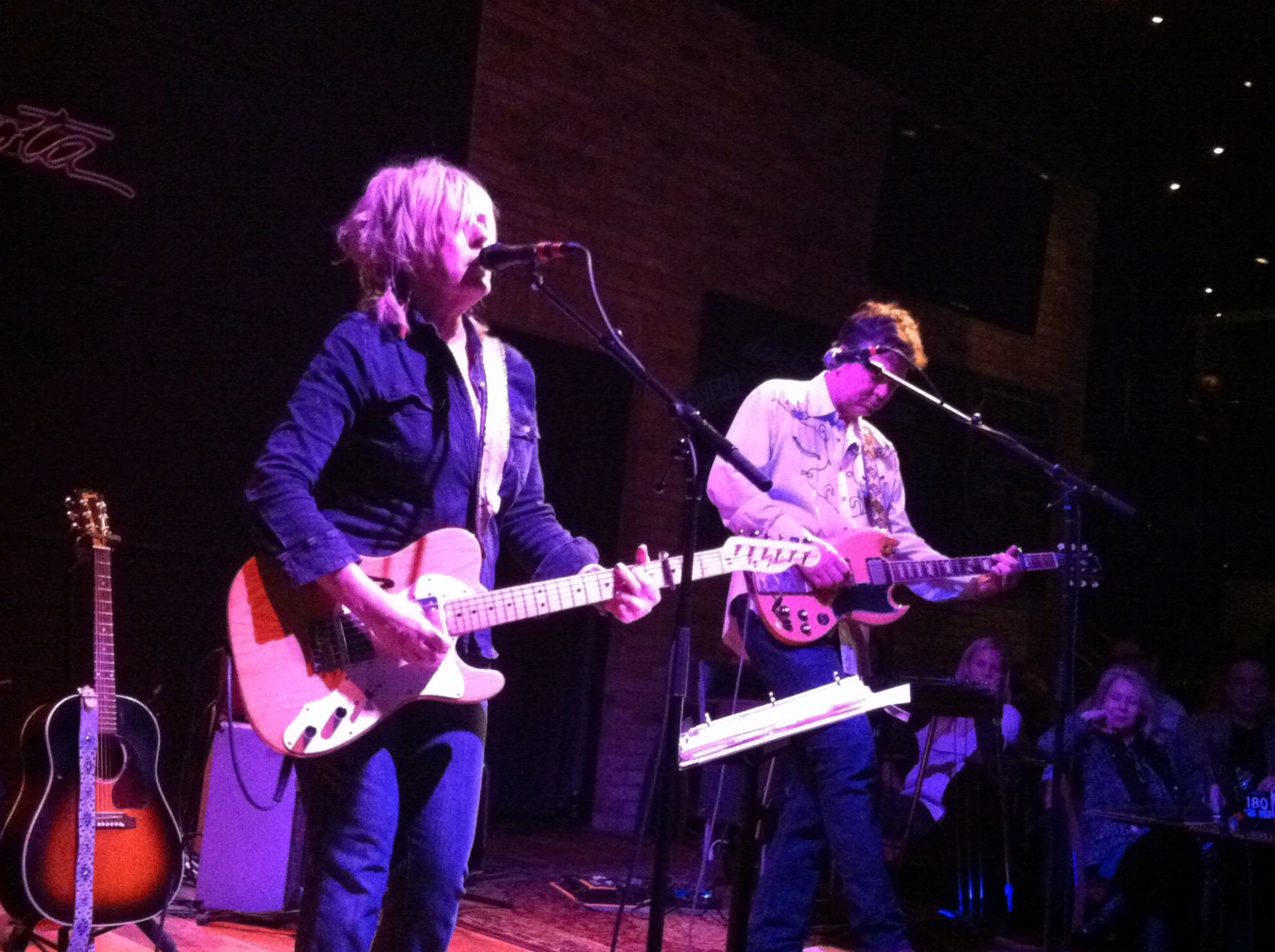
Louris has been out of circulation for awhile, wryly noting early on in his set that he had been “shipped away, due to problems with my ‘usage,'” a euphemistic way of stating that he’d been in treatment. Sporting a shorter haircut but looking and sounding healthy, Louris was backed initially by the opening band, Kevin Bowe and the Okemah Prophets. Eschewing his trademark red Gibson SG electric guitar, he instead accompanied himself on a Gibson acoustic all night, as well as harmonica. This would not be a night for showing off his underestimated guitar chops; instead, the focus was on his songs, and, in particular, his collaborations with other writers and his lesser-known solo work.

“True Blue” from his as-yet only solo album (another is in the works, he assured us), “Vagabonds,” was the set opener, followed by a self-described “B-side” from “Vagabonds,” called “Three Too Many.” Louris’ voice was strong, self-assured, and apparently well-rested. He introduced another B-side from the “Vagabonds” sessions, “Baby Let Me Take Care Of You,” by wryly noting “as if ‘Vagabonds’ isn’t obscure enough!” The song had a gently rolling folk-rock cadence, vaguely reminiscent of 70’s country rockers Poco.

Switching to more familiar territory Louris and the band played the first of several old Jayhawks faves, “I’m Gonna Make You Love Me,” from the 2000 “Smile” album, before closing out the Okemah Prophets portion of the set with the hard driving “The Love That Binds.

Louris next did a brief solo set, featuring a number of his collaborations, starting with “Everybody Knows,” co-written with The Dixie Chicks, and featured on their 2006 album, “Taking The Long Way.” Louris strained to reach the high notes in that song, displaying both his courage and vulnerability in tackling a tune intended for female voices. The solo set also included “Need You Tonight,” a collaboration with the band Sugarland, and “Jennifer Save Me,” from the 1998 Golden Smog album, “Weird Tales.” The latter is an easygoing alt-country song, similar in style to many Jayhawks compositions. Another Golden Smog tune, “Gone,” was followed by a song Gary Louris co-wrote with Chris Thiele of Nickel Creek, called “Jealous Of The Moon”.

At this point, the first of several guests was introduced, sister Jayhawk, Karen Grotberg, who took to the grand piano onstage for the Jayhawks’ classic “Smile” Grotberg added beautiful but compact solos to the song, where Louris might have otherwise stepped out on electric guitar. “Morning Star” featured sweet harmonies between the two long-time band mates, after which Louris turned his head toward the stage entrance and hollered out “Are Tim and Marc there?” Sure enough, drummer Tim O’Reagan soon emerged, along with bassist Marc Perlman, and from that point on it was a mini-Jayhawks concert, with only Mark Olson missing.
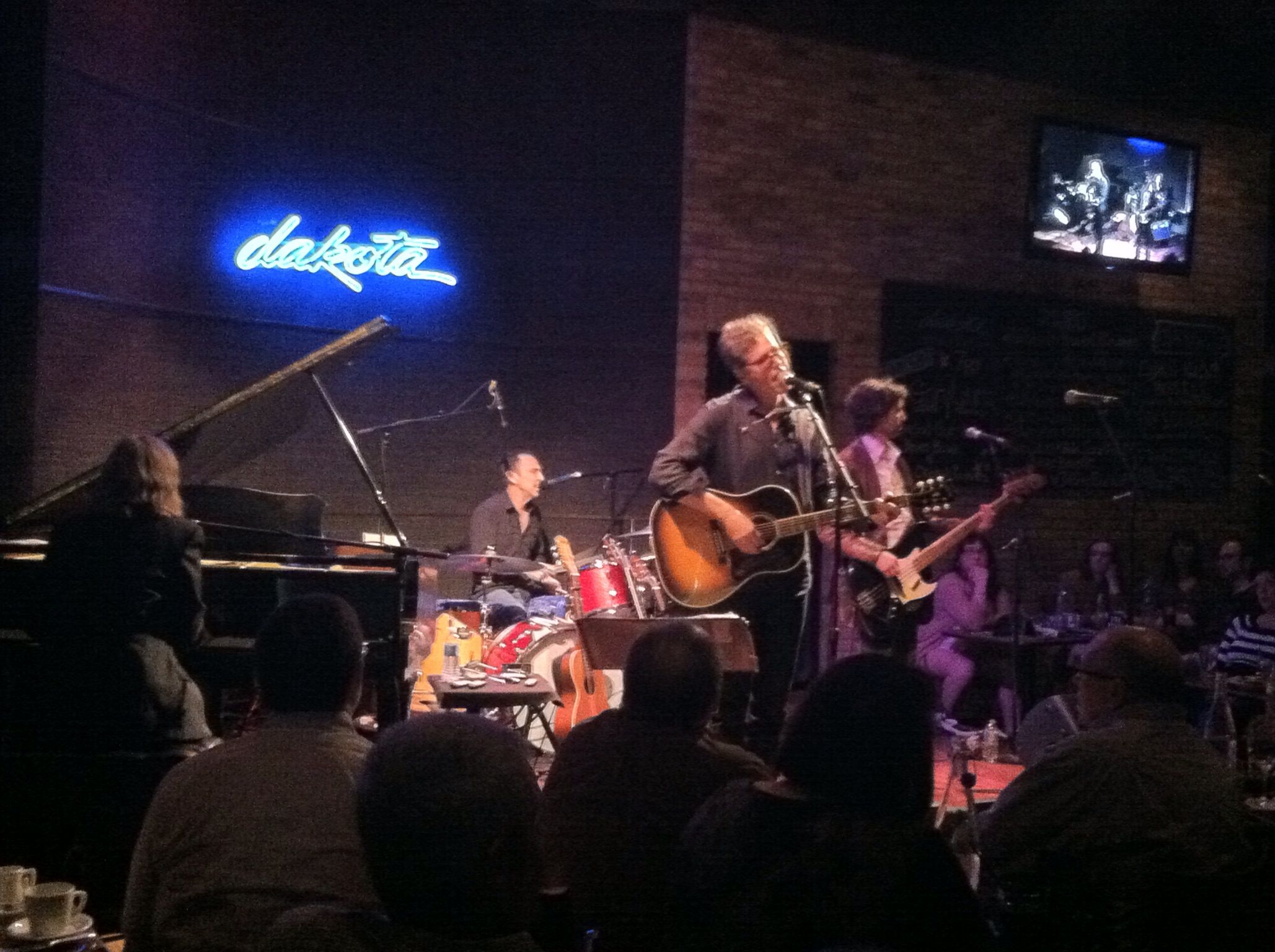
Four-fifths of The Jayhawks

Four-fifths of The Jayhawks

The songs included “One Man’s Problem,” “Better Days,” “It’s Up To You,” and the crowd-pleasing finale of “I’d Run Away” and “Save It For A Rainy Day.” For the encore set, Louris trotted out another “Vagabonds” outtake, “In The Window,” then back to the Jayhawks treasure trove for the rollicking “Tail Spin.” Yet another guest was waiting in the wings to join him, Chan Poling, keyboardist for the beloved local dance-punk band, The Suburbs, and more recently with the quirky jazz trio, the New Standards.
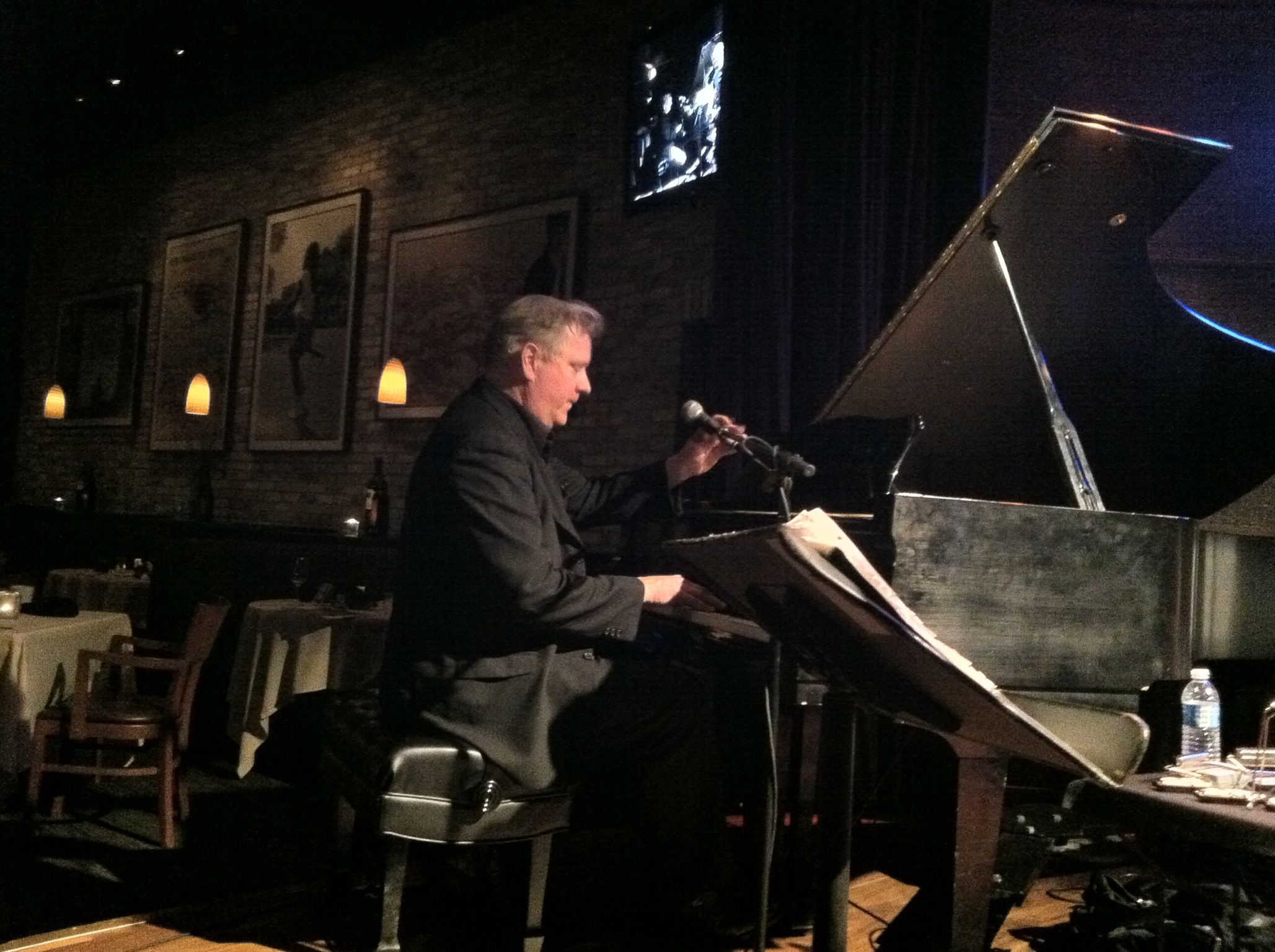
Chan Poling, sitting in with Gary Louris

Chan Poling, sitting in with Gary Louris

Poling provided the spare piano accompaniment for the only cover of the evening, Harry Nilsson’s “Without You.” Once again, Louris strained to hit the high notes of the climactic chorus to the song, but hit them he did. For the finale, O’Reagan and Perlman rejoined Louris for the rousing Golden Smog classic, “Until You Came Along.”

As much as it was a treat to see Gary Louris performing again, and with old friends and band mates, it was encouraging to hear that he has taken steps to get sober and healthy. Judging by this performance, there’s plenty of life and lots of new songs left in this highly-regarded, veteran musician. We’ll be the first in line when the new CD comes out.
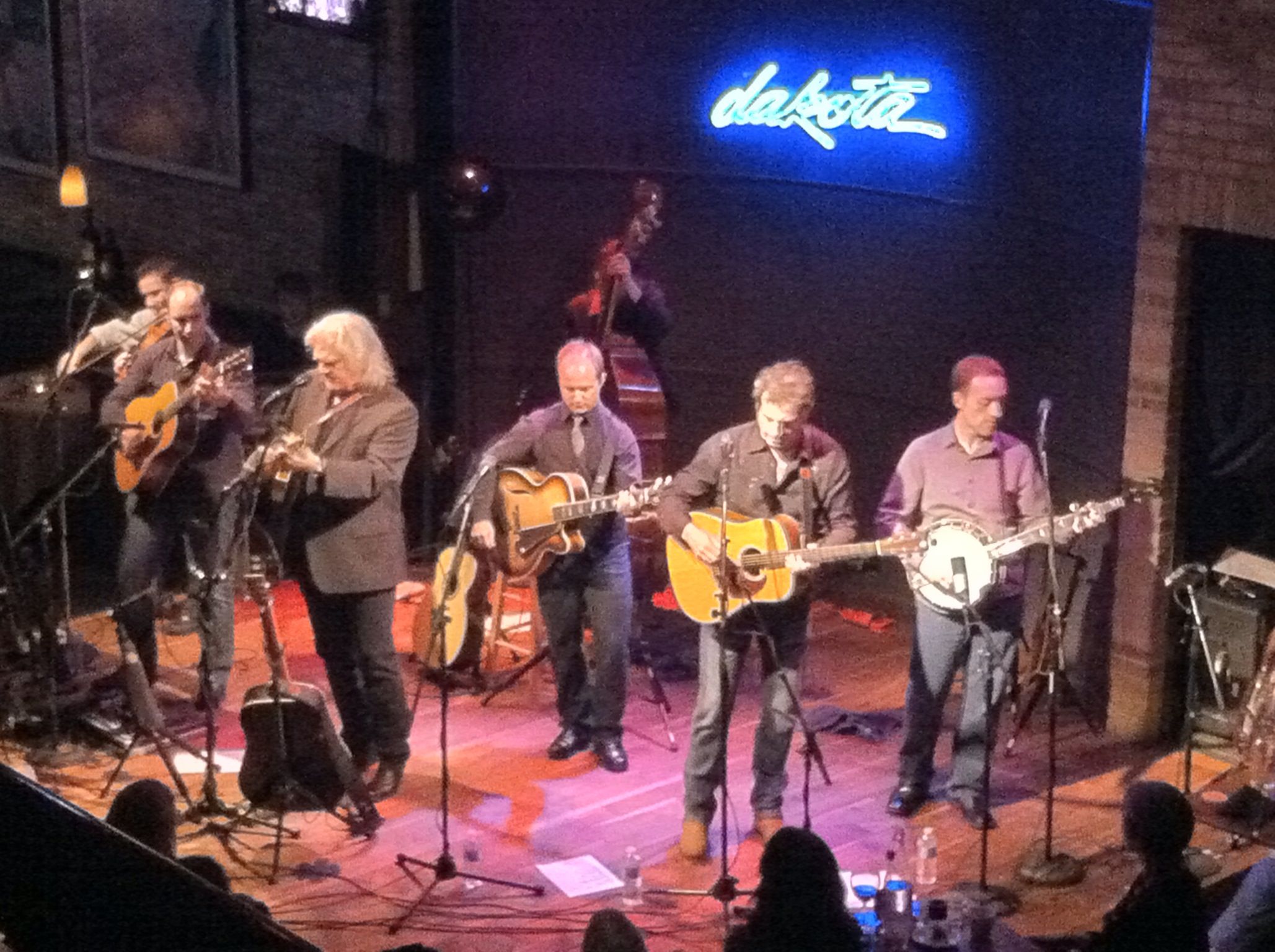
Bluegrass in a white-out; Ricky Skaggs & Kentucky Thunder, Dakota Jazz Club, Minneapolis, MN, 4/18/13

Ricky Skaggs & Kentucky Thunder:  L - R:  Andy Leftwich (fiddle); Cody Kilby (lead guitar); Ricky Skaggs; Eddie Faris (baritone vocals; rhythm guitar); Paul Brewster (tenor vocals; rhythm guitar); Justin Moses (banjo, dobro, background vocals); rear - Scott Mulvahill (upright bass, bass vocals)

Ricky Skaggs & Kentucky Thunder: L – R: Andy Leftwich (fiddle); Cody Kilby (lead guitar); Ricky Skaggs; Eddie Faris (baritone vocals; rhythm guitar); Paul Brewster (tenor vocals; rhythm guitar); Justin Moses (banjo, dobro, background vocals); rear – Scott Mulvahill (upright bass, bass vocals)

It began the night before, with a cold rain gradually turning to sleet, then snow by daybreak.  The flakes got heavier and more intense as the morning progressed, and by mid-day the blizzard was on.  Schools closed, traffic snarled, and businesses let their employees leave earlier, to flee the last blast of this endless winter for the warmth and comfort of their homes.

Frequent checks of the Dakota’s website gave no indication that the show would be canceled.  If the boys from Kentucky were determined enough to make this gig, then by God us Minnesotans had no reason not to show up.  Snowstorm be damned!  Time to saddle up the Subaru and ride her through this mess and into downtown!

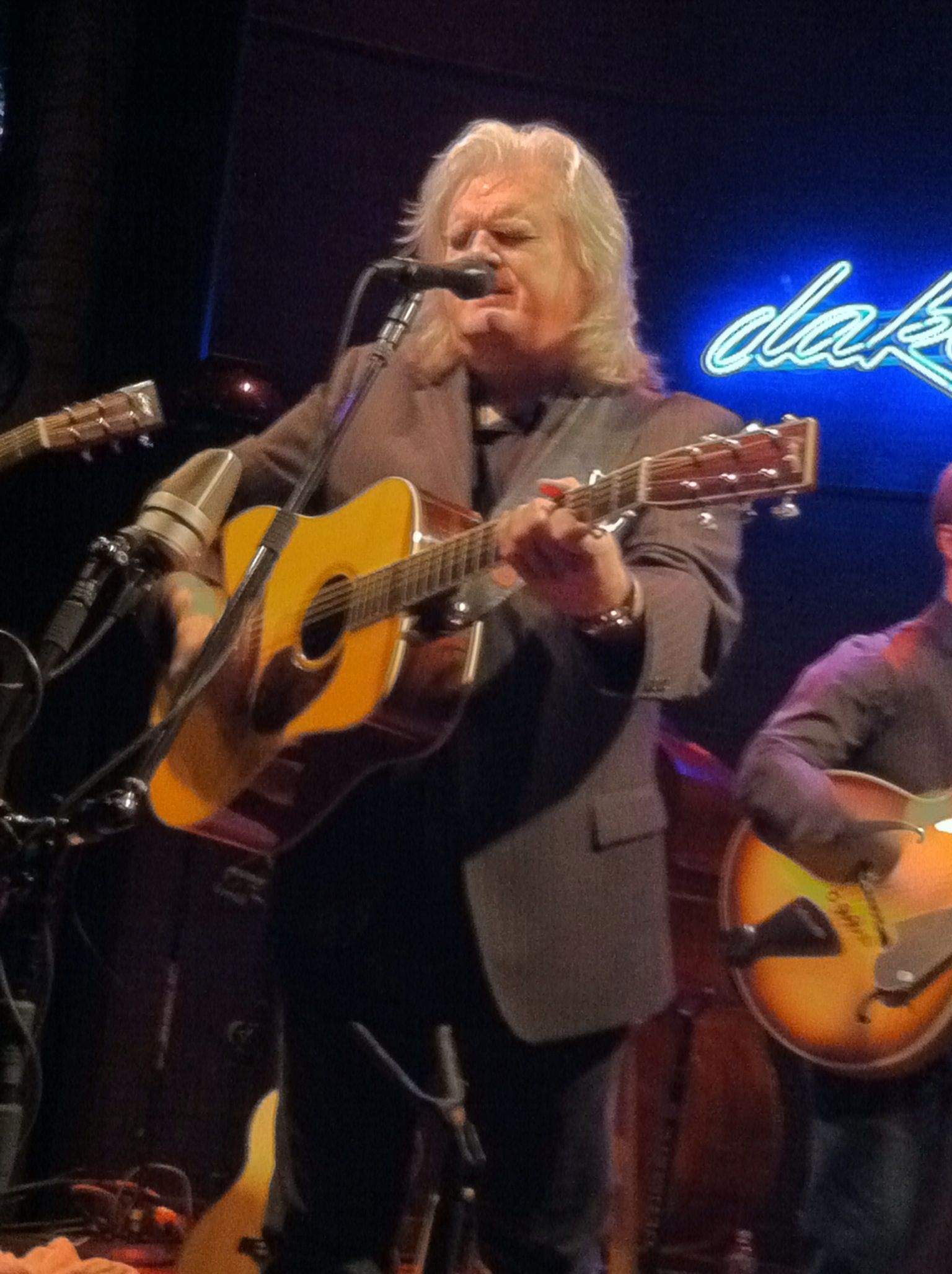
Ricky Skaggs took the stage as scheduled, promptly at 7:00, his youthful Kentucky Thunder arrayed on either side of him like disciples around the Messiah.  Mr. Skaggs, was warm, friendly and engaging, thanking the audience for showing up on such a miserable night and making no mention of what must have been a harrowing bus ride to get to Minneapolis.  Ricky and the band hit the ground running, starting off with the up-tempo “How Mountain Girls,” featuring classic bluegrass four-part vocal harmonies, as well as solos by Ricky on mandolin, Andy Leftwich on fiddle, Cody Kilby on guitar, and Justin Moses on banjo – a pattern that would be repeated often during the set.

Mandolin master Ricky Skaggs

Mr. Skaggs has (how to put this delicately?) become a man of some substance as he’s entered middle age, yet his nimble fingers flew over the mandolin fretboard with the speed and dexterity of a man half his size.  Small wonder, given the fact that he started playing the instrument more than 50 years ago, at the tender age of five.  Later in the set, while introducing “Lovin’ You Too Well,” Ricky noted that the well-worn instrument he was playing once belonged to Pee Wee Lambert, who was a member of the Stanley Brothers band in the late 40’s – early 50’s.

From “How Mountain Girls” the band shifted gears to the slower, country weeper, “Selfish Heart,” with Messrs. Leftwich, Kilby and Moses once again taking solos, sandwiched around Ricky’s turns on the mandolin.

Deviating from the set list, Ricky chose a tune by the Father of Bluegrass, Bill Monroe, called “Toy Heart.”  Ricky noted the enormous contributions that Lester Flatt and Earl Scruggs made while they were members of Bill Monroe’s band, before pursuing their own career, and also paid homage to Nashville radio station WSM, a 50,000-watt clear channel station most noteworthy for broadcasting the Grand Ole Opry across the country.

“Bluegrass Breakdown,” was another fast and furious rave-up, featuring the by-now familiar mandolin-fiddle-banjo-guitar-mandolin series of solos.  From Ricky Skaggs’ most recent album, 2012’s “Music To My Ears,” came the Kirk McGee-penned tune “Blue Night,” originally recorded by the estimable Bill Monroe and his Bluegrass Boys.  This was Ricky’s best vocal turn of the night.  With no harmony vocals, his earnest, plaintive, yet impassioned voice had that “high lonesome” quality to it that is the hallmark of traditional bluegrass singing.  Switching gears, Ricky introduced the humorous “You Can’t Hurt Ham,” as “a song about the durability of cured pork,” with its whimsical chorus: “No refrigerate, no expire date / You can’t hurt ham.”

He's a guitar man, too!

He’s a guitar man, too!

Ricky switched to guitar, and Justin Moses exchanged banjo for dobro, for the gentle, country-flavored title track to “Music To My Ears.”   Ever ready to pay tribute to his musical forbears, Ricky paused to offer a reminiscence of the late Doc Watson, before introducing one of Doc’s signature tunes, “Tennessee Stud.”  He commented that the version by Gid Tanner & The Skillet Lickers, with Riley Puckett on guitar, was lively enough to “make a one-legged fella get up & dance!” Unfortunately, there was no room for dancing in the Dakota, or several folks might have taken the hint.

Switching back to mandolin, Ricky closed the set with the instrumental “New Jerusalem,” from the current album, followed by the Bill Monroe tune “Sally Jo,” featuring a sort of instrumental call-and-response between Ricky on mandolin, Andy Leftwich on fiddle, and Cody Kilby on guitar.  The lone encore was the overtly Christian-themed “A Work Of Love,” from his 2010 release, “Mosaic.”  Although he is a man of faith, Ricky is careful to gauge his audience and the setting, carefully avoiding any proselytizing while playing in a secular context.

Apparently, the inclement weather caused a number of persons holding tickets for the second show to stay home, as the announcement came over the house PA system that anyone who wanted to stay for the later show was welcome to do so.  For The Missus and me, we were pleased and satisfied with the set we had just seen, so we passed on the opportunity for a second helping and turned our attention to the grim business of navigating through the snow-filled streets, back to our home, with the sound of mandolin, fiddle, guitar, banjo and bass pleasantly ringing in our ears.

Americana Queen Reigns Supreme: Lucinda Williams at The Dakota Jazz Club, Minneapolis, MN, 2/6/13

Lucinda Williams, with Doug Pettibone

Lucinda Williams, with Doug Pettibone

Minneapolis has become something of a second home for Lucinda Williams. Her 2003 release “World Without Tears” included a song called “Minneapolis,” and also “Real Live Bleeding Fingers And Broken Guitar Strings,” purportedly written about Paul Westerberg of The Replacements. In 2009, she married Minnesota-born Tom Overby onstage at First Avenue, in a post-concert service that was surprisingly moving, given the unholy setting. With her apparent affinity for the Twin Cities, it was no surprise that by the fourth night of her five-night “residency” at the Dakota, she seemed completely at ease; comfortable in her surroundings, friendly and gracious with the crowd, and calm and self-assured in her delivery. None of this detracted from the passion and conviction of her performance – the best of the half-dozen times this writer has seen her.

Following brief opening sets by Ben Kyle (Romantica) and The Kenneth Brian Band, Lucinda and her longtime guitarist, the incomparable Doug Pettibone, took the stage and opened with “Can’t Let Go,” a song written by St. Paulite Randy Weeks – yet another local connection! – from her 1998 masterpiece, “Car Wheels On A Gravel Road.” Doug Pettibone was already making his presence felt, with sharp, focused lead and bottleneck slide work on this uptempo breakup song. Reaching back nearly 25 years to her eponymous 1988 release, for the next number, “Big Red Sun Blues,” it was clear that Lucinda was going to make the most of her deep catalogue by sprinkling her set list with obscure gems, as well as more familiar favorites.

The title track to “Car Wheels” certainly fell into the latter category. Introducing it, she told a deeply personal story of having debuted the song at the intimate Bluebird Café in Nashville, before an audience that included her father, the writer and poet, Miller Williams. Afterward, he commented that she must have been the little girl in the verse: “Chld in the back seat, about four or five years / Lookin’ out the window”. In complete and convincing sincerity, Lucinda said that she had never realized that until her father pointed it out to her, so complete was her immersion in her writing.

Slowing down the pace, Lucinda next chose the title track to “World Without Tears,” an achingly beautiful ballad that showcased her world-weary voice to its best advantage. Doug Pettibone switched from his Strat to a big hollow body Gretsch for the tender solos on this one, adding understated harmony to Lucinda’s vocals, as he did all night. Keeping the mood somber, Ms. Williams told of having been inspired to write “Memphis Pearl” in 1984, by the sight of a poor woman digging through trash cans, looking for food. The gentle, bluegrass-flavored song tells the story of a fallen angel, a girl whose high hopes and big dreams are sadly unrealized. It is a common theme of Ms. Williams, who relates tales of the downtrodden and those living on the fringes of society, without ever becoming maudlin, condescending or judgmental.

"Back in Memphis she was a pearl"

“Back in Memphis she was a pearl”

Lucinda kept the mood subdued and intimate with “Tears Of Joy,” a love song to Tom Overby, from her 2008 release, “Little Honey.” Introducing the next song, “I Don’t Know How You’re Living,” Lucinda noted that it was written for her younger brother, “who I haven’t seen in many years.” Incredibly sad and moving, featuring sublime echo-effect guitar work by Doug Pettibone, the pairing of the song with “Tears Of Joy” was breathtaking. Where “Tears Of Joy” celebrates the emotional catharsis of falling deeply in love, “Don’t Know” reminds us of the pain and longing that comes from being estranged from someone we were once close to. “I don’t know how you’re living / I don’t know where you are / And you may not be willing / To open up the door.” The yin and yang of interpersonal relations, encapsulated in two songs. Stunning.

To bring us out of our doldrums, at least momentarily, Lucinda debuted a new song, “Stowaway,” a mid-tempo rocker that’s sure to appear on her next album. “Born To Be Loved,” from her most recent album, “Blessed,” was next, followed by “Everything Is Changed,” from 2007’s “West,” featuring Miss Lily Mae Rische from The Kenneth Brian Band on fiddle. Lily Mae and her fiddle stuck around for “Jailhouse Tears,” giving the song a more country, less rocking feel than the studio version (that paired Lucinda with guest vocalist Elvis Costello). The ease with which Lucinda traded verses with Doug Pettibone erased all the bad memories of her tortured attempt at the song during her 2008 First Avenue appearance – simulcast on the internet – when she stopped and started the song four times before finally being able to finish it.

Returning to the land of broken dreams and tragic characters, Lucinda noted that “you meet a lot of beautiful losers in this business,” and told the story of Blaze Foley, a gifted songwriter whose songs have been recorded by Merle Haggard, Willie Nelson, and John Prine, among others. But, possessed by his own demons, he barely eked out a living on the fringes of society before being shot and killed in a senseless confrontation. “Drunken Angel” from the “Car Wheels” album is Lucinda’s tribute to this singular talent, whose life and death are straight out of a Greek tragedy.

The tempo picked up and the set list continued its wide range thereafter, as Lucinda debuted another new song, a driving, soulful number that might be titled “I Need Protection (From The Enemy of Love),” followed by the title track to 2001’s “Essence,” with Doug Pettibone producing stinging notes on his Gibson SG. To amp up the proceedings, Lucinda switched from her big Gibson acoustic to a Telecaster for the remainder of the night, starting with a Delta blues number by Little Son Jackson, “Disgusted,” followed by a ferocious version of “Change The Locks,” then a new version of “Joy” (recorded as part of a compilation to support the West Memphis Three), and a hard-rocking ‘Honey Bee” to close out the set.

Before starting the encore, Lucinda complimented the crowd, saying “y’all might be the liveliest audience yet!” She then opened the three-song encore with “Blessed,” an inspired piece of songwriting that takes the biblical Beatitudes and turns them around 180 degrees. Instead of the meek, the humble, the poor in spirit being blessed by the diety, it is we who are blessed by them: “We were blessed by the girl selling roses / Showed us how to live / We were blessed by the neglected child / Who knew how to forgive.” It is a brilliant, thought-provoking piece of songwriting. Not wanting to leave us with anything too heavy, Lucinda brought Lily Mae and the rest of the Kenneth Brian Band back on stage for the rollicking Hank Williams party tune, “Jambalaya,” and a hand-clapping, foot-stomping gospel cover, “You Know You’ve Got To Get Right With God.”

The little girl in the back seat of the car is all grown up now, and she’s moved behind the steering wheel. The tank is full, the engine is well-tuned, and those tires still have a lot of life left in them. The road ahead is wide open and there’s still a lot of this sweet old world left for Lucinda to discover. We’ll all be waiting for her when she swings by next time, to tell us all about it.

Martha Reeves and The Vandellas, Dakota Jazz Club, Minneapolis, MN, 1/10/12

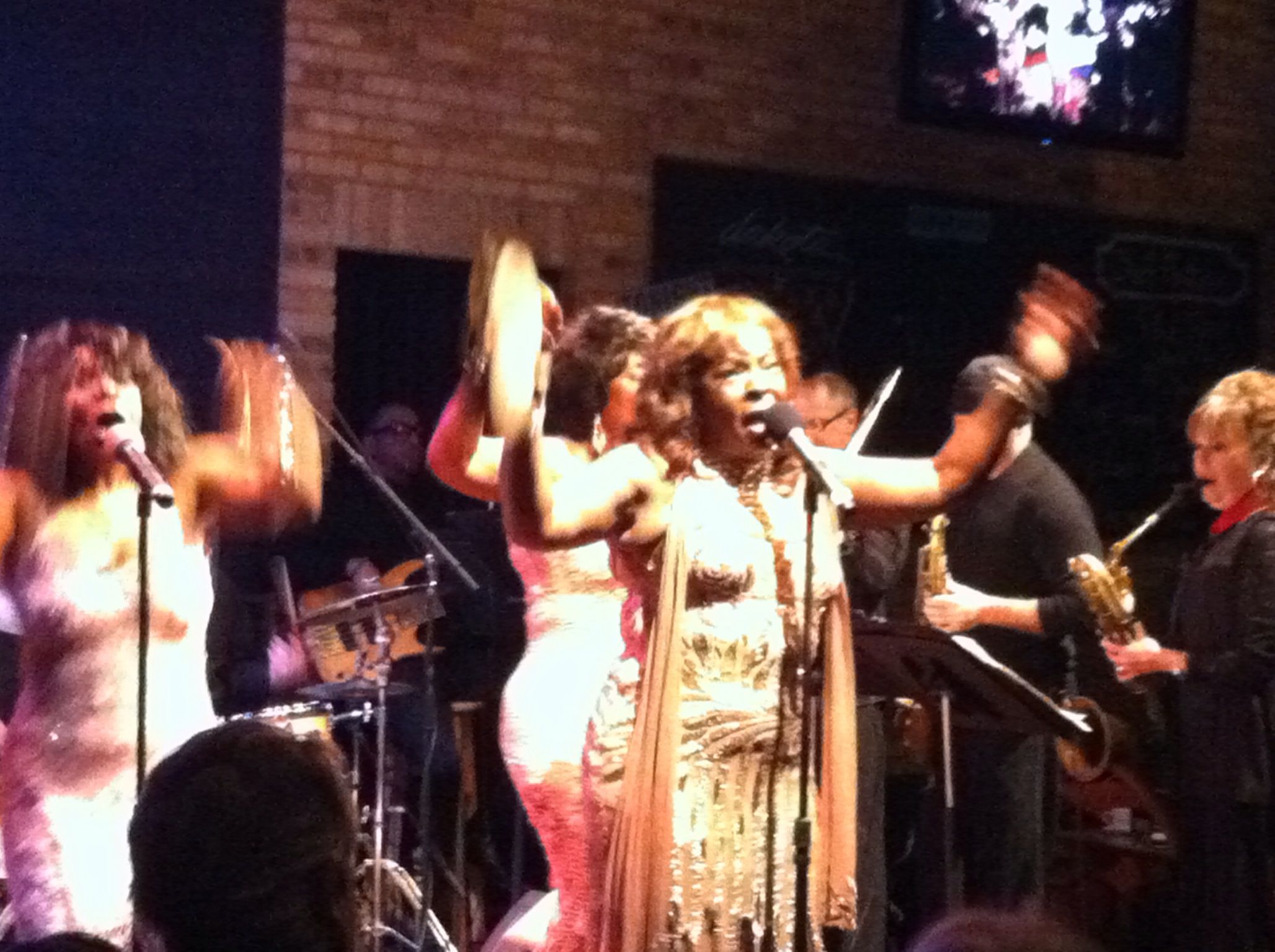
Martha Reeves and The Vandellas, turning up the heat at the Dakota Martha Reeves and The Vandellas, turning up the heat at the Dakota[/caption]

Mention the word “Motown” to a member of Generation X, Y or Z and you’ll likely draw a blank stare. I know, I’ve done it. The magnificent music empire that Barry Gordy, Jr. forged in Detroit in the 1960’s – spawning such artists as Marvin Gaye, Stevie Wonder, The Supremes, The Jackson 5, The Temptations and The Four Tops – is a part of our musical heritage that is in danger of being forgotten. More than just a record label, Motown was an instantly recognizable sound, blending the call-and-response of gospel, the sweet harmonies of doo-wop and the persistent beat of rhythm & blues. The Motown Sound was slicker and more sophisticated than its grittier Southern cousin, the Memphis soul music produced by Stax Studio. And, boy, could you dance to it!

Like Stax, Motown’s heyday ended by the early 70’s. Few of the classic Motown artists are still plying their trade today. Stevie Wonder gets trotted out for the occasional awards program guest shot, and the casino circuit has kept alive the careers of Smokey Robinson, Gladys Knight, and various iterations of the Temps and the Tops. The dwindling number of active Motown artists made Martha Reeves and The Vandellas return engagement at The Dakota all that more special.

Taking the crowded stage with her sisters, Lois (a Vandella since 1967) and Delphine (who joined the group in 1980), Martha opened with “Quicksand,” with the 8-member band already revving up the instantly recognizable beat. The sequined septuagenarian was in good voice, upbeat and chatty, with a well-rehearsed stage patter, familiar to those of us who had seen her last year. Following “Quicksand” with the equally upbeat “Ready For Love,” Martha then introduced “Our first recording on Motown,” and asked the audience to try to recall “Where you were, what you were doing, and who you were doing it with,” leading into “Come And Get These Memories” – a make-out song, if ever there was one.

Ït's like a heat wave!
Returning to more familiar territory, Martha related a story about having gone to a certain movie with her son, sitting in the front row, and her son admonishing her not to make a scene during the movie. “The movie was ‘Good Morning, Vietnam,’ and when Robin Williams played this song on his radio show, you bet I jumped up and made a scene!” The song, of course, was “Nowhere To Run,” one of Martha & The Vandellas biggest hits and most instantly identifiable recordings.

The setlist interspersed the group’s well-known songs with carefully chosen covers. Following their hits, “Love like Yours (Don’t Come Knockin’Every Day)” and a too-slow “Jimmy Mack,” Martha introduced their version of George Harrison’s “Something,” by noting with pride that, although The Beatles caused massive traffic jams when they came to the U.S., when Martha & The Vandellas and the rest of the Motown Review went to England, “We shut down Heathrow!” Back to the hits, with the bouncy, uptempo 1964 smash “Heat Wave,”before Martha and her sisters paid tribute to the late Marvin Gaye, covering “What’s Goin’ On?” The singers were able to take a breather on this one, as each of the eight members of the band was given a solo, and an individual shout-out by Ms. Reeves. Classy! Next up was the Johnny Bristol-penned tearjerker, “No One There,” sung by Martha in a quavering voice that threatened to break at any minute.

But, you can’t end the show on a downbeat note, so it was time for THE BIG ONE: “Dancing In The Streets,” one of the biggest selling singles of all time, recorded by everyone from The Mamas and The Papas and Neil Diamond, to Van Halen and the David Bowie/Mick Jagger duet. Although Martha got no takers when she asked the audience to “Get up and do the ‘Temptation Walk’ with me” during “Jimmy Mack,” for this song, she had no difficulty rousing the crowd from their seats to move and clap along to the infectious rhythm. The stage version included a medley of Motown hits, plus a nod to Stax, with the inclusion of Eddie Floyd’s “Knock On Wood.” Martha and The Vandellas left the stage as they had entered, with the band in high gear accompanying them.

If you’ve followed us at all, you know that seeyouattherockshow isn’t a nostalgia website. While we love and appreciate older, well-established artists, we’re also eager to sing the praises of newer or lesser known musicians. In the case of Martha Reeves and The Vandellas, we pay tribute not just to their own formidable catalogue, but also to their role as purveyors of an important and influential style of music that is fading from public view. The Motown era is a significant chapter in American musical history, and we can be thankful that Martha Reeves and her sisters are still out there to remind us of that. So, pay attention, Gen X thru Z-ers! Do yourselves a favor and drag out some of Mom’s & Dad’s old Marvin Gaye, Supremes, Martha & The Vandellas, and Temps & Tops records and give a listen. There will be a test!