After the Scene Dies: Remembering the 400 Bar

(“Somali Children’s Center is Likely to Replace 400 Bar” Minneapolis Star Tribune, December 29, 2012)

If you weren’t aware of its place in Twin Cities musical history, you would not likely give a second glance at the nondescript 2-story red and black building on the SW corner of Cedar & Riverside in Minneapolis’ West Bank neighborhood. Walking through the side entrance (the front door was walled off long ago) was an equally underwhelming experience, revealing a long bar along the wall by the entryway, a few shabby booths and ripped up stools with uneven legs, and red, red walls throughout. But, oh, if these walls could talk, what a story they’d tell!

The news that the Sullivan brothers, Tom and Bill, were calling it quits after 17 years of running the 400 Bar was greeted with a mix of emotions by the Twin Cities’ music community: dismay at the loss of another live music venue; nostalgic reminiscing over memorable past shows; and acknowledgement that the sale of the bar is simply further evidence of the changing character of the neighborhood, as the largest Somali community outside of Somalia becomes more settled in its new surroundings. For this writer, it’s an opportunity to reflect upon the bar’s role in shaping one man’s musical tastes.

Before the Sullivans took over, the 400 Bar was part of a network of bars and clubs that made the Cedar-Riverside area a magnet for folks looking for the heart of a Saturday night. Drawing initially on the convenient patronage of students from the nearby University of Minnesota and Augsburg College, the West Bank became a destination point for young people throughout the metropolitan area, as well as out-of-towners who got the word that The Scene was here. Folk and blues artists like Spider John Koerner, Dave “Snaker” Ray and Tony Glover; Bill Hinkley and Judy Larson; Dakota Dave Hull and Sean Blackburn kept things lively at The Coffeehouse Extempore. Willie Murphy and The Bumblebees, The West Bank Trackers, Doug Maynard et al. were regulars at places like the Triangle Bar, the Viking Bar, and the Seven Corners Saloon. Pioneering local reggae/calypso stalwarts Shangoya put on many a memorable show upstairs at the old Dania Hall. Sadly, most of those venues no longer exist, falling victim to changing times, tastes, demographics and economics. (The whole scene is chronicled much better than space permits here, in Cyn Collins’ excellent 2006 book, “West Bank Boogie.”)

The 400 Bar certainly had a piece of that West Bank action. Before the bar doubled in size, to its current dimensions, the cramped stage was located right up front, behind the big window overlooking Cedar Avenue that drew in passersby wondering “Who’s playing?” Willie and the Bees could barely squeeze their 6 or 7 members onto the stage. Koerner, Ray & Glover played there often, individually or in various combinations. The West Bank was a supportive environment for Twin Cities musicians in the 70’s and 80’s and the 400 Bar played a vital role in nurturing the creative local talent base.

The character of the bar began changing when the Sullivans took over approximately in 1995. They expanded the bar into the space next door and moved the stage away from the front window and into the new space. Bill Sullivan had been the tour manager for popular local bands Soul Asylum and The Replacements, as they rose to national prominence. He and his brother, Tom, widened their search for talent and began booking lesser known but up and coming bands and artists. Bands that went on to national prominence, such as Arcade Fire, Bright Eyes (Conor Oberst), Sharon Jones & The Dap Kings, The Heartless Bastards, Elvis Perkins and Justin Townes Earle, all made their Twin Cities debuts at the 400. The Missus and I recall young Mr. Earle OPENING for The Felice Brothers at the bar – roles that would certainly be reversed today.

We were privileged to see many a fine show at the 400. Patterson Hood of the Drive By Truckers made his only two solo Twin Cities appearances there (these were true solo shows, unlike his recent appearance with The Downtown Rumblers, reviewed earlier on this site). Split Lip Rayfield chose the 400 for their Minneapolis return engagement following the death of founding member Kirk Rundstrom. The first of several times we saw Marah there ranks as one of the best bar shows ever, as we marveled at Serge Bielanko duck-walking atop the half wall separating the front and back bar area, all the while blowing a furious harp solo. The Heartless Bastards, Jason Isbell & The 400 Unit, The Baseball Project, Southern Culture on the Skids, James McMurtry, The Bottle Rockets, The Deadstring Brothers, Centro-Matic – we can thank the 400 Bar for giving us our first look at these bands, among many, many others. And, we never tired of seeing iconic local musicians Willie Murphy, Spider John, or Tony Glover perform there.

Although no longer as densely packed with music venues as it was in its heyday, the West Bank remains well-populated with places to see live music. The Nomad World Pub, Triple Rock Social Club, Acadia Cafe, Red Sea, and Palmer’s Bar all cater to various musical genres. The Cedar Cultural Center books a wide variety of folk, rock, blues and world music acts, and at the Southern terminus of the West Bank, past the I-94 underpass, Whiskey Junction, The Joint and the venerable Cabooze all do brisk business every weekend. Still, it will be interesting to see who picks up the slack left behind by the 400’s closing. The challenge, in this Twitter/Facebook/Myspace age will be sifting through the plethora of information out there, to cull out the artists deserving of wider exposure. At this, the 400 Bar excelled, and for this, it will be missed.
Beyond Austin’s City Limits: James McMurtry and The Gourds, Cedar Cultural Center, Minneapolis, MN 11/10/12

20121111-161516.jpg

20121111-161551.jpg

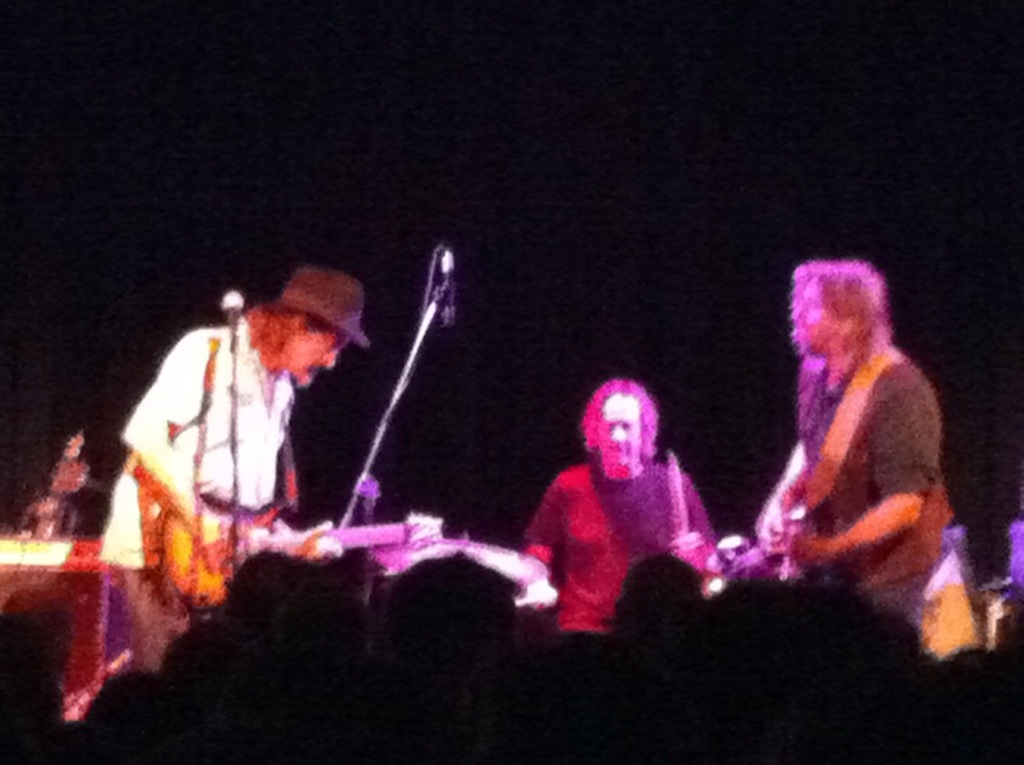
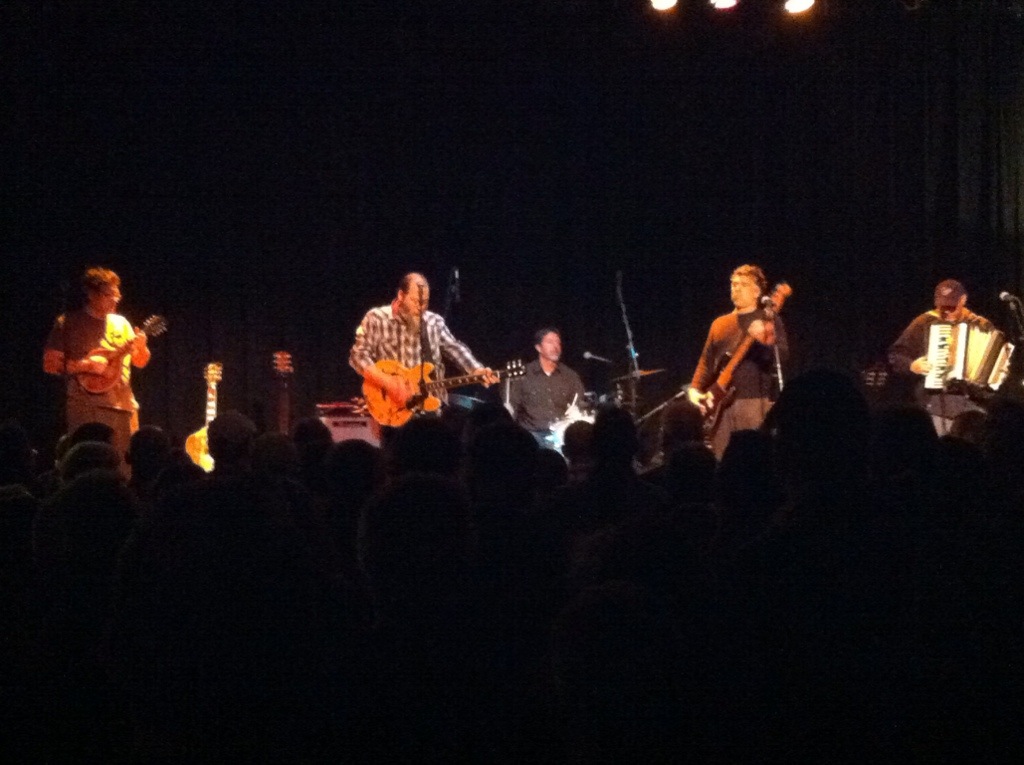
The Continental Club relocated 1200 miles North this past Saturday, from South Congress Street in Austin, to Cedar Avenue in Minneapolis, changing its name to the Cedar Cultural Center in the process. There, two mainstays of the Austin music scene, James McMurtry (top photo) and The Gourds (bottom), entertained a sold out house on a chilly, stormy night.

Lanky, laconic James McMurtry is simply one of the best storytellers in the business. Call him the chronicler of the common people. In five to six minutes, he can encapsulate one couple’s tumultuous lifetime relationship (“Ruby and Carlos”) or offer a scathing political commentary on the economic hardships of the working class (“We Can’t Make It Here”). His magnum opus, “Choctaw Bingo,” reads like an epic poem, Homeric in its description of an extended, dysfunctional, co-dependent family – or, as McMurtry himself described them, “the congregation of the First United Crystal Methodist Church.”

Taking the stage without an introduction (unusual for The Cedar), McMurtry and his band – longtime drummer Darren Hess and relative newcomer “Cornbread” on bass and vocals – began with “Bayou Tortue,” the hard-driving opening tune from the “Just Us Kids” CD. From, there, he moved quickly into the slinky, seductive “Red Dress,” featuring the wry verse: “Yes I’m drunk but damn you’re ugly / Tell you one thing yes I will / Tomorrow morning I’ll be sober / You’ll be just as ugly still.”

As brilliant a wordsmith as he is, McMurtry is a man of few words between songs. He keeps his stage patter to a minimum, preferring to express himself with his songs and his formidable guitar chops. His narrow vocal range has been the subject of some criticism, but a case can be made that his vocal limitations make his lyrics that much more effective. With no verbal histrionics getting in the way, the listener’s focus is on the powerful images and messages being conveyed by the words themselves. Still, one can’t help but wish that he’d show some emotion, or even crack a smile occasionally. Instead, he barely changes facial expression from start to finish.

With no new album to tout, McMurtry served up a satisfying set of old favorites, including “Just Us Kids,” “Hurricane Party” (true to form, McMurtry eschewed the obvious opportunity to comment on Sandy), “You’d a’Thought” (subtitled “Leonard Cohen must die”; sorry about that, Nanker!), and, of course, “Choctaw Bingo.” Switching to a 12-string, McMurtry sent his bandmates offstage for one solo acoustic number, before bringing them back, along with longtime guitar tech/stage manager/sound board operator Tim Holt on guitar, for the final trio of “We Can’t Make It Here,” “Level land,” and “Too Long In The Wasteland.” McMurtry and Holt traded solos on both of the latter two songs, including a lengthy guitar break in “Wasteland.” Drummer Hess drove the beat so intensely on “Wasteland” that he broke a stick. Then, with a wave of his Lagunitas IPA and a “Thanks for coming out tonight,” McMurtry left the stage with the rest of the band, and left the audience clamoring for the encore that never came.

Next up were The Gourds, that lovable quintet who mix a little Cajun, a little N’awlins, into their alt-country stew. Front man Kevin Russell (aka “Shinyribs”) is the polar opposite of James McMurtry, in terms of stage presence. Full of self-deprecating physical humor, he dances about like a bandy-legged rooster, gyrating his arms and hands as if he was in a high school dance line. He is warm and witty, fully engaged with the audience – and, he plays a mean mandolin. Versatile musicians Max Johnston (mandolin, fiddle, guitar, lap steel) and Claude Bernard (accordion, keys, guitar) anchor either end of the stage, while co-leader/bassist Jimmy Smith (who splits songwriting duties with Russell) and Keith Langford (drums) provide the rhythm. And, everybody sings!

Opening with some New Orleans-style funk, the band quickly moved into “Country Love,” a bouncy barn dance number from the 2009 “Haymaker” CD. Shinyribs and Jimmy alternated on lead vocal from song to song, mixing older tunes with selections from their new release, “Old Mad Joy,” recorded at Levon Helm’s Woodstock studio, with Larry Campbell producing. The album is a departure for the band – literally and figuratively – taking them away from their comfort zone in Texas, where they produced or co-produced most of their other releases. “I Want It So Bad,” in particular, stood out, with its easygoing beat and nimble accordion work by Claude B.

The Gourds are noteworthy for throwing snippets of other songs into the middle of a tune, especially if they can make a local connection. During their cover of Warren Zevon’s “Werewolves of London,” for example, Shinyribs suddenly broke into The Replacements’ “I Will Dare,” followed immediately by “Makes No Sense At All” by Husker Du, before the band circled back to “Werewolves” in time for a few more “Ah-OOOHs!” from the crowd. Shinyribs clicked off all the various venues where the band has played on its many trips to the Twin Cities, including Lee’s Liquor Lounge (“taking us back to the gay 90’s”), the 400 Bar, the Turf Club, now adding the Cedar Cultural Center to the list.

The band closed strong, honoring a request for the seldom heard “Lower 48” (name-checking all of the continental United States), and including a killer cover of the Bobby Fuller Four’s “I Fought The Law.” But the real treat, of course, came during the encore set. After the fairly sedate country-folk tune “Gray On The Green Hillside,” McMurtry and his band joined The Gourds for a 15-minute mashup of their cover of Snoop Dogg’s “Gin And Juice.” Shinyribs kicked it off, singing the opening verse over his single-note mandolin strumming, then everyone else joined in, rockin’ the rhythm into full-blown dance mode. Instruments changed hands over the course of the next several minutes and, during the very lengthy bridge, we were treated to selections from a half-dozen disparate rock songs, none of which had even the remotest connection to Snoop Dogg or “Gin And Juice.” And, it was a total blast! First, Jimmy Smith stepped up to the mike to sing a few verses of The Kinks’ “You Really Got Me.” McMurtry got into the act with some lines from “Sweet Jane,” by Lou Reed, then back to Smith for The Ramones’ “I Wanna Be Sedated.” Darren Hess followed that with The Faces’ “Ooh La La,” then Smith reminded us that “You Can’t Always Get What You Want,” before Shinyribs closed off the mayhem with – what else? – “Purple Rain,” busting a mando string in the process. Snoop Dogg’s old gangsta rap tune was barely recognizable within the controlled mayhem onstage, but it was an exhilarating crescendo to a terrific showcase of two of Austin’s finest bands. Y’all come back real soon, y’hear?