The Real-Phonic Radio Hour Presents: Robinella and Gurf Morlix, J.J. Hill Reference Library, St. Paul, MN, 5/16/13

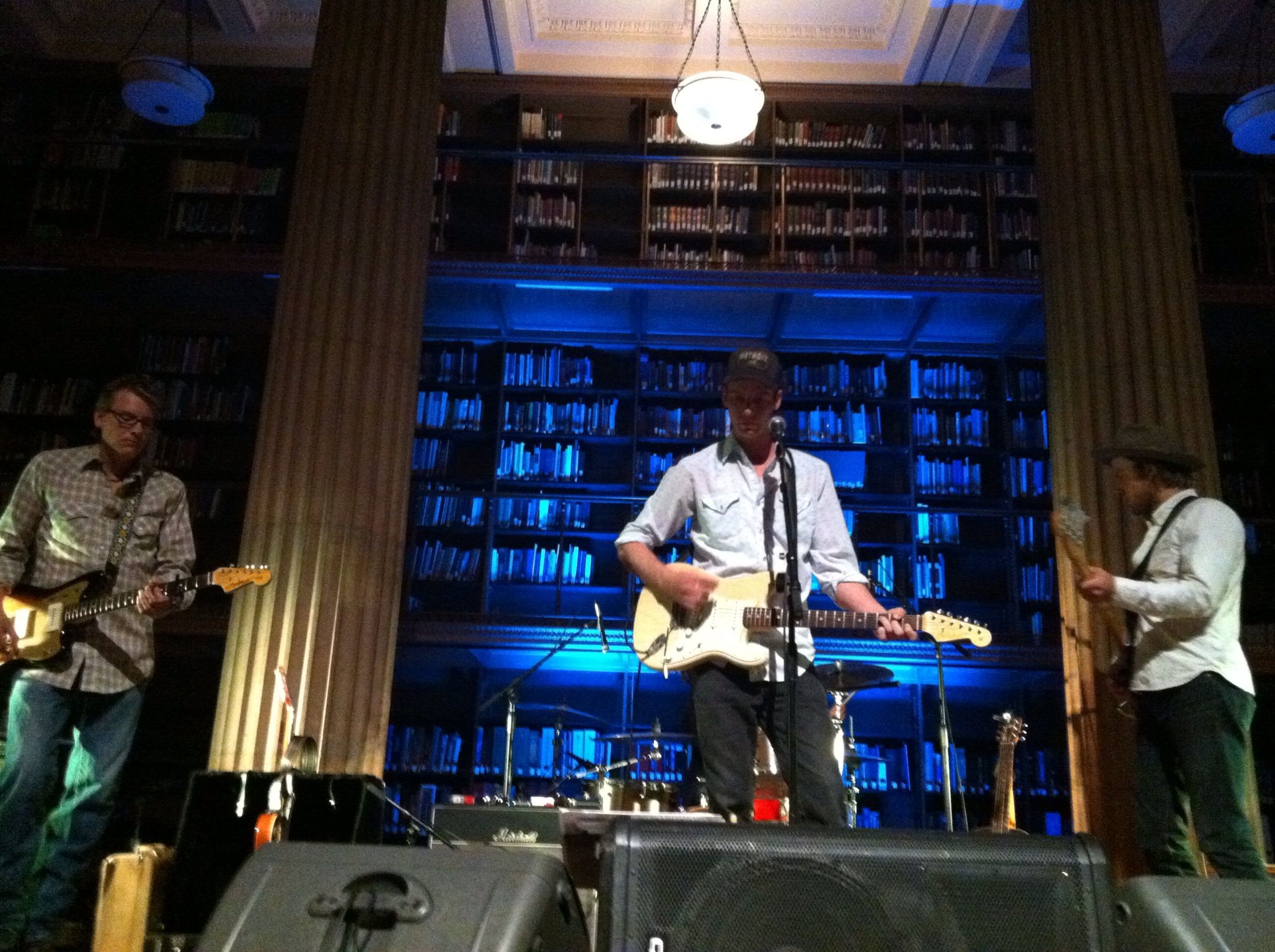
The Real-Phonic Radio band: L - R: Paul Bergen, Erik Koskinen, Frankie Lee (hidden: drummer J.T. Bates)

The Real-Phonic Radio band: L – R: Paul Bergen, Erik Koskinen, Frankie Lee (hidden: drummer J.T. Bates)

There’s a very cool program broadcasting from St. Paul, featuring lots of great music and mirth, originating in one of the most stately buildings in all of downtown. No, it’s not A Prairie Home Companion, nor even its citified second cousin, the Wits series (see the Calendar page on this site for details). The program in question is the Real-Phonic Radio Hour, held monthly (except this coming June) at the majestic James J. Hill Reference library.

The purveyors of this event are a group of musicians – Molly Maher, Erik Koskinen, Paul Bergen, Frankie Lee and J.T. Bates (collectively known as Molly Maher and Her Disbelievers) – plus announcer/monologuist Thom Middlebrook. Together, they transform the cavernous J.J. Hill Reference Library space – with its soaring Greek columns, marble floors and 30′ ceilings – into an intimate 200-seat concert hall, showcasing not only the talents of the local hosts but also an interesting and eclectic group of touring musicians. The tickets are cheap (only $20, or $10 with a food shelf donation), the beer and wine selection small but adequate, and the ambience is unbeatable. Technically not a “radio hour,” in keeping with its 21st century origins, the shows are actually taped, edited, and eventually made available as a podcast on the Real-Phonic website (realphonic.com).

Molly Maher took over Thom Middlebrook”s role, handling the opening monologue on this particular night. Her comments included an “attaboy!” for the Minnesota legislature, which had just passed the Marriage Equality law, as well as a number of well-placed jibes at that soft target who goes by the name of Michelle Bachmann. Both themes would later be revisited when Middlebrook did his own commentary later in the evening.

Erik Koskinen and the rest of the boys warmed things up with a trio of selections (we’re going to take a stab at the titles), ranging from the steady rolling Americana of “Feelin’ Pretty Good,” to the country-flavored “You Didn’t Even Remember My Mama’s Name,” finishing with the rockabilly “I Ain’t Nothin’ With You.” Although deferring to Paul Bergen for most of the lead guitar work, Erik is no slouch on guitar himself, and together the two of them form a most formidable tandem.
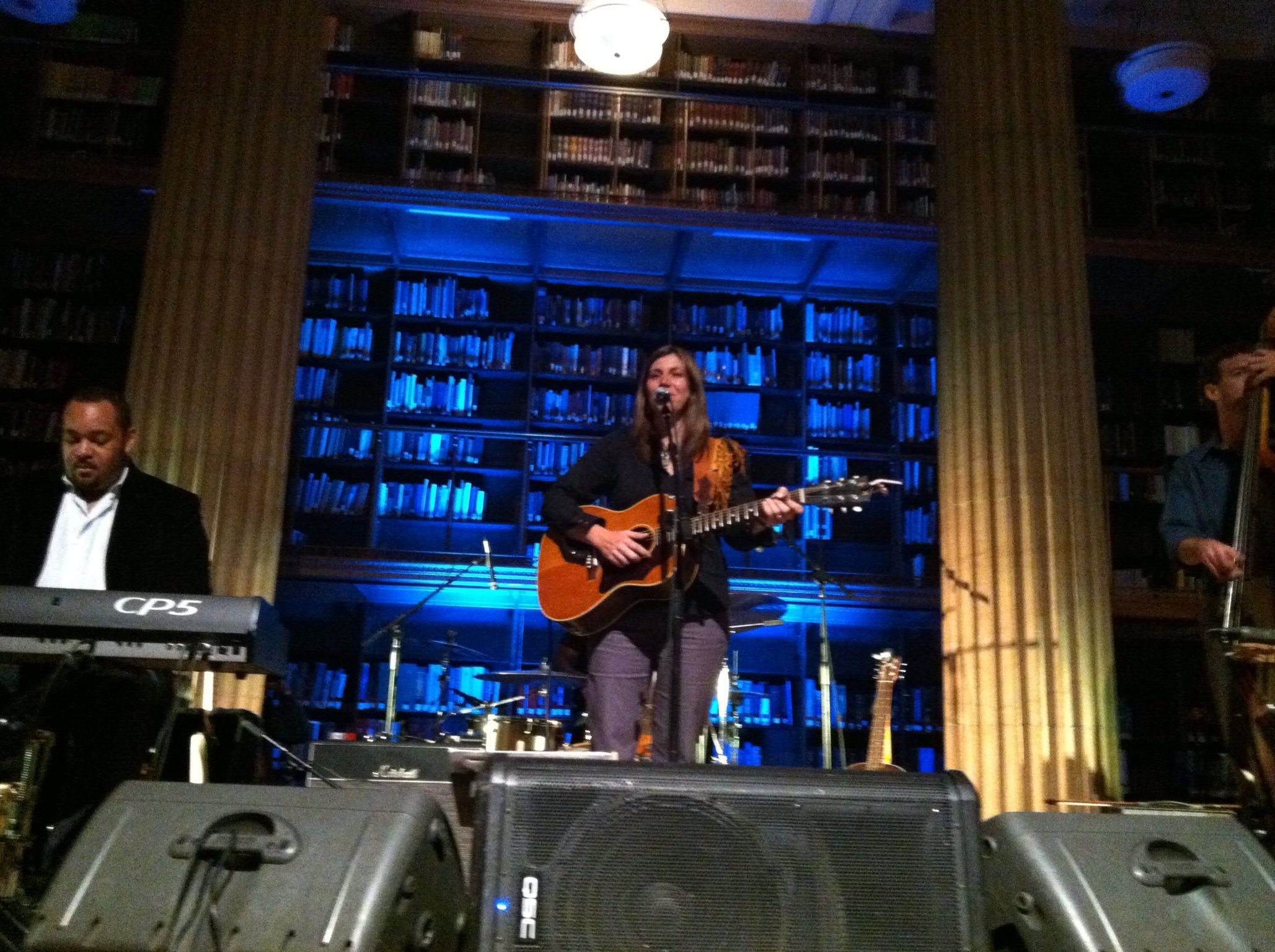
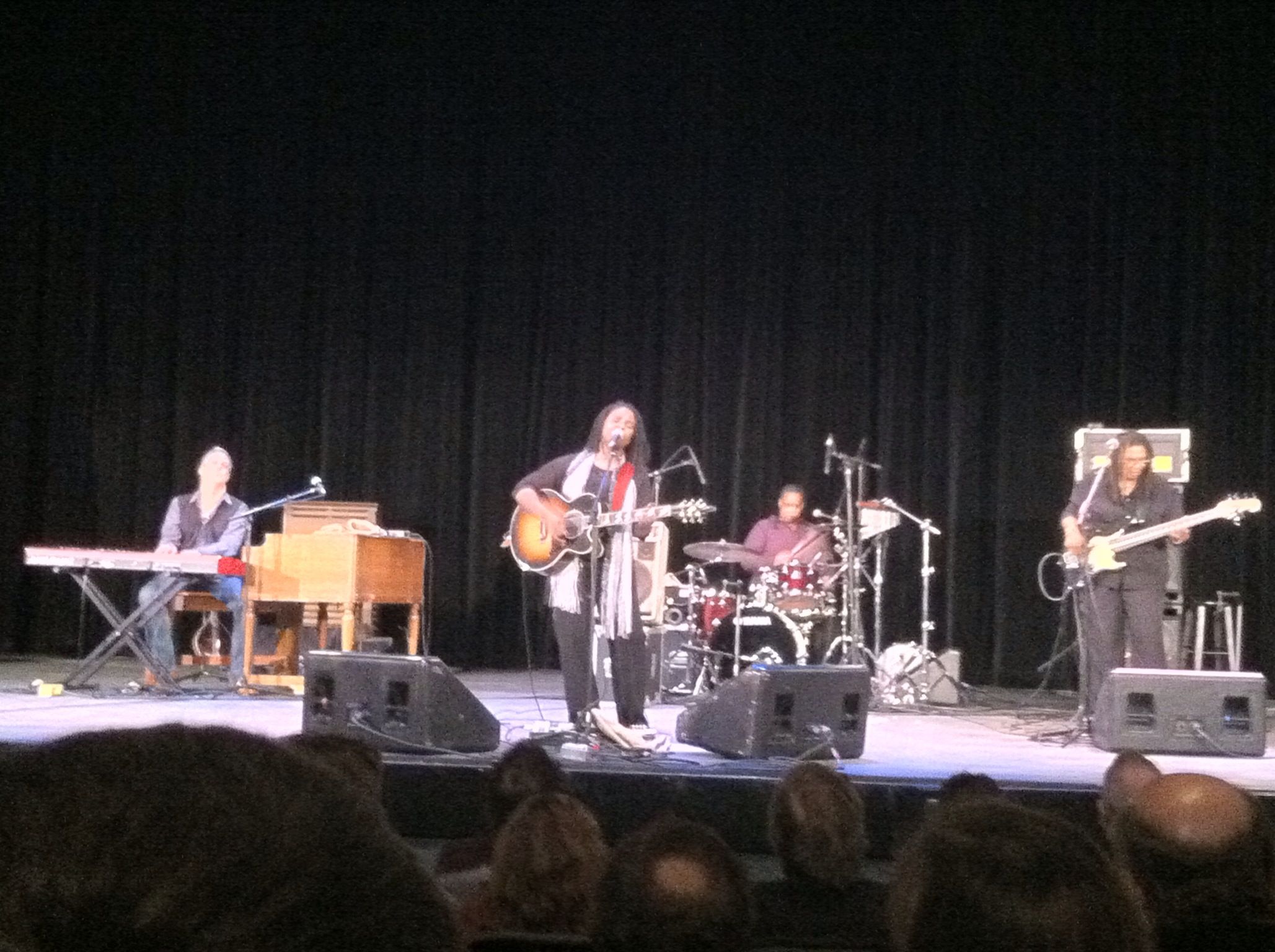
Robinella and band

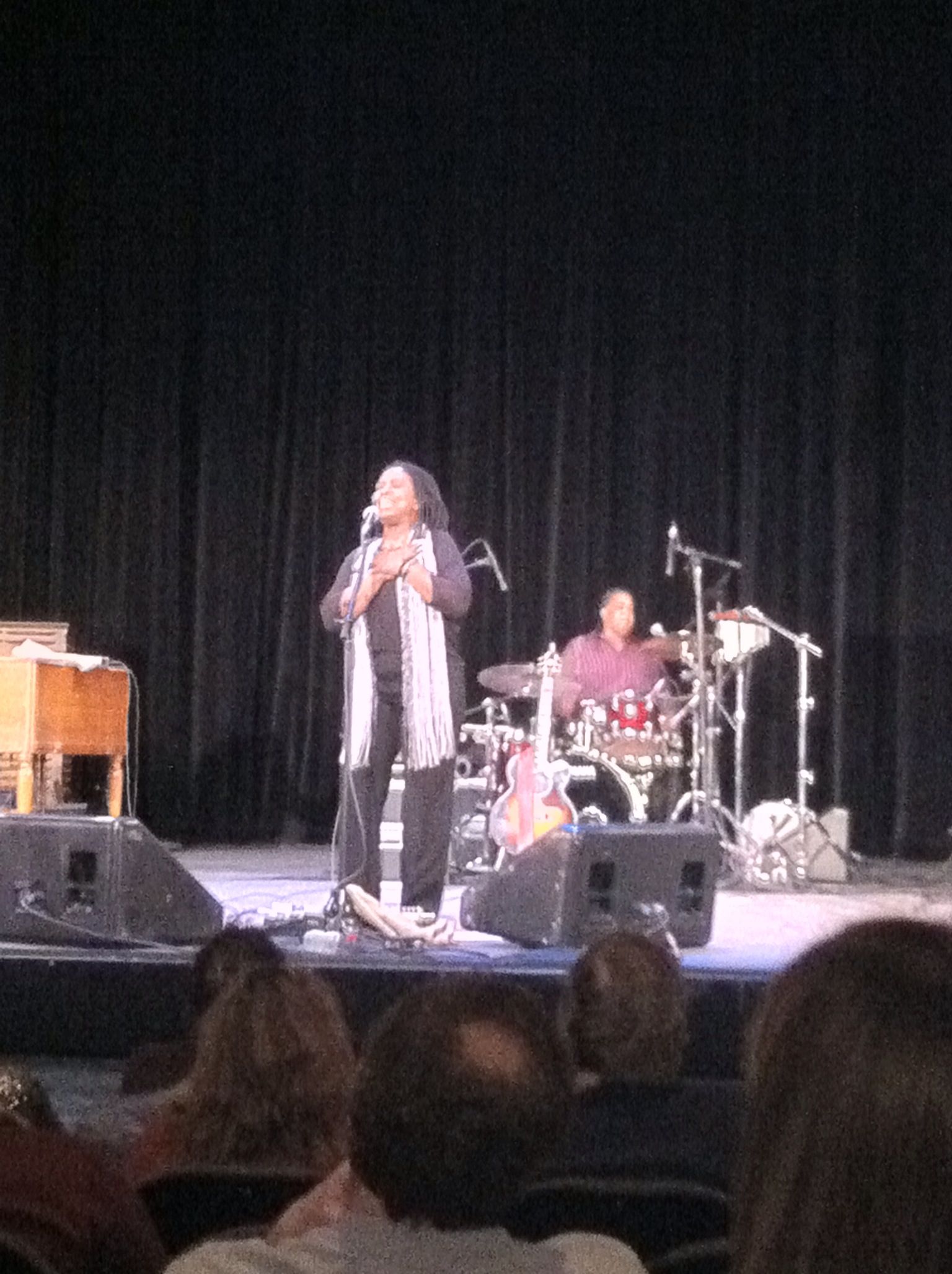
Robinella and band

Knoxville singer/songwriter Robinella was next up. At first glance, it would be easy to conclude that Robinella is just another country singer (Tennessee gal + guitar = country, right?). That would be a big mistake, as the lady from Volunteer State is mostly about jazz. She can scat like Ella, purr like Billie, or croon like Peggy, with a swinging combo that features Jesse Hains on the electric piano.

She opened with a nifty jazz arrangement of “This Little Heart Of Mine,” showing off her impressive range. In her short set she showcased three songs from her forthcoming album, including the tender “Lullaby for Beau,” dedicated to her son, and closing with the freewheeling “Surrender All,” with Mr. Hains stepping out for some flashy solos on the keys. It was a tantalizing taste of a talented singer, making us all hope she’ll return for a full show soon.
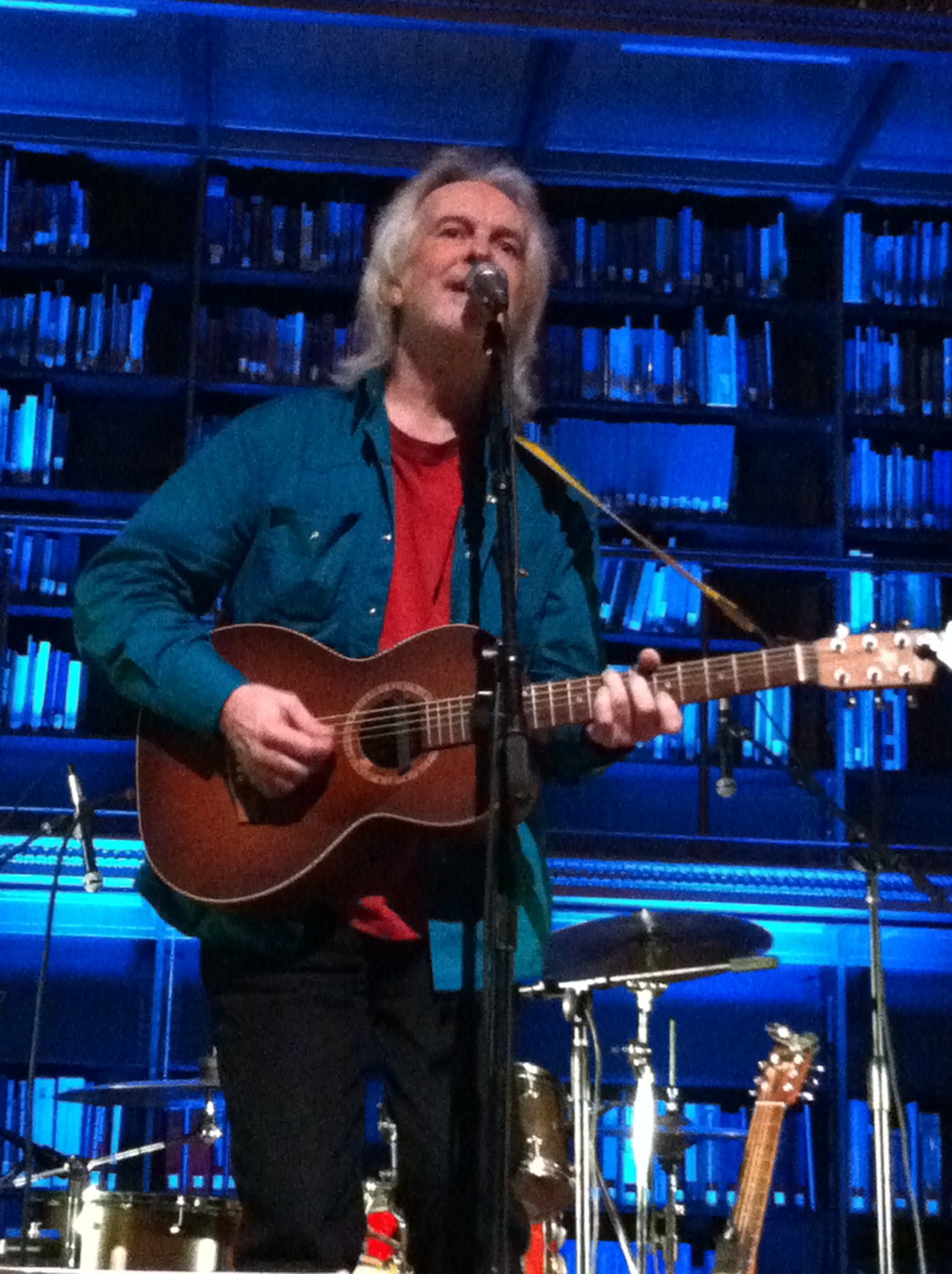
Gurf Morlix

Gurf Morlix

You’re probably saying to yourself, “How could Mr. and Mrs. Morlix have possibly named their son “Gurf”? In fact, neither is his given name (surprise!). According to an interview in No Depression magazine ( http://archives.nodepression.com/2000/05/get-to-know-him/) the name came to 14-year old what’s-his-name in a dream, causing him to awaken with a start and write the name down. No matter; he’s been Gurf for all of his professional life and will be so till the end.

And, what a life he’s had so far! He’s been a fixture on the Austin music scene for over 30 years, working with and producing albums for such Americana/roots noteworthies as Lucinda Williams, Ray Wylie Hubbard, Robert Earl Keen, Slaid Cleaves and Buddy Miller. His 10-year association with Lucinda Williams coincided with her early success, ending abruptly during the “Car Wheels On A Gravel Road” sessions when he became frustrated at the pace of the project. He was chosen as Instrumentalist of the Year by the Americana Music Association in 2009, and was elected to both the Austin and Buffalo Music Halls of Fame (Buffalo being his birthplace).

In addition to his work with others, he’s released a series of well-received albums, starting with 2000’s “Toad of Titicaca” (love that name!), leading up to this year’s “Gurf Morlix Finds The Present Tense,” which, Gurf noted, “has already made Rolling Stone’s list of the top 30,000 albums of 2013!” Accompanying himself on guitar and kick drum (actually, a miked board that he tromped on for his one-man band rhythm section), his set list naturally drew heavily on the new release. “My Life’s Been Taken,” the ominous murder ballad that opens the CD, was also Gurf’s opener this night. Gurf’s sandpaper voice does not have a great deal of range, yet is surprisingly emotive and effective. The tender love song “Empty Cup,” co-written with Grant Peeples, was next, followed another dark number, “Series of Closin’ Doors,” which Gurf introduced, tongue in cheek, as having been inspired by “watching reruns of Get Smart.” The song, which deals with extricating oneself from a bad relationship, could not be farther removed from the old Mel Brooks/Buck Henry TV series.

Gurf has long been a champion of the music of Blaze Foley, a truly sad, tragic, and obscure figure in American music. In fact, the last time Gurf was in town, a couple of years back, he was promoting the movie “Duct Tape Messiah,” a documentary about Blaze Foley, who was a homeless alcoholic most of his life, yet wrote truly amazing songs that were recorded by John Prine, Merle Haggard and Willie Nelson. As a tribute to his late friend, Gurf performed two of Blaze’s compositions, the powerful “Cold, Cold World” (which Gurf described as “probably my favorite song – ever”) and the hilarious “Wouldn’t That Be Nice?” The latter was inspired by Blaze hitchhiking one day when the line of cars passing him by was stopped by traffic up ahead. A car driven by a matronly woman happened to stop right next to Blaze and the driver, eyeing the disheveled transient in disgust, reached over and very deliberately locked her passenger side doors. This led Blaze to compose this brief ditty, with lines like “Lock your door lady, or I’ll jump in your car / Don’t you know how nasty we are? / I’ll poke out your eyeballs and make you a scar / Make you have to walk real far.” And, it gets much worse.

Gurf then returned to the new album, for “Bang Bang Bang,” introducing the song by noting, “Regardless where you are on the gun control issue, there’s no doubt that we have a gun violence problem in this country.” Amen, brother! He closed the set with a cover of The Blind Boys of Alabama’s “This May Be The Last Time.” We hope not, Gurf!

The whole ensemble: Paul Bergen, Jesse Hains, Erik Koskinen, Gurf Morlix, JT Bates, Frankie Lee, Robinella, surprise walk-on Chastity Brown, Thom Middlebrooks (partially obscured), Eric Pollard

The whole ensemble: Paul Bergen, Jesse Hains, Erik Koskinen, Gurf Morlix, JT Bates, Frankie Lee, Robinella, surprise walk-on Chastity Brown, Thom Middlebrook (partially obscured), Eric Pollard

The evening ended with most of the musicians gathering onstage to sing “Will The Circle Be Unbroken?” with Gurf and Robinella trading verses. Local singer-songwriter Chastity Brown (see “Hit Me Two Times!” post on this site), happened to be in the audience and joined in the fun onstage. Now, cue the Real-Phonic band to do the closing theme (“Gonna see my baby in the city of St. Paul”) while Thom Middlebrook reads off the credits, and away we go!

What a blast this was! Can’t wait for the July show to roll around – who knows, it might actually be summer here by then!
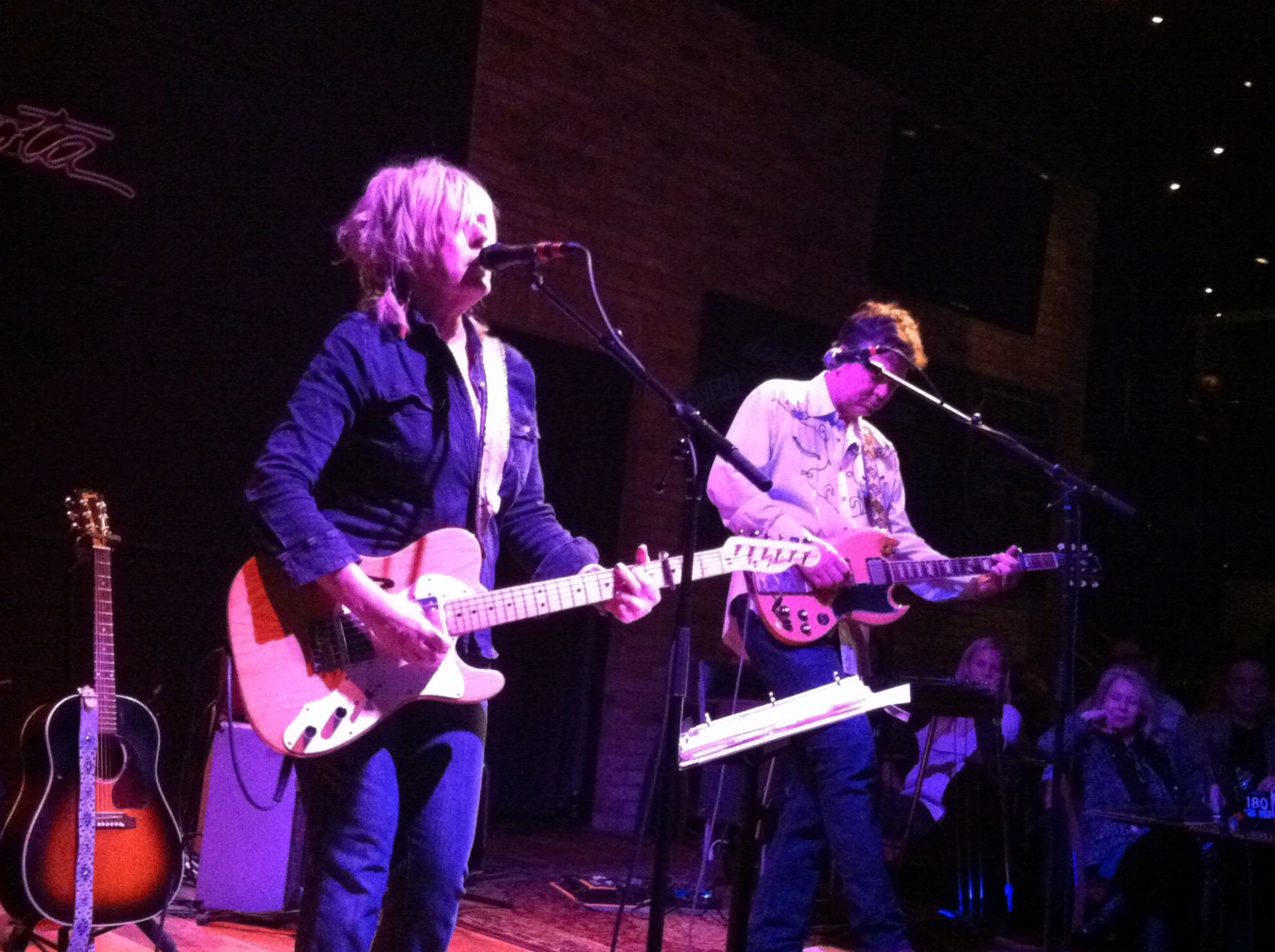
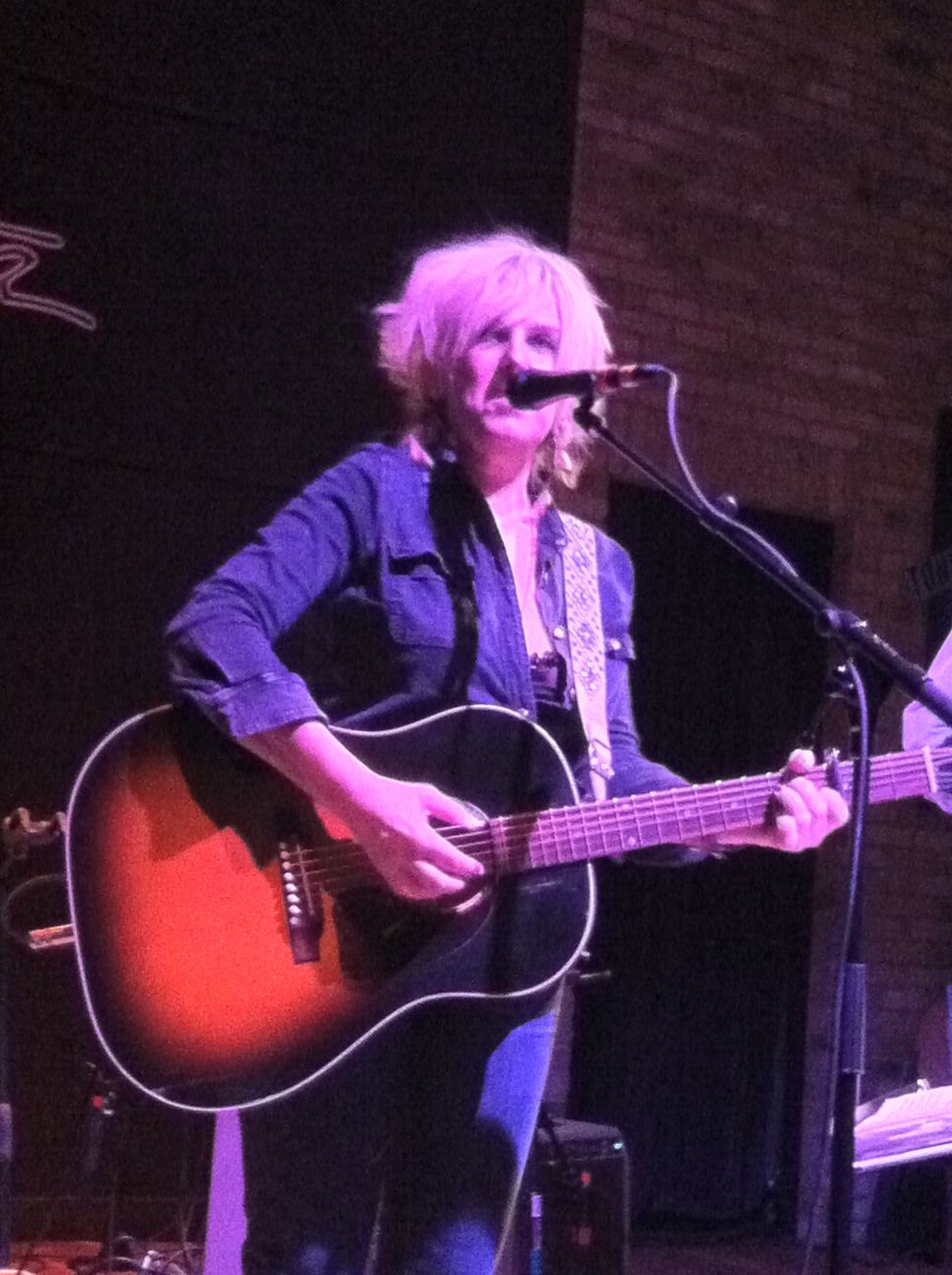
Americana Queen Reigns Supreme: Lucinda Williams at The Dakota Jazz Club, Minneapolis, MN, 2/6/13

Lucinda Williams, with Doug Pettibone

Lucinda Williams, with Doug Pettibone

Minneapolis has become something of a second home for Lucinda Williams. Her 2003 release “World Without Tears” included a song called “Minneapolis,” and also “Real Live Bleeding Fingers And Broken Guitar Strings,” purportedly written about Paul Westerberg of The Replacements. In 2009, she married Minnesota-born Tom Overby onstage at First Avenue, in a post-concert service that was surprisingly moving, given the unholy setting. With her apparent affinity for the Twin Cities, it was no surprise that by the fourth night of her five-night “residency” at the Dakota, she seemed completely at ease; comfortable in her surroundings, friendly and gracious with the crowd, and calm and self-assured in her delivery. None of this detracted from the passion and conviction of her performance – the best of the half-dozen times this writer has seen her.

Following brief opening sets by Ben Kyle (Romantica) and The Kenneth Brian Band, Lucinda and her longtime guitarist, the incomparable Doug Pettibone, took the stage and opened with “Can’t Let Go,” a song written by St. Paulite Randy Weeks – yet another local connection! – from her 1998 masterpiece, “Car Wheels On A Gravel Road.” Doug Pettibone was already making his presence felt, with sharp, focused lead and bottleneck slide work on this uptempo breakup song. Reaching back nearly 25 years to her eponymous 1988 release, for the next number, “Big Red Sun Blues,” it was clear that Lucinda was going to make the most of her deep catalogue by sprinkling her set list with obscure gems, as well as more familiar favorites.

The title track to “Car Wheels” certainly fell into the latter category. Introducing it, she told a deeply personal story of having debuted the song at the intimate Bluebird Café in Nashville, before an audience that included her father, the writer and poet, Miller Williams. Afterward, he commented that she must have been the little girl in the verse: “Chld in the back seat, about four or five years / Lookin’ out the window”. In complete and convincing sincerity, Lucinda said that she had never realized that until her father pointed it out to her, so complete was her immersion in her writing.

Slowing down the pace, Lucinda next chose the title track to “World Without Tears,” an achingly beautiful ballad that showcased her world-weary voice to its best advantage. Doug Pettibone switched from his Strat to a big hollow body Gretsch for the tender solos on this one, adding understated harmony to Lucinda’s vocals, as he did all night. Keeping the mood somber, Ms. Williams told of having been inspired to write “Memphis Pearl” in 1984, by the sight of a poor woman digging through trash cans, looking for food. The gentle, bluegrass-flavored song tells the story of a fallen angel, a girl whose high hopes and big dreams are sadly unrealized. It is a common theme of Ms. Williams, who relates tales of the downtrodden and those living on the fringes of society, without ever becoming maudlin, condescending or judgmental.

"Back in Memphis she was a pearl"

“Back in Memphis she was a pearl”

Lucinda kept the mood subdued and intimate with “Tears Of Joy,” a love song to Tom Overby, from her 2008 release, “Little Honey.” Introducing the next song, “I Don’t Know How You’re Living,” Lucinda noted that it was written for her younger brother, “who I haven’t seen in many years.” Incredibly sad and moving, featuring sublime echo-effect guitar work by Doug Pettibone, the pairing of the song with “Tears Of Joy” was breathtaking. Where “Tears Of Joy” celebrates the emotional catharsis of falling deeply in love, “Don’t Know” reminds us of the pain and longing that comes from being estranged from someone we were once close to. “I don’t know how you’re living / I don’t know where you are / And you may not be willing / To open up the door.” The yin and yang of interpersonal relations, encapsulated in two songs. Stunning.

To bring us out of our doldrums, at least momentarily, Lucinda debuted a new song, “Stowaway,” a mid-tempo rocker that’s sure to appear on her next album. “Born To Be Loved,” from her most recent album, “Blessed,” was next, followed by “Everything Is Changed,” from 2007’s “West,” featuring Miss Lily Mae Rische from The Kenneth Brian Band on fiddle. Lily Mae and her fiddle stuck around for “Jailhouse Tears,” giving the song a more country, less rocking feel than the studio version (that paired Lucinda with guest vocalist Elvis Costello). The ease with which Lucinda traded verses with Doug Pettibone erased all the bad memories of her tortured attempt at the song during her 2008 First Avenue appearance – simulcast on the internet – when she stopped and started the song four times before finally being able to finish it.

Returning to the land of broken dreams and tragic characters, Lucinda noted that “you meet a lot of beautiful losers in this business,” and told the story of Blaze Foley, a gifted songwriter whose songs have been recorded by Merle Haggard, Willie Nelson, and John Prine, among others. But, possessed by his own demons, he barely eked out a living on the fringes of society before being shot and killed in a senseless confrontation. “Drunken Angel” from the “Car Wheels” album is Lucinda’s tribute to this singular talent, whose life and death are straight out of a Greek tragedy.

The tempo picked up and the set list continued its wide range thereafter, as Lucinda debuted another new song, a driving, soulful number that might be titled “I Need Protection (From The Enemy of Love),” followed by the title track to 2001’s “Essence,” with Doug Pettibone producing stinging notes on his Gibson SG. To amp up the proceedings, Lucinda switched from her big Gibson acoustic to a Telecaster for the remainder of the night, starting with a Delta blues number by Little Son Jackson, “Disgusted,” followed by a ferocious version of “Change The Locks,” then a new version of “Joy” (recorded as part of a compilation to support the West Memphis Three), and a hard-rocking ‘Honey Bee” to close out the set.

Before starting the encore, Lucinda complimented the crowd, saying “y’all might be the liveliest audience yet!” She then opened the three-song encore with “Blessed,” an inspired piece of songwriting that takes the biblical Beatitudes and turns them around 180 degrees. Instead of the meek, the humble, the poor in spirit being blessed by the diety, it is we who are blessed by them: “We were blessed by the girl selling roses / Showed us how to live / We were blessed by the neglected child / Who knew how to forgive.” It is a brilliant, thought-provoking piece of songwriting. Not wanting to leave us with anything too heavy, Lucinda brought Lily Mae and the rest of the Kenneth Brian Band back on stage for the rollicking Hank Williams party tune, “Jambalaya,” and a hand-clapping, foot-stomping gospel cover, “You Know You’ve Got To Get Right With God.”

The little girl in the back seat of the car is all grown up now, and she’s moved behind the steering wheel. The tank is full, the engine is well-tuned, and those tires still have a lot of life left in them. The road ahead is wide open and there’s still a lot of this sweet old world left for Lucinda to discover. We’ll all be waiting for her when she swings by next time, to tell us all about it.

Small Wonder: The Phenomenal Ruthie Foster, Hopkins Center for the Arts, Hopkins, MN, 1/29/13

Ruthie Foster and band

Ruthie Foster and band

(Ed. note:  Struggling mightily agaiinst writer’s block, and well past deadline, Harry Gebippe offers these long overdue observations about the recent Twin Cities’ appearance of the diminutive but dynamic Ruthie Foster.)

The roots of Ruthie Foster’s musical genealogy lead back to Sister Rosetta Tharpe (“The Godmother of Rock ‘N Roll”), Mahalia Jackson (“The Queen of Gospel”), and Aretha Franklin (“Lady Soul”), with branches stretching out into country, blues, and even pop, Ruthie’s music pays homage to the past, celebrates the present, and never strays too far away from the church, for it is there that she first found her voice, as a teenage soloist in her local Texas choir.

Immediately upon taking the stage at the Hopkins Center for the Arts, Ruthie introduced her band (Samantha Banks on  drums, Tanya Richardson on the 5-string bass, and Twin Cities native Scottie Miller on the B-3, electric piano and mandolin) – a classy gesture that for many headliners is an end of the show afterthought.  Ruthie warmed up with the Patty Griffin-penned “When It Don’t Come Easy,” a power ballad that did not tax her considerable vocal prowess.  Despite having just returned from Europe the day before, she and the band showed no signs of jet lag; instead, all were in high spirits, engaging with each other and the audience immediately.

Next up was Lucinda Williams’ “Fruits Of My Labor,” an early set show-stopper, showcasing Ruthie’s superb phrasing; sustaining key passages of the song, then snapping off the end of the lyric.  While Ms. Williams deserves much credit for writing this smoldering ballad, Ruthie Foster OWNS this song, much as Mary Chapin Carpenter owns another Lucinda-penned tune, “Passionate Kisses.”

Noting that “I love to record where I like to eat!” Ruthie introduced two songs off her newest album, the Grammy-nominated “Let It Burn,” recorded in New Orleans.  “This Time” is another carefully chosen cover, written by David Hidalgo and Louie Perez (Los Lobos), while  “Aim For The Heart” is Ruthie’s own composition. Of the latter, she remarked, “I had written the song with Bonnie Raitt in mind, sent it to her people, and they promptly sent it back!”  Ms. Raitt might want to reconsider that decision, as “Aim” is a mid-tempo rocker, well-suited to Bonnie’s blues/rock style.

Ruthie is careful to pay her respects to the strong African-American women artists whose legacy she embraces, by celebrating their music.  Maybelle Smith’s “Ocean of Tears” was delivered with a slinky “double shuffle” blues beat, reminiscent of Howlin’ Wolf, while Sister Rosetta Tharpe’s joyous “Up Above My Head” took us right back to the church.  Get out your fans, sisters, and let’s have us a good givin’!

The centerpiece of Ruthie’s shows is her signature rendition of “Phenomenal Woman.”  Featuring the words of the writer Maya Angelou set to music, “Phenomenal Woman” is a proud feminist statement, proclaiming the joys of womanhood.  Ruthie set aside her guitar for this one, bending her knees like a weight lifter, throwing her head back and unleashing the full power of her formidable voice.  Microphone?  We don’t need no stinkin’ microphone!   The folks in downtown Minneapolis could probably hear her, let alone those of us in the concert hall.  It was an amazing performance, earning her a well-deserved mid-set standing ovation.

"Phenomenal Woman"

“Phenomenal Woman”

From the gospel to the blues for the next two songs: Son House’s “People Grinnin’ In Your Face,” with hand-clapping accompaniment from the audience, followed by “some front porch pickin'” on a Mississippi John Hurt country blues number, that featured Scottie Miller on mandolin and Samantha Banks doing yeoman work on the spoons.  Can’t recall the last time I witnessed a solo on the spoons, but Ms. Banks’ is truly a virtuoso on that primitive percussion instrument.

Ruthie ended her eclectic set with a wide range of songs, from the gentle country blues of “Hole In My Pocket,” with its singalong chorus, to a straightforward rocking version of David Crosby’s “Long Time Gone,” to her cover of Adele’s power pop ballad, “Set Fire To The Rain.”  But far and away the most interesting song in this last segment of her set was her take on “Ring Of Fire.” The song was totally deconstructed into a slow blues number, completely unrecognizable from the original, and with Ruthie’s most understated vocal of the night.  It was a bold, fascinating move by Ms. Foster, appropriating one of Johnny Cash’s signature songs and remaking it into her own, much as The Man In Black himself did near the end of his life, when he released his American Recordings series of sparely-arranged rock ‘n roll songs.   In that sense, it was the perfect homage to one of the most independent spirits in contemporary music history.