The Real-Phonic Radio Hour Presents: Robinella and Gurf Morlix, J.J. Hill Reference Library, St. Paul, MN, 5/16/13

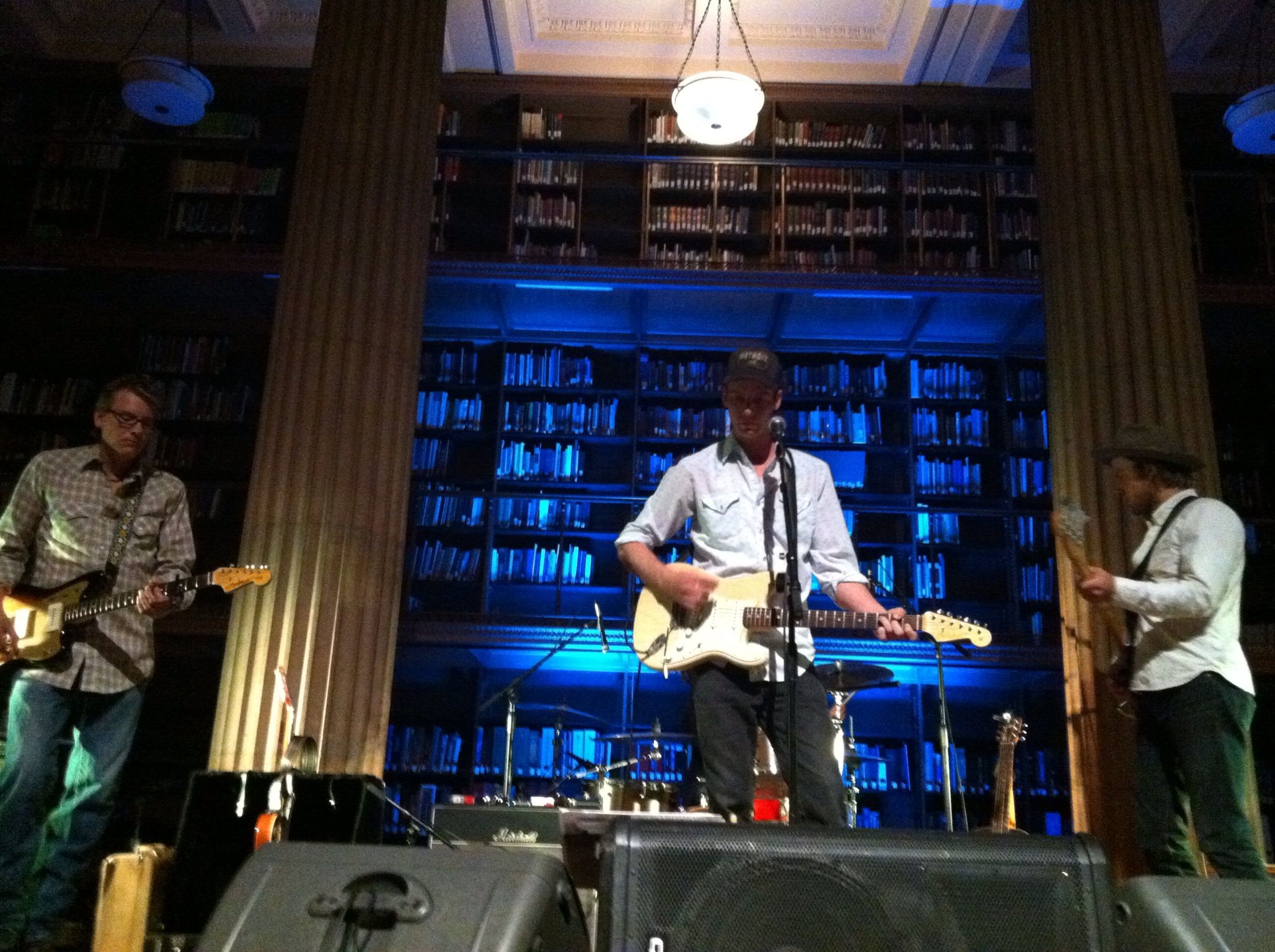
The Real-Phonic Radio band: L - R: Paul Bergen, Erik Koskinen, Frankie Lee (hidden: drummer J.T. Bates)

The Real-Phonic Radio band: L – R: Paul Bergen, Erik Koskinen, Frankie Lee (hidden: drummer J.T. Bates)

There’s a very cool program broadcasting from St. Paul, featuring lots of great music and mirth, originating in one of the most stately buildings in all of downtown. No, it’s not A Prairie Home Companion, nor even its citified second cousin, the Wits series (see the Calendar page on this site for details). The program in question is the Real-Phonic Radio Hour, held monthly (except this coming June) at the majestic James J. Hill Reference library.

The purveyors of this event are a group of musicians – Molly Maher, Erik Koskinen, Paul Bergen, Frankie Lee and J.T. Bates (collectively known as Molly Maher and Her Disbelievers) – plus announcer/monologuist Thom Middlebrook. Together, they transform the cavernous J.J. Hill Reference Library space – with its soaring Greek columns, marble floors and 30′ ceilings – into an intimate 200-seat concert hall, showcasing not only the talents of the local hosts but also an interesting and eclectic group of touring musicians. The tickets are cheap (only $20, or $10 with a food shelf donation), the beer and wine selection small but adequate, and the ambience is unbeatable. Technically not a “radio hour,” in keeping with its 21st century origins, the shows are actually taped, edited, and eventually made available as a podcast on the Real-Phonic website (realphonic.com).

Molly Maher took over Thom Middlebrook”s role, handling the opening monologue on this particular night. Her comments included an “attaboy!” for the Minnesota legislature, which had just passed the Marriage Equality law, as well as a number of well-placed jibes at that soft target who goes by the name of Michelle Bachmann. Both themes would later be revisited when Middlebrook did his own commentary later in the evening.

Erik Koskinen and the rest of the boys warmed things up with a trio of selections (we’re going to take a stab at the titles), ranging from the steady rolling Americana of “Feelin’ Pretty Good,” to the country-flavored “You Didn’t Even Remember My Mama’s Name,” finishing with the rockabilly “I Ain’t Nothin’ With You.” Although deferring to Paul Bergen for most of the lead guitar work, Erik is no slouch on guitar himself, and together the two of them form a most formidable tandem.
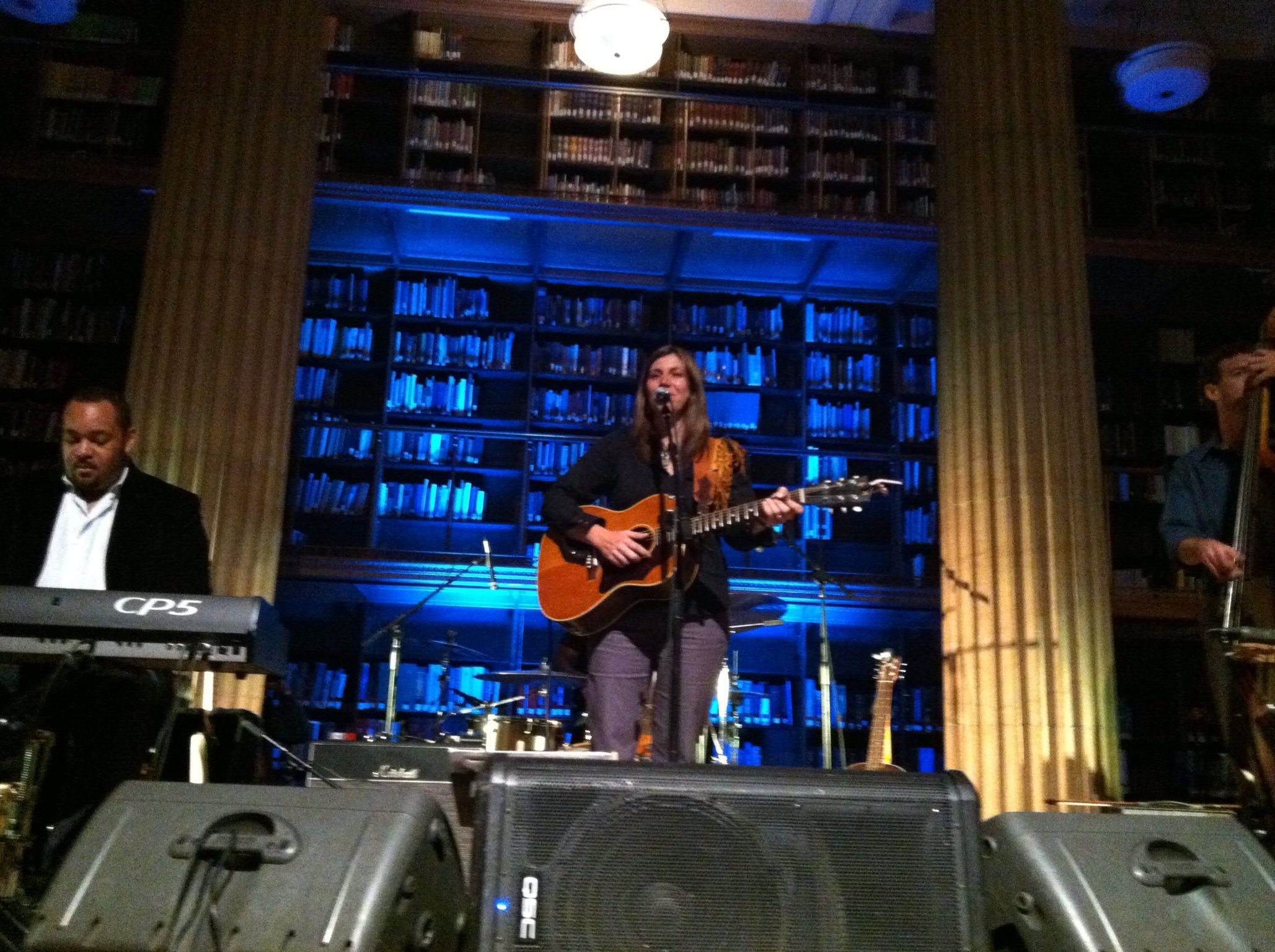
Robinella and band

Robinella and band

Knoxville singer/songwriter Robinella was next up. At first glance, it would be easy to conclude that Robinella is just another country singer (Tennessee gal + guitar = country, right?). That would be a big mistake, as the lady from Volunteer State is mostly about jazz. She can scat like Ella, purr like Billie, or croon like Peggy, with a swinging combo that features Jesse Hains on the electric piano.

She opened with a nifty jazz arrangement of “This Little Heart Of Mine,” showing off her impressive range. In her short set she showcased three songs from her forthcoming album, including the tender “Lullaby for Beau,” dedicated to her son, and closing with the freewheeling “Surrender All,” with Mr. Hains stepping out for some flashy solos on the keys. It was a tantalizing taste of a talented singer, making us all hope she’ll return for a full show soon.
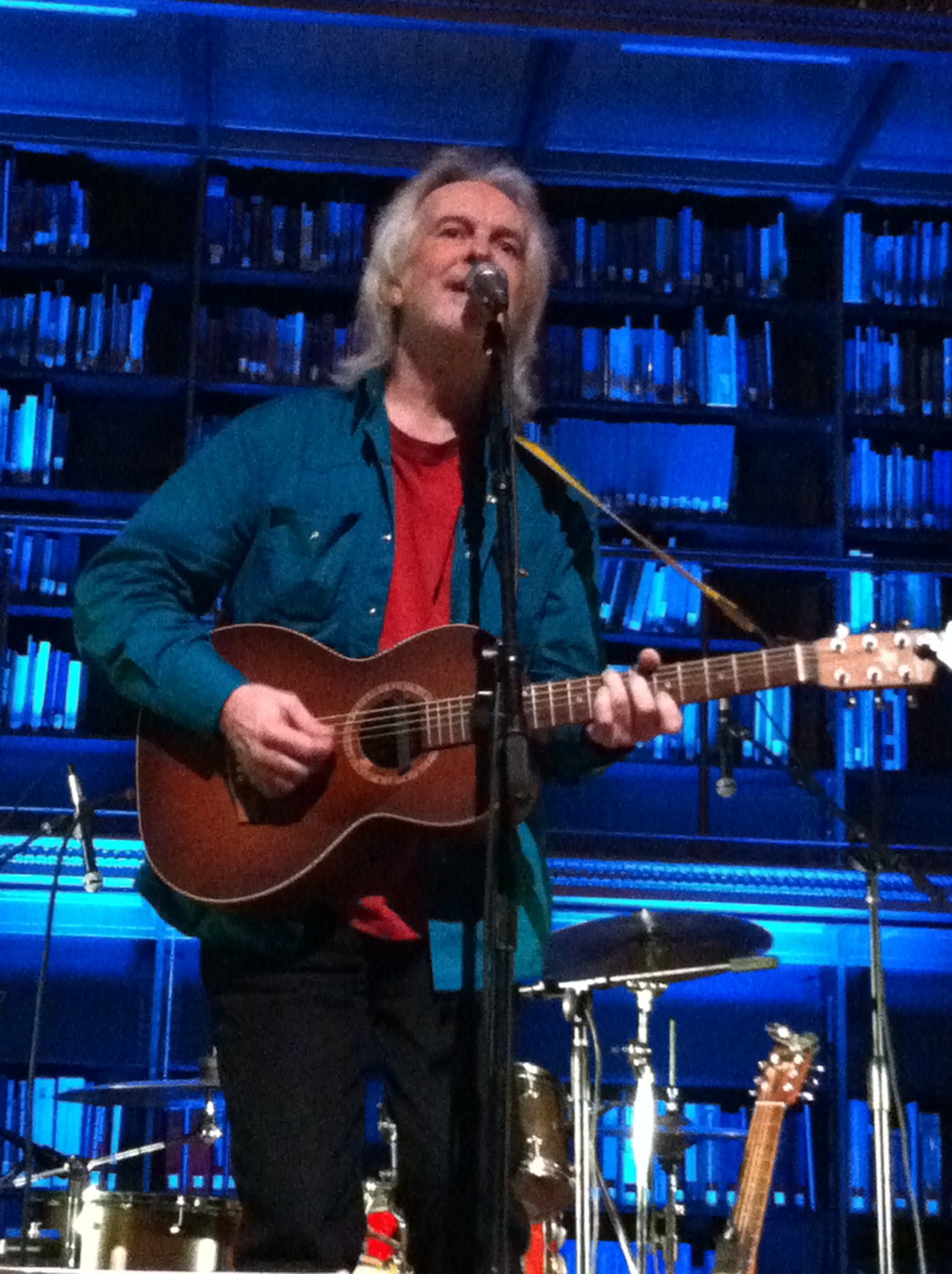
Gurf Morlix

Gurf Morlix

You’re probably saying to yourself, “How could Mr. and Mrs. Morlix have possibly named their son “Gurf”? In fact, neither is his given name (surprise!). According to an interview in No Depression magazine ( http://archives.nodepression.com/2000/05/get-to-know-him/) the name came to 14-year old what’s-his-name in a dream, causing him to awaken with a start and write the name down. No matter; he’s been Gurf for all of his professional life and will be so till the end.

And, what a life he’s had so far! He’s been a fixture on the Austin music scene for over 30 years, working with and producing albums for such Americana/roots noteworthies as Lucinda Williams, Ray Wylie Hubbard, Robert Earl Keen, Slaid Cleaves and Buddy Miller. His 10-year association with Lucinda Williams coincided with her early success, ending abruptly during the “Car Wheels On A Gravel Road” sessions when he became frustrated at the pace of the project. He was chosen as Instrumentalist of the Year by the Americana Music Association in 2009, and was elected to both the Austin and Buffalo Music Halls of Fame (Buffalo being his birthplace).

In addition to his work with others, he’s released a series of well-received albums, starting with 2000’s “Toad of Titicaca” (love that name!), leading up to this year’s “Gurf Morlix Finds The Present Tense,” which, Gurf noted, “has already made Rolling Stone’s list of the top 30,000 albums of 2013!” Accompanying himself on guitar and kick drum (actually, a miked board that he tromped on for his one-man band rhythm section), his set list naturally drew heavily on the new release. “My Life’s Been Taken,” the ominous murder ballad that opens the CD, was also Gurf’s opener this night. Gurf’s sandpaper voice does not have a great deal of range, yet is surprisingly emotive and effective. The tender love song “Empty Cup,” co-written with Grant Peeples, was next, followed another dark number, “Series of Closin’ Doors,” which Gurf introduced, tongue in cheek, as having been inspired by “watching reruns of Get Smart.” The song, which deals with extricating oneself from a bad relationship, could not be farther removed from the old Mel Brooks/Buck Henry TV series.

Gurf has long been a champion of the music of Blaze Foley, a truly sad, tragic, and obscure figure in American music. In fact, the last time Gurf was in town, a couple of years back, he was promoting the movie “Duct Tape Messiah,” a documentary about Blaze Foley, who was a homeless alcoholic most of his life, yet wrote truly amazing songs that were recorded by John Prine, Merle Haggard and Willie Nelson. As a tribute to his late friend, Gurf performed two of Blaze’s compositions, the powerful “Cold, Cold World” (which Gurf described as “probably my favorite song – ever”) and the hilarious “Wouldn’t That Be Nice?” The latter was inspired by Blaze hitchhiking one day when the line of cars passing him by was stopped by traffic up ahead. A car driven by a matronly woman happened to stop right next to Blaze and the driver, eyeing the disheveled transient in disgust, reached over and very deliberately locked her passenger side doors. This led Blaze to compose this brief ditty, with lines like “Lock your door lady, or I’ll jump in your car / Don’t you know how nasty we are? / I’ll poke out your eyeballs and make you a scar / Make you have to walk real far.” And, it gets much worse.

Gurf then returned to the new album, for “Bang Bang Bang,” introducing the song by noting, “Regardless where you are on the gun control issue, there’s no doubt that we have a gun violence problem in this country.” Amen, brother! He closed the set with a cover of The Blind Boys of Alabama’s “This May Be The Last Time.” We hope not, Gurf!

The whole ensemble: Paul Bergen, Jesse Hains, Erik Koskinen, Gurf Morlix, JT Bates, Frankie Lee, Robinella, surprise walk-on Chastity Brown, Thom Middlebrooks (partially obscured), Eric Pollard

The whole ensemble: Paul Bergen, Jesse Hains, Erik Koskinen, Gurf Morlix, JT Bates, Frankie Lee, Robinella, surprise walk-on Chastity Brown, Thom Middlebrook (partially obscured), Eric Pollard

The evening ended with most of the musicians gathering onstage to sing “Will The Circle Be Unbroken?” with Gurf and Robinella trading verses. Local singer-songwriter Chastity Brown (see “Hit Me Two Times!” post on this site), happened to be in the audience and joined in the fun onstage. Now, cue the Real-Phonic band to do the closing theme (“Gonna see my baby in the city of St. Paul”) while Thom Middlebrook reads off the credits, and away we go!

What a blast this was! Can’t wait for the July show to roll around – who knows, it might actually be summer here by then!
The Return of the Badgerman: David Lindley at the Cedar Cultural Center, Minneapolis, MN, 5/14/13


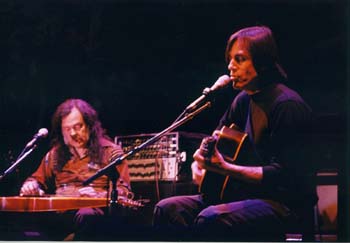
David Lindley and Jackson Brown, circa 1992 (archive photo necessitated by the Cedar's new "no photos" policy during performances

David Lindley and Jackson Browne, circa 1992 (archive photo necessitated by the Cedar’s new “no photos” policy during performances)

If the music industry ever gave out the equivalent of the NBA’s Sixth Man Award, surely David Lindley would be a contender.  In addition to his long affiliation with Jackson Browne, Lindley’s multi-instrumental work has added depth, color and nuance to a veritable who’s who of contemporary artists, including Ry Cooder, Warren Zevon, Rod Stewart, Crosby, Stills and Nash, Emmylou Harris, The Blind Boys of Alabama, Linda Ronstadt, Dolly Parton, John Prine, Bob Dylan, and David Bromberg.  And that’s just for starters!  His long affiliation with the group of session musicians known as The Section has led him to appear on scores of albums.  For approximately 10 years, he led the much-loved, sorely-missed, multi-cultural cult favorite band, El Rayo -X, with its captivating mix of rock, blues and reggae.  As one of the earliest champions of “world music,” he toured and recorded with Jordanian musician Hani Naser, as well as venturing to Madagascar with guitarist Henry Kaiser, to record with musicians there

The Axe-Man cometh!  David Lindley's instruments, including a massive baritone Hawaiian guitar, normal Hawaiian guitar, bouzouki and oud.
The Axe-Man cometh! David Lindley’s instruments, including a massive baritone Hawaiian guitar, normal Hawaiian guitar, bouzouki and oud.

Although he is still regularly called upon for session work, Lindley’s preference these days is to tour solo, dazzling audiences with his deft fretwork on a variety of instruments, including bouzouki, oud, and an impressive set of Hawaiian style hollow neck acoustic lap guitars.  So it was during his recent appearance at the Cedar Cultural Center, where he entertained the 2/3’s full house for nearly two hours, with his mix of songs and story telling.

Bespectacled, with his long graying hair and signature massive mutton chops, Lindley resembled a character out of a Dickens novel – except for the loud paisley-print shirt, that is (standard apparel for the man occasionally referred to as The Prince of Polyester).  “Ain’t No Way” from the first El Rayo-X album, was the set opener, done up more as a stately march than the loose, freewheeling arrangement from the 1981 album.  Reflecting on his early career, Lindley noted that he used to play at Disneyland in a hillbilly band “with our bumpkin suits, bumpkin hats, and bumpkin instruments.”  One of the members of the group was a much older man named Johnny Sancere, who played banjo and guitar, and whose longevity in the business while playing the style of music he preferred seems to have had a profound influence on Lindley’s own chosen career path.  He used the Disneyland/Sancere episode as a segue into “Coot From Tennessee,” then the Warren Zevon composition “Beneath The Vast Indifference of Heaven,” both played on Hawaiian-style acoustic lap guitars.  The hollow necks of these formidable instruments provided a huge, resonating bottom to the songs, making it sound for all the world as though there was a bass player up on stage, too.

Referring to the recent Rolling Stone article about The Section, Lindley related a story about saxophonist David Sanborn (“the Troll of Soul,” as Lindley referred to him),, making his way from ledge to ledge along the second story outside wall of the Holiday Inn where the band was staying while touring with Jackson Browne.  Finally persuaded to come into the room from his precarious perch, Sanborn pointed at someone in the band and proclaimed “You and your little dog, too!” causing Lindley to howl with laughter at the recollection, while the audience politely chuckled in puzzled amusement.  I guess you had to have been there.

Announcing, “I’d like to do a drug song for you,” Lindley told of how he and his daughter, Rosanne, came to write “Little Green Bottle,” an ode to . . . Extra Strength Excedrin.  It occurred after Lindley had been bitten between the shoulder blades by some nasty tree spider that dropped down on him as he brushed against a branch.  Only the magic in the little green bottle soothed his pain, so, while walking with Rosanne soon after – in the street, away from spider-infested trees – they began tossing off verses, eventually winding up with “about 30.”  Although the version performed this night consisted of far fewer verses, the song itself went on for over 10 minutes, including hilarious spoken interludes about taking too much (leading to “bad musical ideas” and manic guitar playing), then coming down from the Excedrin high (slowing the song down to a dirge).

Back to the bouzouki, and another story about doing sessions with Dolly Parton, including an extravagant show at her Dollywood theme park, with a number of other guest musicians.  Dolly introduced the musicians one by one, noting that so-and-so came in from New York, so-and-so from Los Angeles, and when she got to Lindley, she announced “And David Lindley flew in from Mars!”  The murder ballad, “Pretty Polly” was the follow up to that anecdote.

Switching to the oud, Lindley pointed out that the one he plays does not have the rounded back traditional for this Middle Eastern instrument.  “That’s because this oud was made to be plugged into a Marshall stack!” he noted, referring to his oud as “Destroys Drummers.”  The bluegrass tune, “Little Sadie” was the first offering on this tricky instrument, followed by a medley of similar songs.  The similarity between oud and mandolin in terms of size and number of strings (although the oud has 2 more) makes the oud a simpatico choice for bluegrass style music.

Back to bouzouki next for the Greg Copeland tune, “Pretty Girl Rules The World,” followed by another Greg Copeland composition, “Revenge Will Come,” played on the thunderous baritone Hawaiian.  In between, Lindley told a story about the man who makes his lap guitars, a fellow by the name of Larry Pogreba, a neighbor of Ted Turner’s, who lives “off the grid” in Montana, and also builds black powder cannons that shoot bowling balls!  It was just such a cannon that dispatched the ashes of Pogreba’s friend, the late Hunter S. Thompson, over his property in Colorado.  Whatever else you might say about David Lindley, you certainly can’t accuse him of having boring friends.

Before performing his lone encore, the zydeco flavored “Bon Temps Roulez,” Lindley referred back to the Rolling Stone article on The Section.  He took umbrage at the writer’s reference to the group as “The Knights of Soft Rock,” so he decided to give himself yet another nickname:  Flaccido Domingo.  That line got him the biggest laugh of the night.

It’s easy to see how David Lindley is such an in-demand studio musician.  His range of instrumental skills is unique, but in addition to that his easygoing demeanor and “what, me worry?” attitude toward life must be refreshing in a business where over-inflated egos are the norm.  Fortunately for us, he still spends a lot of time on the road, playing in bars and clubs, and at festivals all over the world.  Alone on stage, flanked by his rack of instruments, is where his true genius shines forth – with a half-dozen humorous anecdotes thrown in for good measure.